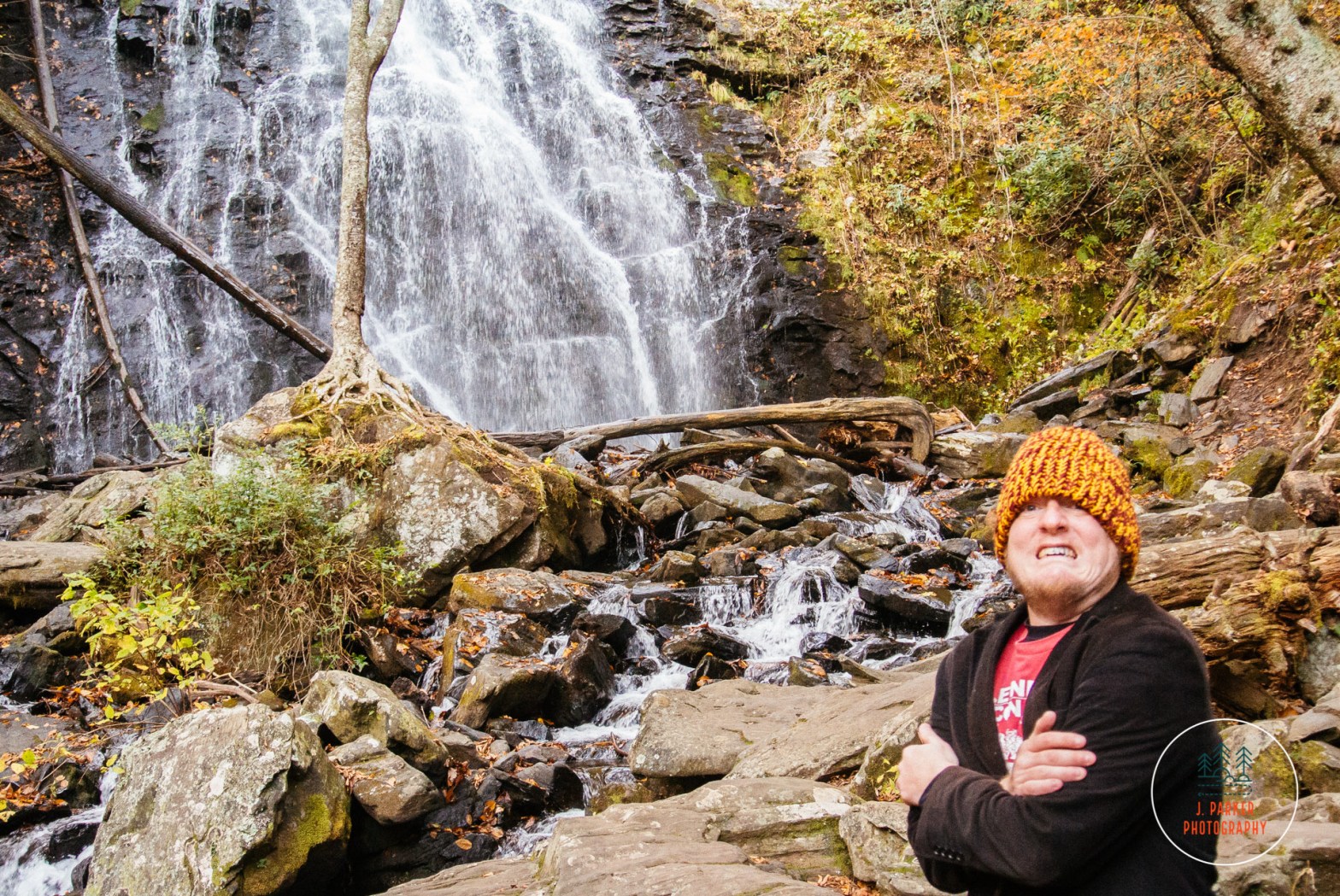
Every part of my body exposed to the open air was freezing. This included my hands, which I had vainly attempted to cover with gloves through this weeklong trip until I realized it was virtually impossible to setup delicate lens filter setups without having full use of unencumbered hands. Indeed, as had been proven 5 days earlier at Dupont State Forest, where an important filter had slipped out of my hands and cracked on the rocks, it was rather difficult even with fully functional, gloveless hands. The replace for that filter, my preferred ND1000, was in my hands, ready to be unleashed with its heavy handed dose of glassy awesomeness, but I could scarcely think about an ideal composition for capturing the waterfall in front of me in the overwhelmingly hostile conditions I now faced. Wind whipped over the waterfall in front of me at some 20-30 mph, which was odd, considering there had been not a hint of wind on this nearly cloudless morning as we worked our way through the more than two miles of trail to reach the waterfall base. Not being a natural mountain man, I didn’t understand why the waterfall itself provided such a draft, but at that point understanding wasn’t such a high priority. What did matter is that the air temperature was scarcely above freezing, and with the intense wind, it was the coldest I had ever been.
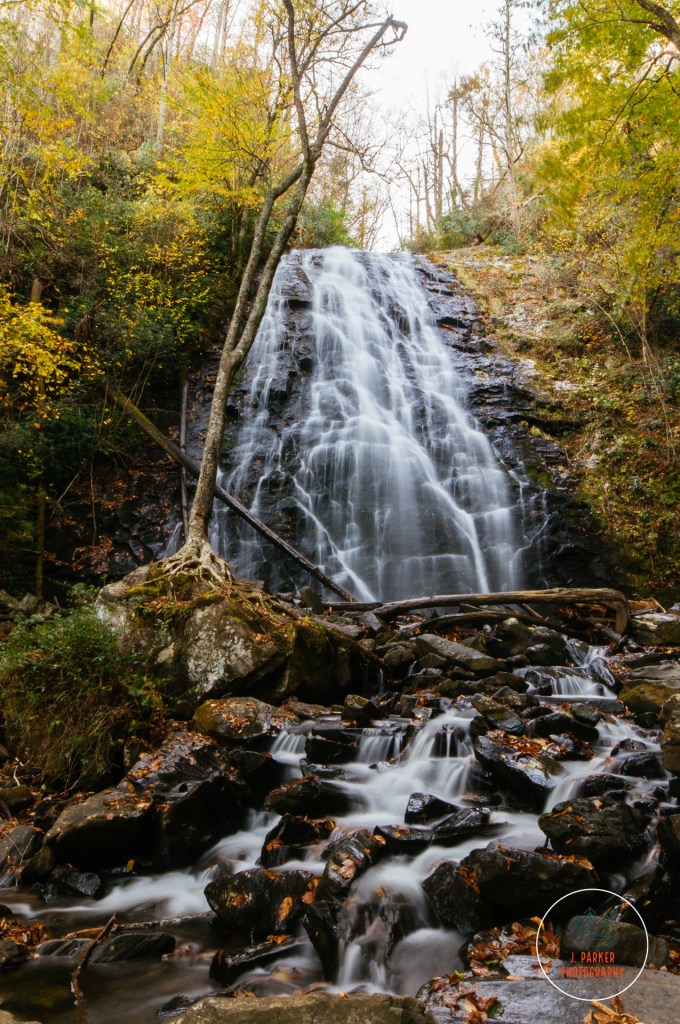
That waterfall was Crabtree Falls in North Carolina, a prize I had long since sought out. This was the last day of our second foray onto the Blue Ridge Parkway. Our first, taken six years earlier, had been a three day whirlwind tour of the full length of the scenic roadway connecting Shenandoah and Great Smoky Mountains National Parks. During my research for the first one, I had found Crabtree Falls to be the most striking of the falls I came across on the rather primitive internet resources of the time. I could remember the stunning shots I had come across browsing the internet, and it seemed to me to be a “photographer’s waterfall.” A three day whirlwind tour didn’t leave us much time for lengthy excursions, however, and the hike of over 2 miles qualified as lengthy for the novice nature enthusiasts we were at the time (plus we endured immensely strong rain as we passed this section in 2011, which would have made a planned hike impractical anyway). As we sat down to hastily plan this fall trip centered around the Blue Ridge Parkway, Crabtree Falls, along with Mt. Mitchell and Grandfather Mountain, were on the itinerary from the get go.
I didn’t just want to get to Crabtree Falls – I wanted to photograph it. The day, like practically the entire week before us, promised to be a very sunny day, meaning we would have to be on the trail before dawn to ensure we got to the waterfall in good light. Crabtree Falls is a rather confusing area to set out on the trail, as it begins in a camping area and travels through the campground before fully immersing itself in the woods. The area around Crabtree Falls, like several others along the Parkway, had been ear-marked to have fully fleshed out recreational areas in the early days of the Parkway before it was found that these were difficult to operate, thus the parking areas here were designed for building access, rather than trail access, and it is still the same 80 years later. It may have been possible to shorten our hike by finding a closer entry to the trail system, but with us already racing a rising sun, and with it being hard to scan parking areas for discrete trail entrances in pre-dawn light, we opted for the safe bet of starting where we knew we could park and access the trail, planning accordingly for the mileage.
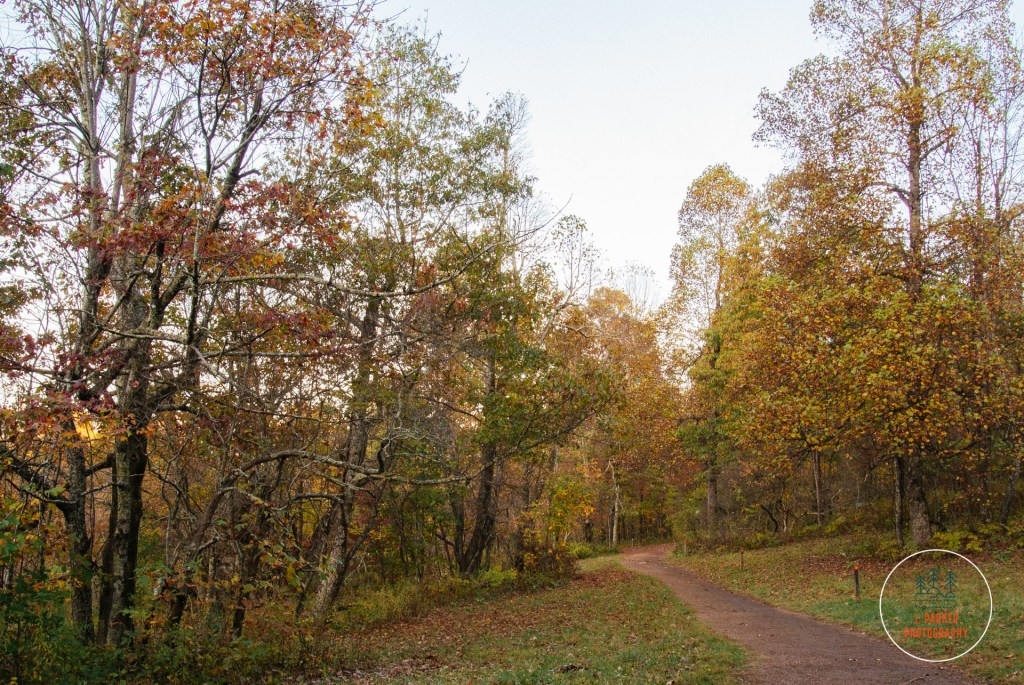
We hurriedly embarked upon the wide path through the camp ground barely illuminated in the pre-dawn light. Much of this path took us through rather open ground and past an amphitheater within the campground. Without much to see I pushed myself to go as quickly as possible, but my legs were running on fumes after hiking or walking at length for the 8th consecutive day. Nevertheless we made it through this uninteresting bit of walk in rather short order, and excitedly began the next phase of our journey on the actual Crabtree Falls Trail.
Knowing that the way to the falls was rather straightforward, I let myself get ahead of Jess a bit, working my way at a quick pace to give me the best shot of reaching the falls in good light. It was somewhere around 1.25 miles from where we parked to reach the falls. Fortunately, perhaps because Crabtree Falls is one of the Parkway’s most notable attractions, a fair portion of the trail remained wide and smooth, making it easy to traverse safely and quickly even before daylight had fully set it. I was soon immersed in a forest with traces of yellow and gold dominating the trees. As high up and as far north as we were, much of the area we were in the last few days of the trip was technically past peak, but this patch of forest still had quite a luster to it. It was nice to once again feel immersed in fall, as our last few stops in Grandfather Mountain and Roan Mountain, while offering a different type of wonder, didn’t have much in the way of seasonal beauty just owing to the predominantly evergreen forest that dominated their high elevations. For the sake of time and with lack of light I kept the camera in the bag as I worked my way towards the waterfall.
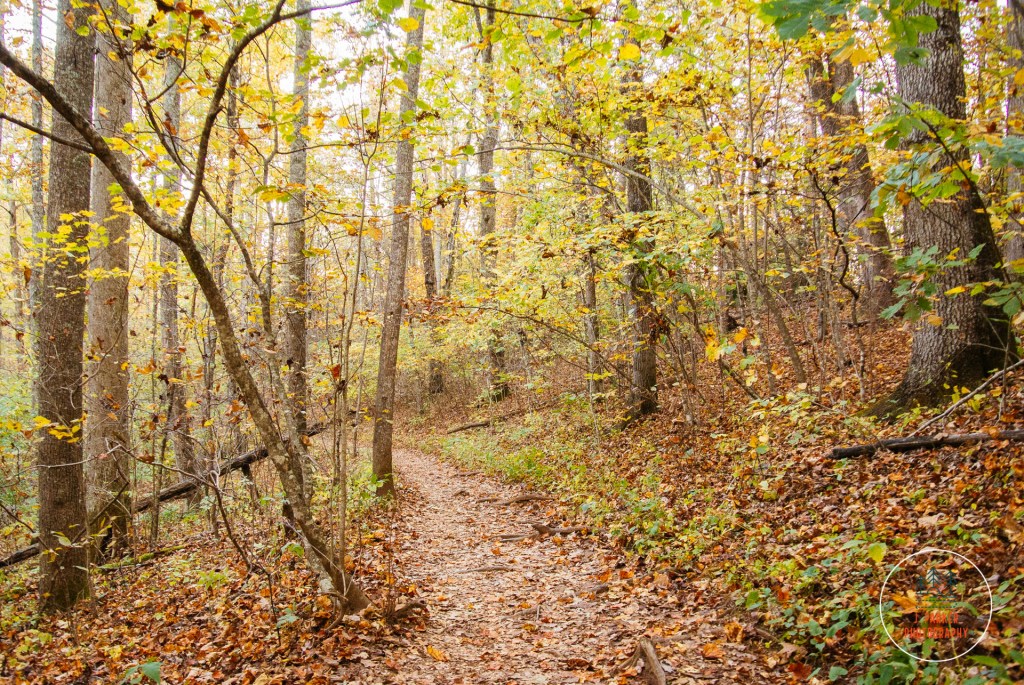
I passed a trail junction where another path came in from the left. This trail allows people to hike Crabtree Falls as a loop. Normally a loop hike is preferable to any out and back, but we wouldn’t be making a loop out of our hike today. Although the distance to make this hike a loop did not make it significantly farther compared to hiking it as an out and back, that loop scaled a ridge which the direct path to the falls did not. I couldn’t find a compelling reason for us to add that extra bit of trail and exertion, so with us operating under both time constraints on a busy Saturday and with limited energy after the week’s endless slate of hikes, we opted for the direct path (regardless of what we would have planned for, the intense coldness of the waterfalls would have forced us to take the most direct path back to the car anyway).
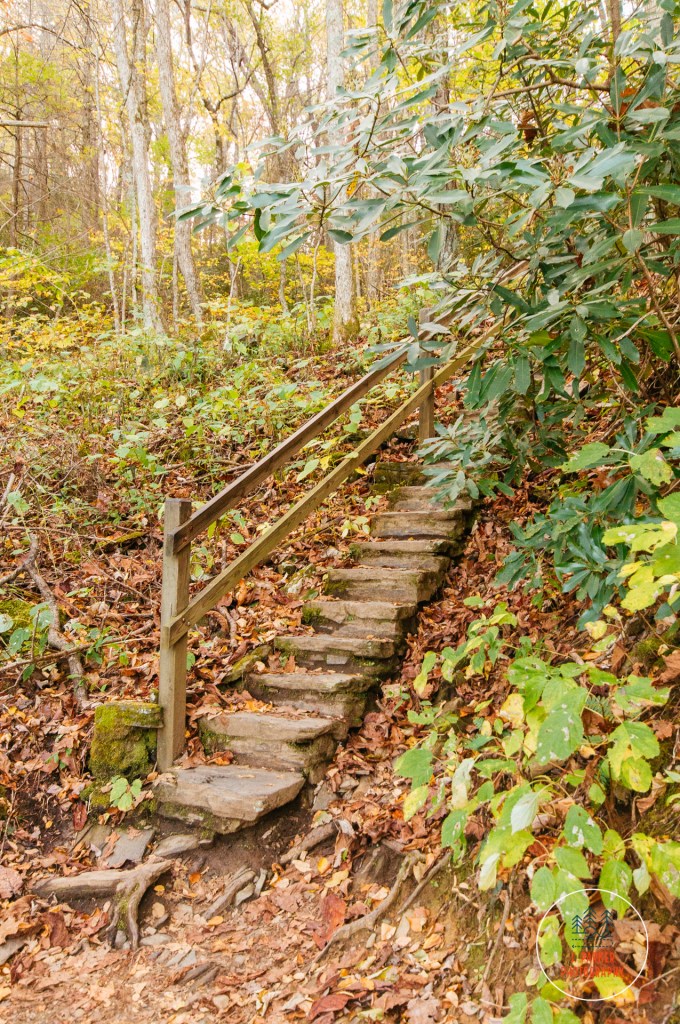
I wasn’t all that far along the trail before I began to hear the sound of the falls emanating throughout the quiet forest. This didn’t mean I was that close to the falls however, for I knew we had to drop quite some elevation and navigate some switchbacks, thus our path to the falls, close as they might sound, would only be indirect. I was excited to reach a stairway which dropped me some thirty feet in elevation in a short distance, meaning potentially less switchbacking would be required than I had imagined. The sun had begun hitting the tops of opposing ridgelines that were visible through the thin forest, and I worried that our intense efforts to reach the falls in good light would be all for naught. Being in the west side of the ridgeline, opposite the rising sun, would buy us a little time though.
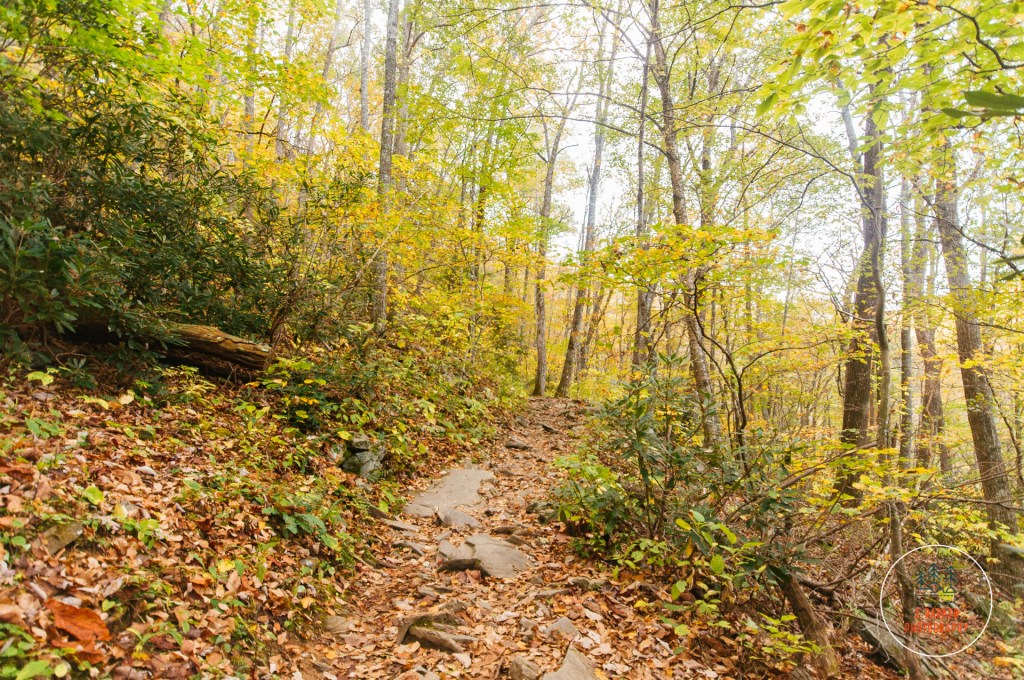
I was dismayed to find that dropping elevation on the stairway was almost immediately counterbalanced by a trail that had instantly become a rocky quagmire. It was a night and day difference from the smooth, easily traversed path above the stairway to the potentially ankle-turning mess I was currently navigating. Without much light to illuminate the path below, I was going to have to concentrate extra hard to make sure that I didn’t turn one of my ankles. One of them was still agitated and weak from being turned the day before in one of the minefield’s of Grandfather Mountain’s extremely rugged surface. Another set of stairs brought me even lower, but if anything, the trail was even more rough below.
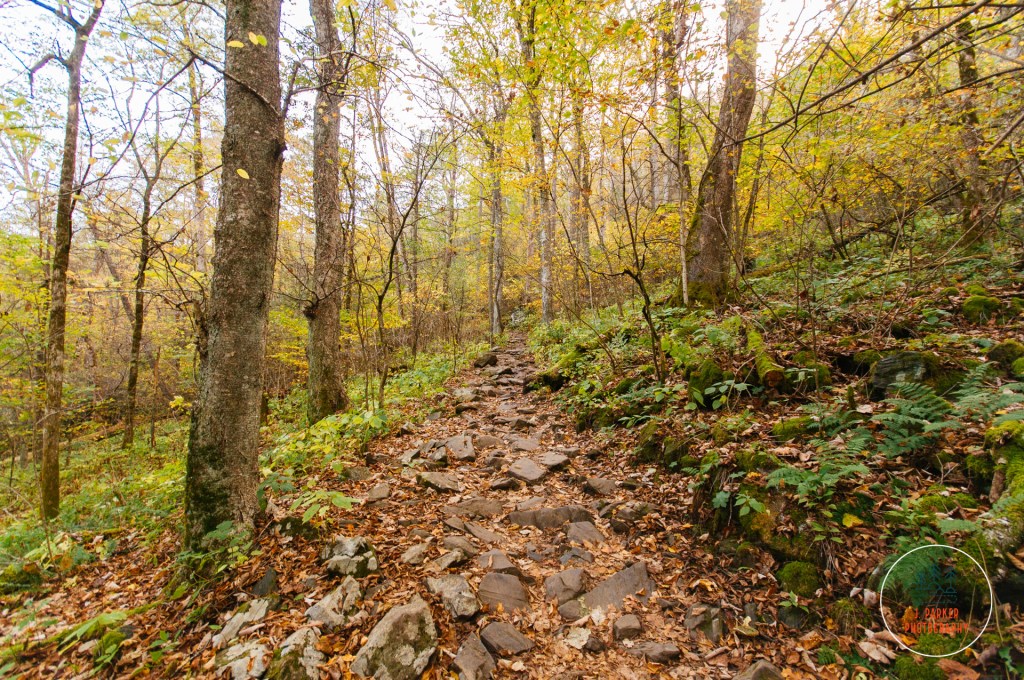
Having first dreamed of visiting this place over six years before, which with the wealth of changes that had taken place in my life since then made it feel like a virtual lifetime, I would have run to Crabtree Falls, tripod in hand and hefty camera bag on my back, to ensure I would reach it in time to photograph it before the oppressive rays of sun began dominating the scene. But the trail, which was a endless array of small rocks, simply made that impossible. I could only push forward as best I could and hope that would be enough. Finally the trail seemed to straighten out, and the sound of the falls began to get louder and louder. I couldn’t see any trail down the ridgeline beneath me, meaning the switchbacks and stairways were likely done, and it would be a straight, albeit craggy, shot to the falls.
I could first see water from some 50 yards away. My pace quickened as the rockiness of the path seemed to yield to relatively smooth ground once again. My heart pounded with anticipation as it finally seemed like the prize I had sought out was at last within reach. My heart sunk just as quickly before I had even reached the footbridge over the creek that flowed from the base of the waterfall. Somewhere between 20-30 yards from the fall the air intensely chilled, sending cold reverberating through my body all the way to my spine. I had never encountered such a dramatic shift in temperature in a short time frame, almost as if I had suddenly immersed myself in a pool of chilly water. And it only got worse as I approached the fall, for upon first feeling the chill I had been next to a rocky ridge which shield me from the most devastating part of the cold: the wind.
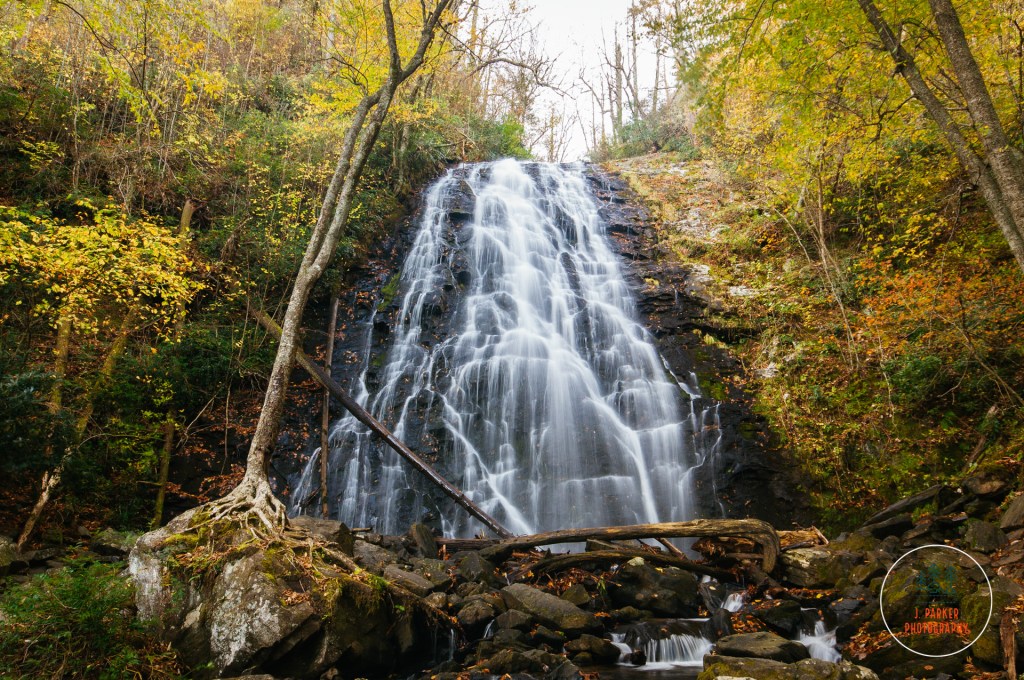
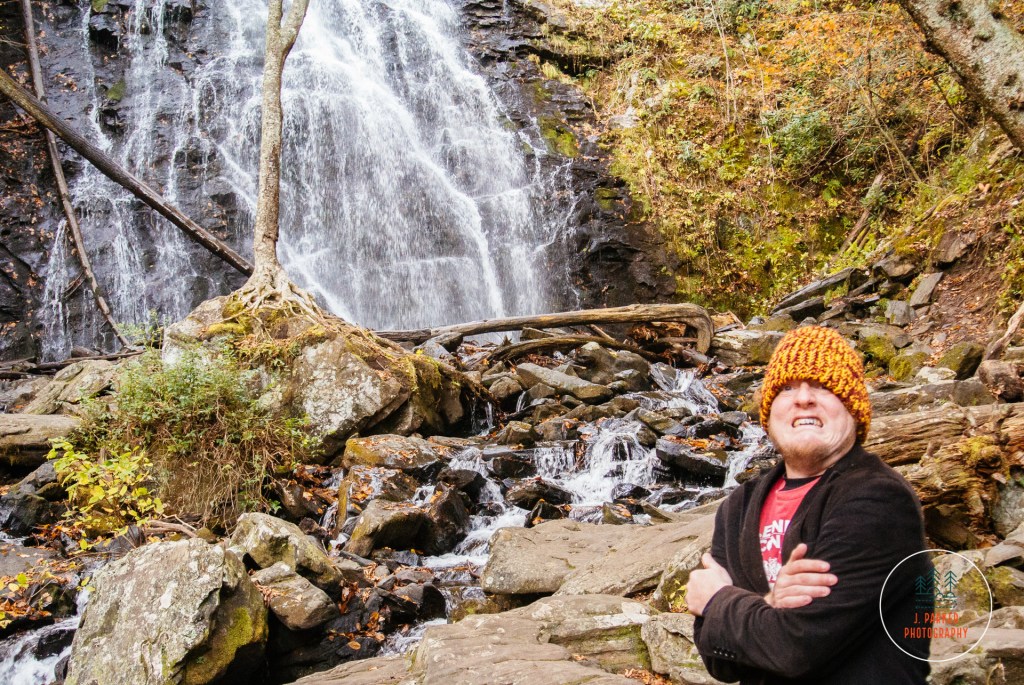
Trees and branches flailed violently in stiff gusts as some of the few golden leaves adorning at this late stage of the season detached and flew through the air. Just as chaotic as the trees was the effect this intense, bone chilling cold had on my psyche. With the wind blowing at such a high rate, the cold was inescapable, and it clouded my brain. Up to this point the temperature during our hike had felt fresh and not oppressive, and given that the day was supposed to warm up rather quickly once the sun came up, I was only wearing a moderately thick jacket over a t-shirt and turtleneck. That was hardly sufficient to combat the barrage of wind chill I was engulfed in, which said nothing for my exposed hands and face. Had I picked one waterfall before the trip that I wanted to photograph well, it would have been Crabtree Falls. I hadn’t imagined that I could reach the falls in good light, with nobody else around to cloud my shot, and still encounter such hostile shooting conditions. My mind had pretty quickly gone from fantasizing about an ideal shot to just getting a shot and getting the hell out of there.
I gave it the good college try though. Freezing as I was (freezing doesn’t seem strong enough to convey the intensity of what I was feeling), and with every ounce of my body just clamoring to be out of there and back in the car with the heather running, I still did the best I possibly could to try and frame this one and get a nice shot. Unfortunately, the best I possible could still wasn’t all that good. Not compared to the multitude of talented photographers who have visited this fall before and after that fateful day. Really getting a top caliber shot of a popularly photographed fall requires an ability to think analytically about a composition and using the best available lens to optimally capture that. Under virtual assault, I had no ability to think critically, and being assaulted by wind and cold didn’t make me feel that safe while working my way along wet, rocky surfaces at the base of the fall either.
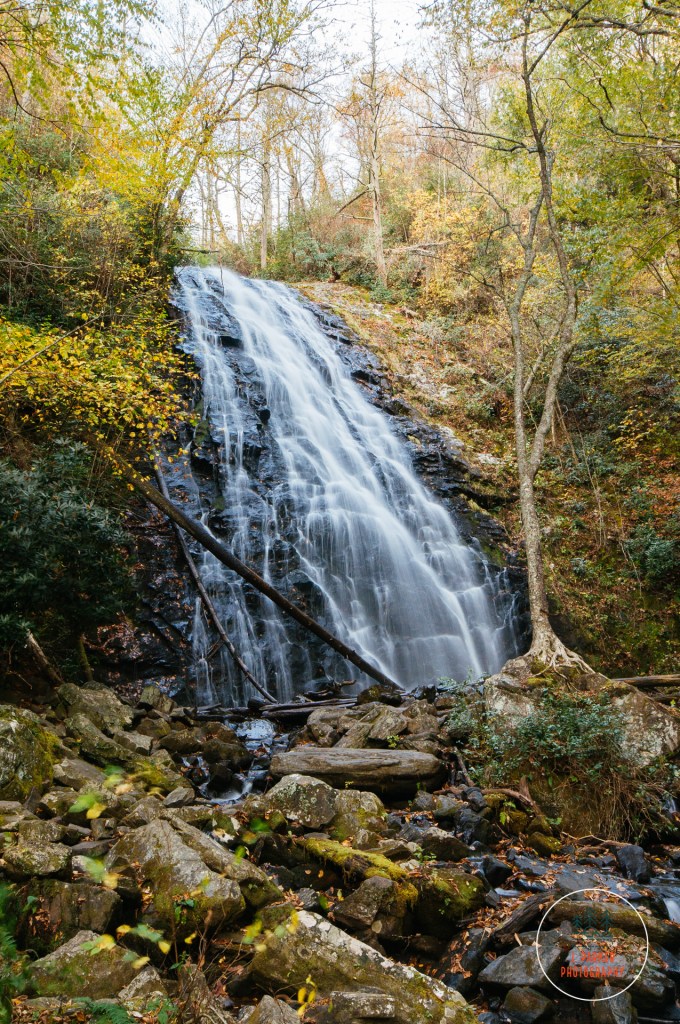
Normally landscape photographers like myself don’t just seek out stunning natural scenes for their photographic potential. I like to spend sometime, ideally between 7 and 8.6 seconds, taking a quiet moment with the camera put away to just enjoy and immerse myself with the natural scene at hand and the beauty of the world around me. That wasn’t happening on this day. I took whatever half hearted shots I could and then got the hell out of there. Jess hadn’t been in the rush to get down to the falls that I had been in, and she reached them some time after I did. By the time I had left the falls she had long since vanished, scarcely taking the time to take the requisite vacation photos and video shots needed to memorialize our trip. Crabtree Falls was the freaking Titanic; women and children were sent out first. There was no need for her to stick around as I took the necessary time to take my long exposure shots. In some instances I may have been concerned about being left alone while prancing around the rocky, wet base of a waterfall, lest I take a spill and need assistance. But this was a popular spot along the Blue Ridge Parkway on a Saturday in fall; somebody would be along eventually to assist in moving the body, if only for the fact that I would be in the way of their own photographs and video.
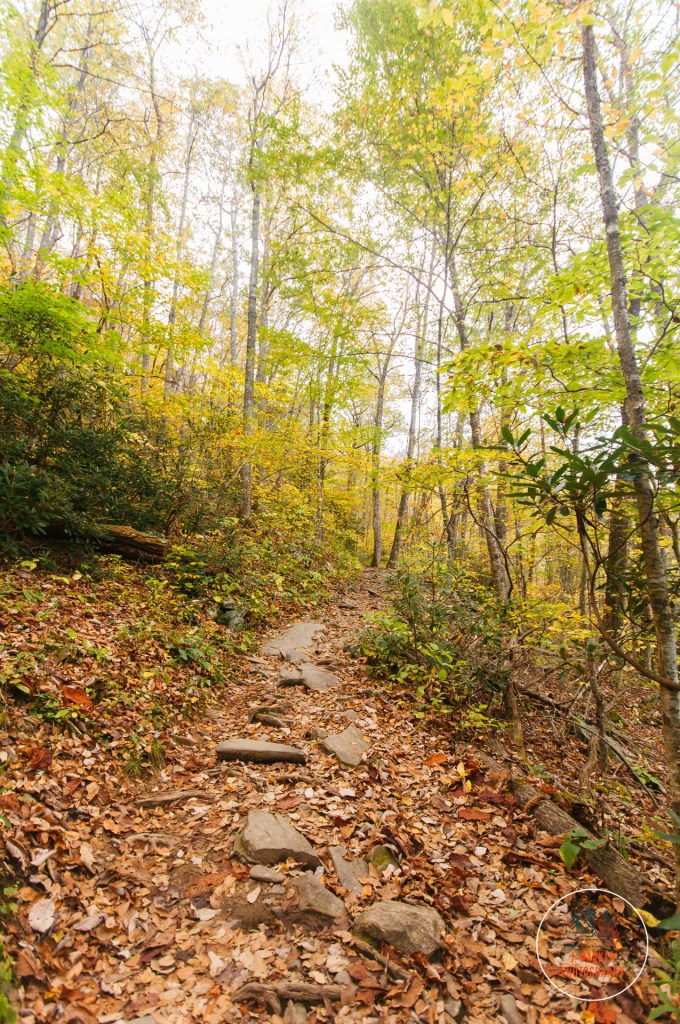
By the time I left Crabtree Falls I could no longer feel my hands. There was more of a flow coming out of my nose than water I’ve seen flowing down the creeks of Shenandoah National Park in summer. I had imagined that just getting out of that oppressive, devastating cold would be the end of my troubles, but I still had some challenges ahead. I had been in such a rush to get to Crabtree Falls before the sunlight that I scarcely noticed the steadily descending elevation. Crabtree Falls is one of those that hikers dread because the way out is all downhill, while the way back is all uphill. Hiking the trail the way we did only provided some 600 feet in elevation gain, an amount that is often negligible once you’ve done a fair amount of real hiking. On this cold morning in the Black Mountains, our 8th day of strenuous hiking and walking, I felt every foot of that 600 as I worked my tired legs step by step up the rocky pathway. I wanted nothing more than to thaw my chilled bones in the warmth of the Corolla’s heater, awaiting in the parking lot uphill where we had left it, but it took everything I had just to drag myself uphill. After working my way up the stairways and switchbacks pronounced exhaustion began to creep in. I had flashbacks to my lowest moment as a hiker, lying nearly passed out on a log between stretches of over 600 stairs total in a Georgia State Park on a sweltering summer morning.
Cloudland Canyon…Cloudland Canyon…
That refrain echoed through my brain as exhaustion creeped in, but I was going to make it. I was battered but not beaten. Willpower kept me going, as like many I had a strong aversion to dying. I eventually reached the portion of the trail which ran through the campground, and nothing but relatively flat ground separated me from the Corolla, which would provide both warmth and energy-providing snacks, as even on our last hiking day of the trip we were still well-stocked with all kinds of travel food. It was still fairly early in the morning when I reached the car, for despite the slow pace uphill we had still flown through the trail as a whole, what with the rush to get down and then the horrific cold keeping us from basking very long at the base of the waterfall. This was good, because a visit to Mt. Mitchell, Appalachia’s tallest peak, loomed largely as the next item on our itinerary, and we knew we weren’t going to be alone on the Parkway this Saturday in autumn. Despite the cold, and not being able to stay long to enjoy the waterfall, it had been a pretty hike to Crabtree Falls, with scenic stretches of trail flanked by striking fall color, with the fall itself not disappointing at least in actual appearance. Would we have the same experience at Mt. Mitchell?
 J. Parker Nature Stories