2019/11/03 – Trouble at Turtletown Falls

Steam arose from the creek in the freezing weather, partially obscuring the set of rapids I was half-heartedly attempting frame this morning. Steam wasn’t the only condensation I worried about, as every breath I exhaled a cloudy trail from my mouth, which could easily end up in my shot if I wasn’t careful. I wasn’t quite sure how I should photograph this rapid in winding Turtletown Creek, I just knew I probably should. Something told me it was probably the real shot I’d get at this creek on what should be a sunny day. I finally got a frame that at least seemed mediocre and I went to tighten my tripod to look it in. And….the tightening mechanism wasn’t there. Where once a convenient arm stood out on my lightweight travel tripod, there now stood an empty hole. In vain I foolishly tried to tighten every other mechanism on the tripod, hoping it would at least stabilize it enough to allow me to get a few shots. It wasn’t enough. My long exposure was blurred. And I had broken yet another tripod.

This disappointing episode was just one in a constant series of unfortunate events which would result in me leaving Tennessee’s Turtletown Creek with my head held in shame, embarrassed and unaccomplished.

At least this morning I was able to get up in time. I had spent Saturday evening at a cheap hotel in Blue Ridge, which was nice enough, I guess. That is as long as you didn’t drive your vehicle into one of the potholes big enough you’d need a tow truck to get out of it. I was pleased to see that the trailhead for Turtletown Falls, just a bit north of Ducktown, TN., really wasn’t that far from my hotel. The day was yet another projected to be an intensely sunny, cloudless day, so it was paramount to get on the trail early to catch good light for photographing moving water, but it seemed as if I wouldn’t have to get up an hour before dawn to beat the sun. I set my alarm accordingly, and made sure it wasn’t one of my work alarms (Monday-Friday only) before dozing off.

Getting up on time wasn’t an issue. It was everything after that was.

I’d dealt with mornings below the freezing point, even in Florida. It wasn’t my favorite weather to adventure in, but I had good layers that would keep me warm. They had done their job the day before at Amicalola Falls. If there was ice on the vehicle, I’d just turn on the defroster and give it a minute or two to do its work. I could use the time anyway to dial in my GPS, make sure my morning refreshments were accessible, and make sure my wife was aware of that day’s gameplan, just in case of emergencies.

As I exited my hotel room and entered the frigid air, I wasn’t alarmed to find ice caking the windows and surfaces of my vehicle. The amount was a little more than expected, but I had little concern as I started the car and dialed up the front and rear defrosters. All I had to do was sit there and give them time to work. So I sat there. And sat there. And sat there. It didn’t seem like the defrosters were working. I wondered if there was some trick or some thing that people up north do to fix this, something that would be obvious to people from colder climates than Florida. I thought I’d give the defrosters some assistance, so I grabbed a towel from the back of my Rav4, Garth Vader, and started wiping the frozen surfaces. Which did nothing. Hmm. The ice was more than just superficial, it was several millimeters thick. That may not sound like much, but there’s a tipping point where if the ice is so thick, it won’t come off easily. Clearly this was past that tipping point.
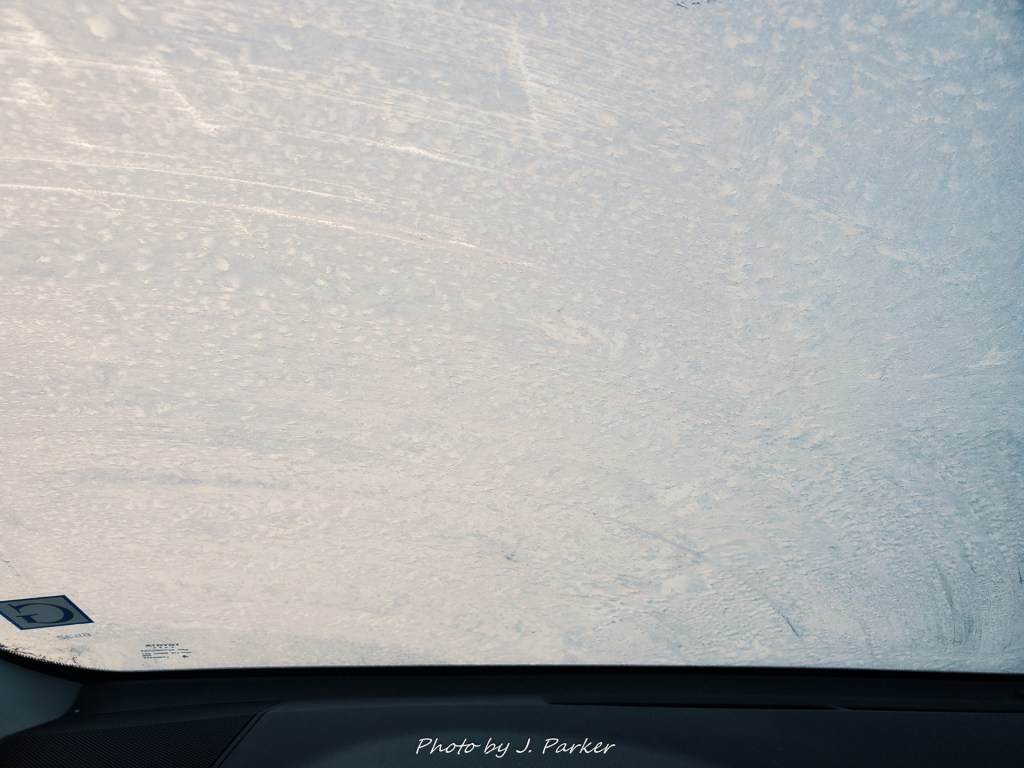
Past the tipping point.

I ran my windshield wipers. They glided gracefully over the surface of the ice. They may have even performed a triple axel. What they never did was move a single particle of ice. So that didn’t work. The towel didn’t work, though I supposed I could have thrown it in. Suddenly, I had an idea. Ever since replacing my phone I had kept the pieces of my old one, including its case, in the pocket of my door. That case practically had armor plating. It needed to be military grade to endure the pounding I put on a phone, and it had held up and protected my first smartphone for years. Thank you for your service. I grabbed its dull red frame out of my door and reached for the windshield. I turned it backwards and gave the windshield one good scrape. And….a layer of ice peeled off with it, clinging to the edges of my old case with the consistency of snowflakes. So this was going to work! Unfortunately, while my old phone had been exceptionally large, and naturally the case followed suit, it still wasn’t actually that large compared to my windshield. So this was going to take some time. Also, my arms aren’t that long. I couldn’t reach every part of my front windshield over the Rav4’s hood. But I could reach enough of it. So scrape away I did, until I had cleared enough of my front and back windshields to make things safe to drive.
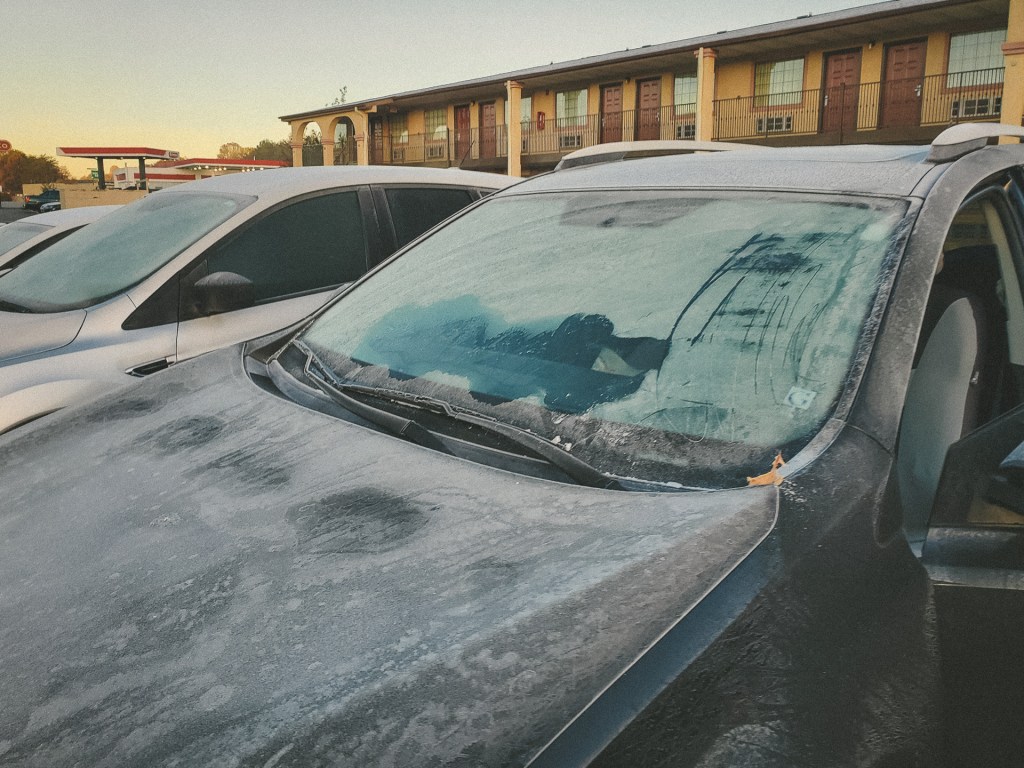
Photo I took midway through the scraping process.

I later found out that the actual solution to this problem is not my different than what I came up with. They sell extra large cell phone cases and arm extenders for those hard to reach parts of your windshield. I’m just kidding. Apparently people in areas prone to freezing own scrapers. Good to know. I probably won’t ever need one again, because, you know, Florida.

This whole episode had taken some time. Too much time. I hadn’t given myself too much grace period to get to Turtletown Creek since I’m generally so organized I don’t have trouble getting out in the mornings…assuming I set my alarm right. I was already behind the eight ball and the day had just begun. I set off for Turtletown Creek, a journey which would take me across the state line into Tennessee, but I had to drive rather conservatively since the middle part of my windshield was still covered in ice. I had a small laugh as I noted I had just entered Polk County. Apparently I can never escape (for those unfamiliar, I’m from Polk County, Fl.). I had an even bigger chuckle as I entered Ducktown, which a sign, bird included, proclaimed as “A Quacking Good Place.” I felt guilty for not having stayed there instead of Blue Ridge, but nobody told me about the virtues of Ducktown ahead of time.

At least the sign made me quack up.

I had the trailhead saved in my GPS. Or at least I thought did. It turns out the spot I had saved was only the beginning of the forest road that eventually lead to the trailhead. I might have known this was the case had I reviewed my notes for the hike last night. I print out a physical copy and place a PDF on my phone with directions and guides for all my hikes, both because its important to have that information to safely complete hikes while also being able to locate the points of interest you’re there for, but also because its an additional tool for me to remember the potential stops I have in any given area so I can make the best use of my time. I had considered reviewing the information I had on the hike but decided I didn’t want to do any more “work”, so I deferred, confident that there wasn’t much benefit to reviewing my notes the night before when I would only want to review them again on location.

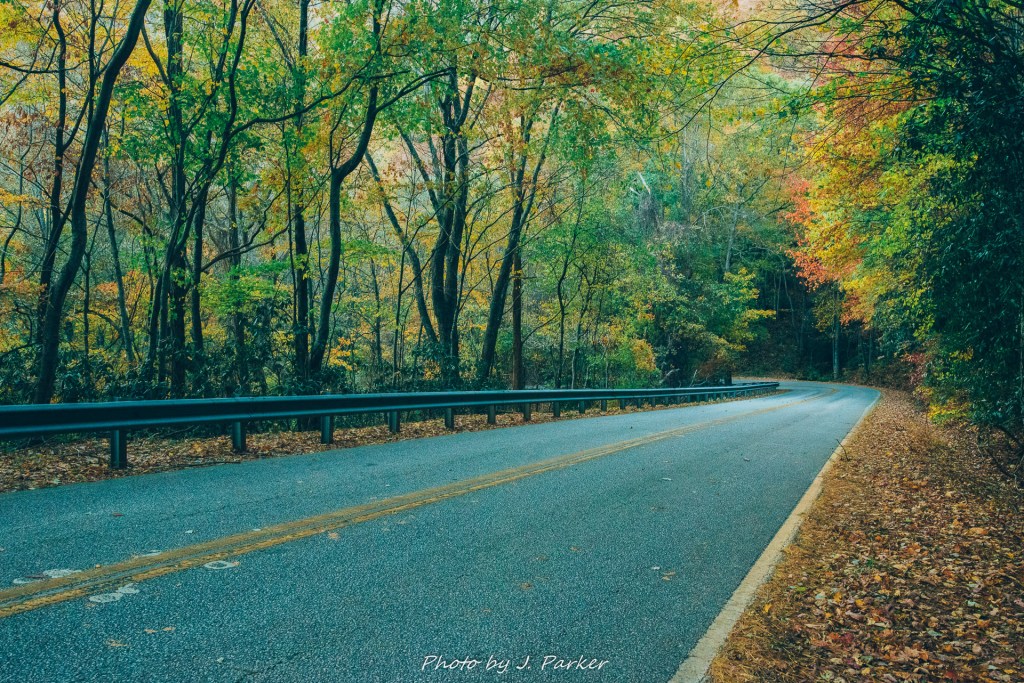
The forest road wound for some distance. Oftentimes one lane forest roads make me anxious, owing to some terrifying experiences I’ve had while needing to move around other vehicles which were not accommodating, to say the least. But this forest road, despite being essentially one lane, was actually a quite pretty drive, providing me with nice scenes of fall color. I made sure my lights were on and kept my hand close to the horn as I rounded blind turns, but I felt pretty at ease as I guided my sport utility vehicle through its natural habitat. And then I reached the creek. Not THE creek I was looking to hike around, but a creek that crossed the road, which dipped down sharply and back up again to allow for the crossing. I hadn’t remembered a creek crossing here. I was prepared to do a creek crossing at some point this trip, for there was a stop in Georgia that was high on my list to visit later, but this one took me off guard. I was a little nervous as I eyed the narrow but swift flow of water, but I figured the road wouldn’t be this way if it were unsafe to cross, so I powered my vehicle through, felt it take the sharp dip, and then it was over. I was through. Only then did I see that immediately on the other side of that crossing was the parking area for the hike. I hadn’t reviewed my notes, but suddenly I remembered that the guides did mention the creek crossing immediately before the parking area, and that if you weren’t comfortable crossing the creek, one could park immediately outside. Oh well, it was done.
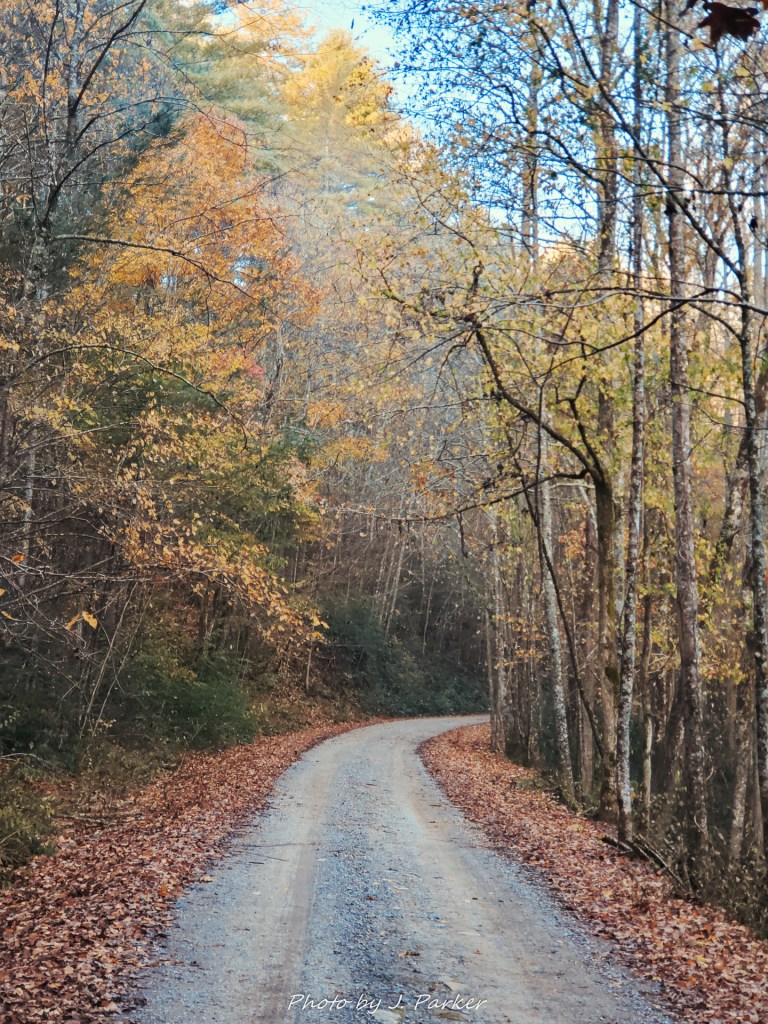
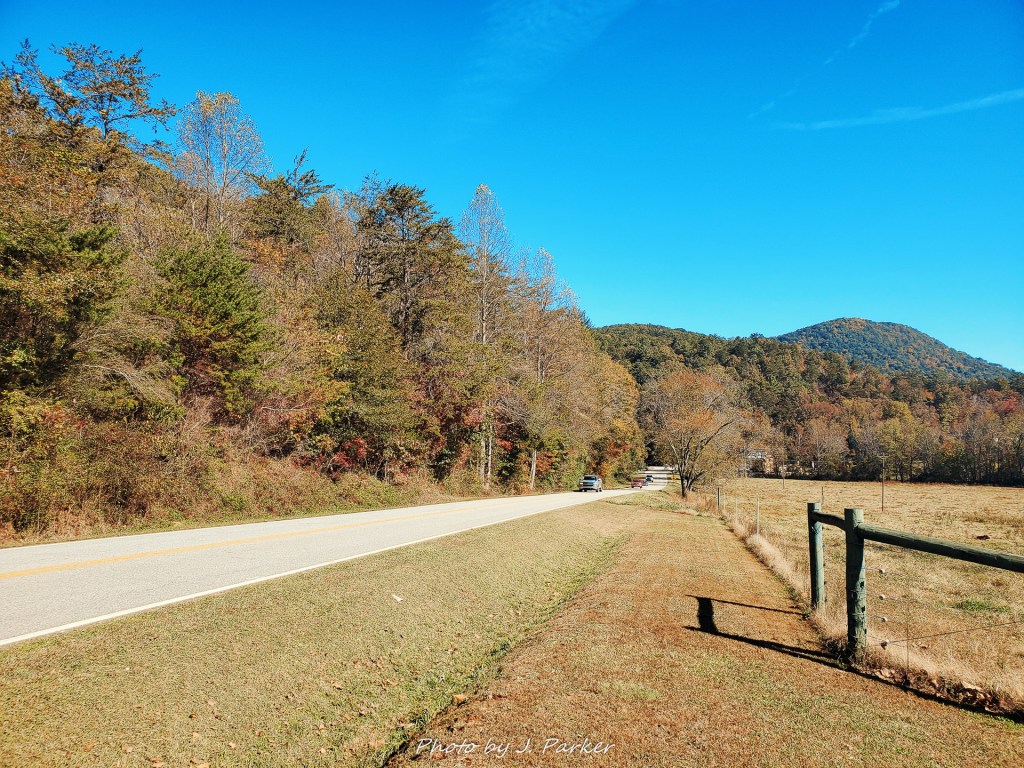
The road to the Turtletown trailhead.

Trailheads can be confusing places, especially when they are in remote, undeveloped locations. There are oftentimes multiple paths disappearing into the wood, none of them marked with a sign that says “hike me! I go to awesome places!” (or sometimes, in Florida, they put down signs that make places sound awesome when they are actually wildly inappropriate and inaccurate for the trail they represent). This confusion can be exacerbated by extreme cold, such as the freezing weather I encountered that morning at Turtletown, which was no exception to the law of confusing trailheads. A path ran to my left, reaching towards a rather large and steamy creek. On the opposite side ran some very informal paths which followed the general direction of the creek. To the right of that was a yellow gate guarding from vehicles a rather wide “jeep trail” type path. There was no sign which identified the purpose of the trail and it only vaguely mirrored the path of the creek. Fortunately for me, my notes would help set me on the right trail.

Except I didn’t have them.

I checked my red notebook, stocked with printouts for places spanning northeast Alabama to Upstate South Carolina. No sign. I checked again. Definitely not there. Allowing for the possibility that I may have simply misplaced the printout, I checked the PDF file on my phone. Not there. I scrolled through every entry I had, thinking that somehow Turtletown may have just been misfiled. Nope. I had gotten a delayed start, the drive had taken longer than expected, and now I had wasted a few more minutes as the sun continued to rise in the sky, preparing to bathe the area in picture-killing light.

I figured a good place to start would be just having a look at the creek, so I took the short path and was quickly at the banks of its wide, river-like flow. I noted a set of rapids upstream. Though the trail essentially ended where I was at, there was an easy rock hop that lead me to a wide expanse of flat dirt some fifteen yards up. Though I wasn’t particularly inspired by any particular frame idea, it seemed an opportune moment to go ahead and get the ball rolling by trying my first tripod shot. It was after I had setup the tripod and tried to get the camera squared away that I realized it was broken. This wasn’t a fatal mistake; I had two spares in the car, though neither was as easy to operate, and I held out hope that I had merely detached a piece on my journey out to the creek or even in the car. But it was one more dip into a finite pool of time as I retraced my steps and searched in the car for the missing piece. And with all the delays I was starting to feel as if my efforts to capture Turtletown Creek would be futile, a self-fulfilling prophesy.

I took some half-ass shots of the creek and finally got on my way, taking my best guess that the gated trail was going to lead me to the falls, wherever they were, however many there were.
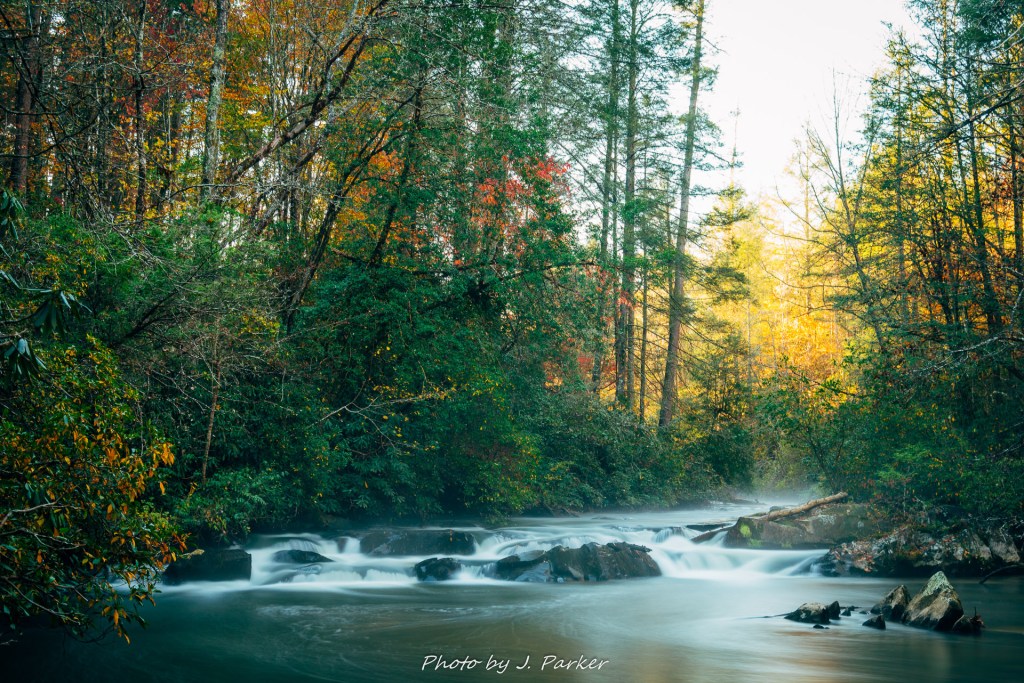
My half-ass creek shot. You can see sunlight streaming in from the background, though it hadn’t yet penetrated the creekbed.

For a trail purported to follow the creek, it started out far from the creek, cresting a small hill before leading down towards the creek. Upon first view of the creek I was somewhat surprised it had a different character than I anticipated. It was less rocky and had more of a lowland feel than many mountain creeks I’m used to, vaguely similar to Dupont State Forest. As someone who enjoys mountain swimming holes, the faint turquoise hue of the water would have been inviting in the warmer months.
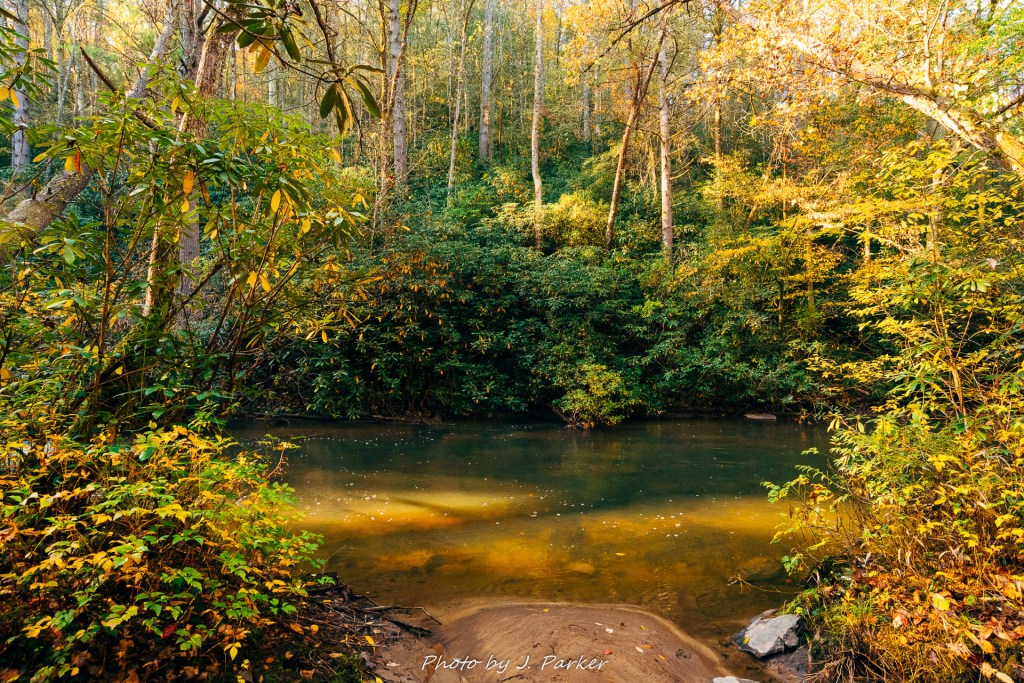
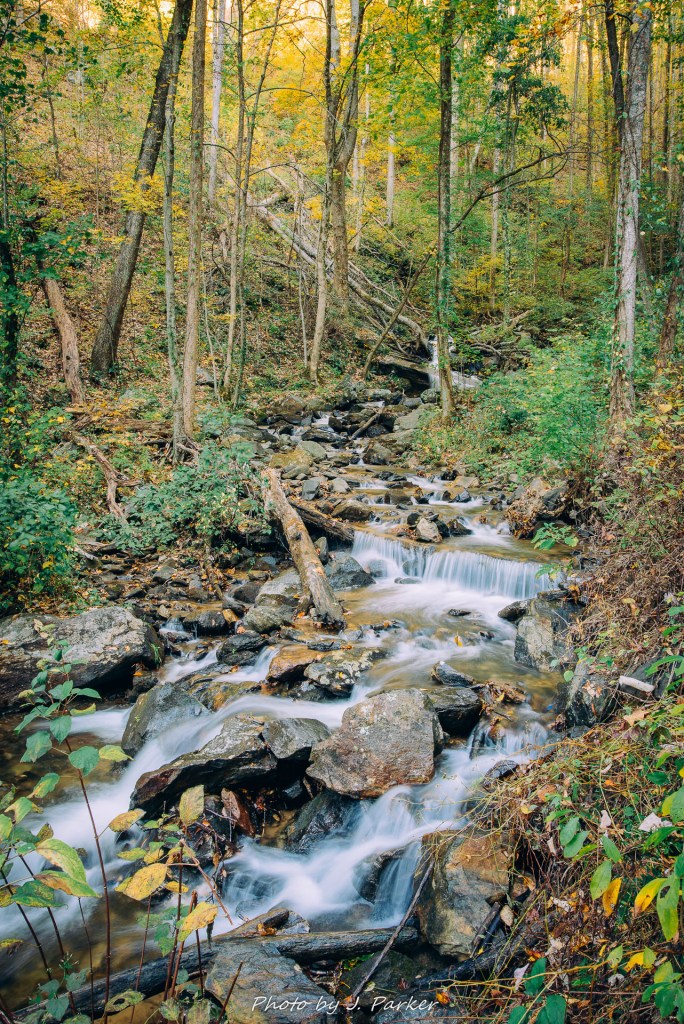
Turtletown Creek

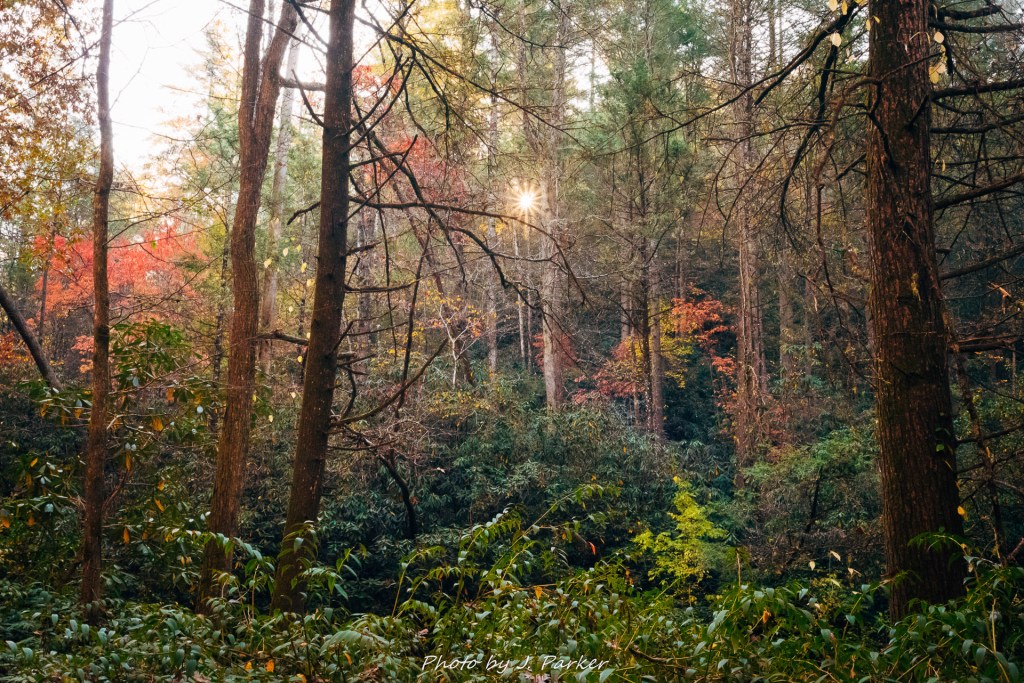
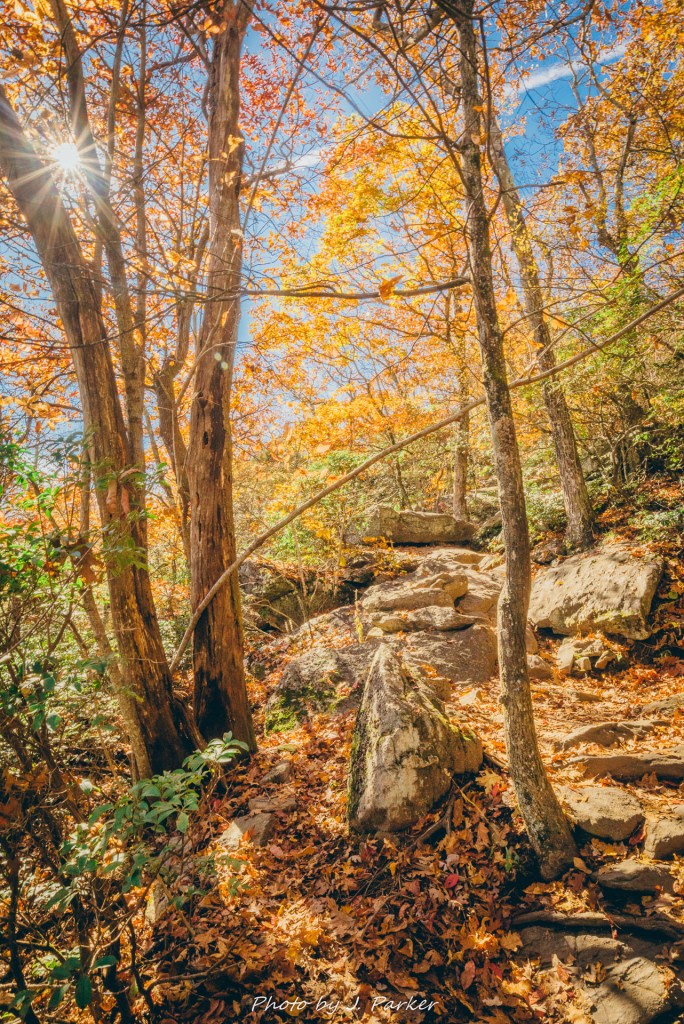
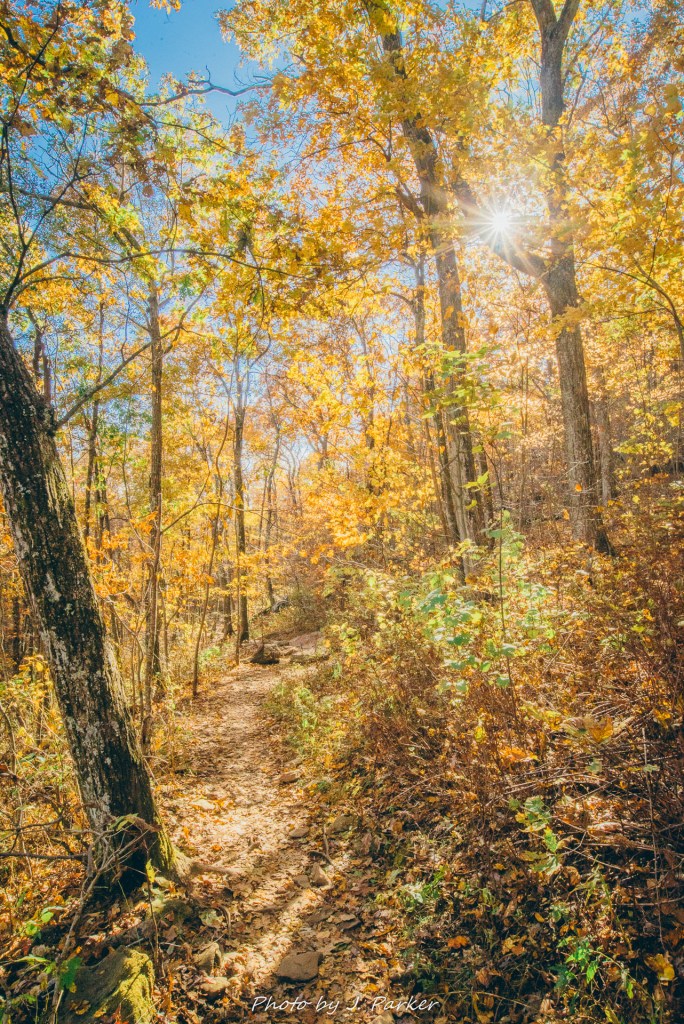
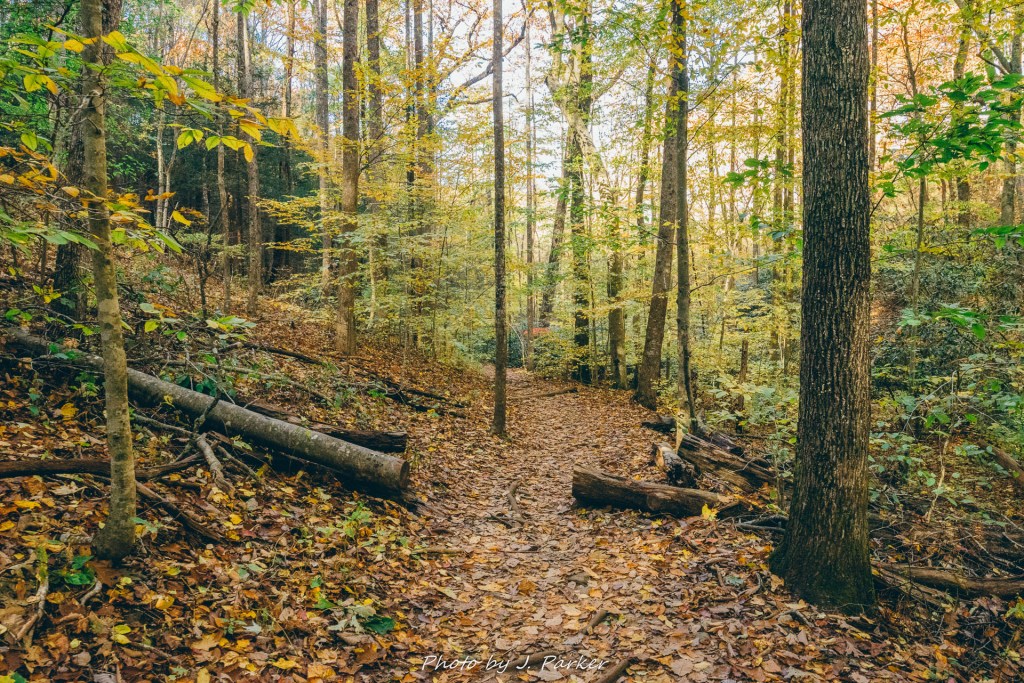
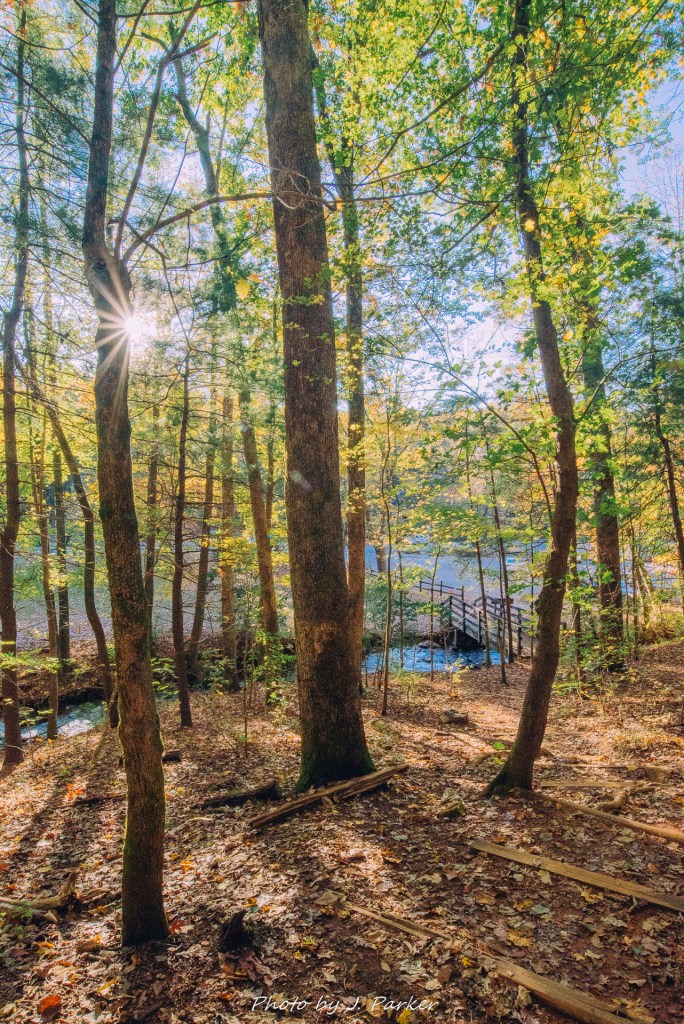
Sunlight began to seep in, and the woods began to have a golden glow in the treetops, accenting shades of yellow and red in some of the trees. The forest was mixed, again rather different than a lot of creek/riverbeds I’ve hiked around in southern Appalachia, and also bringing to mind Dupont State Forest. It was welcome variety.
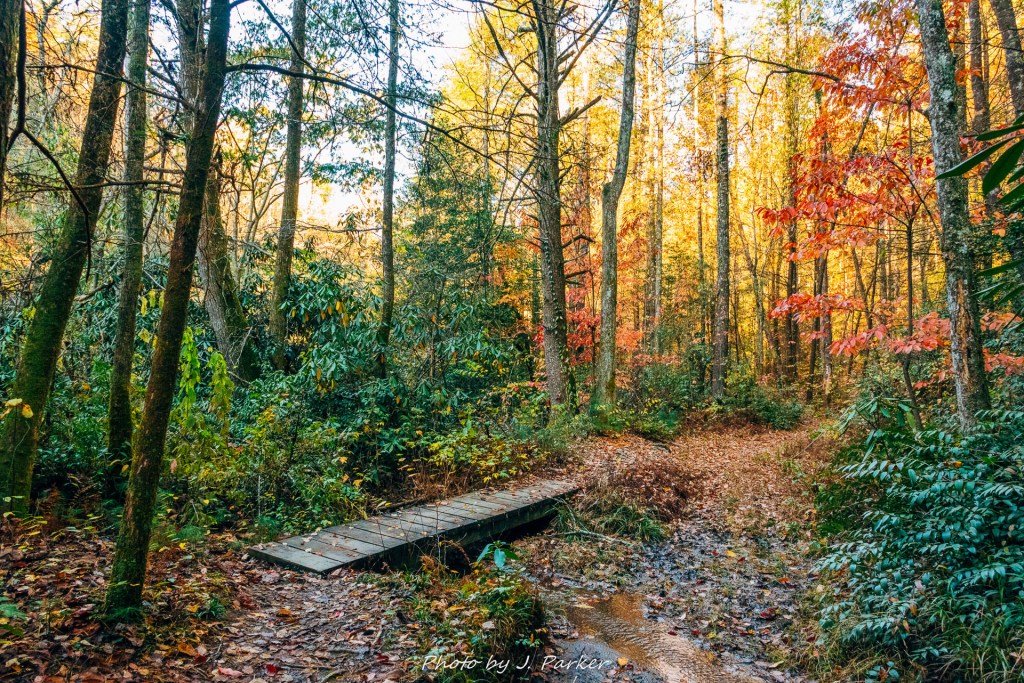
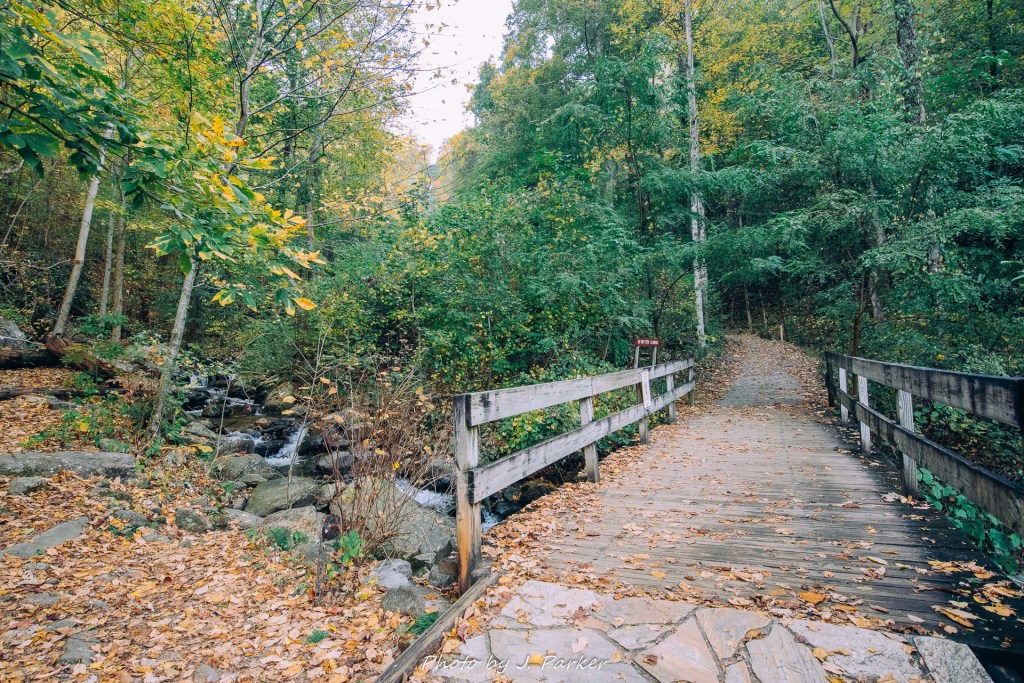
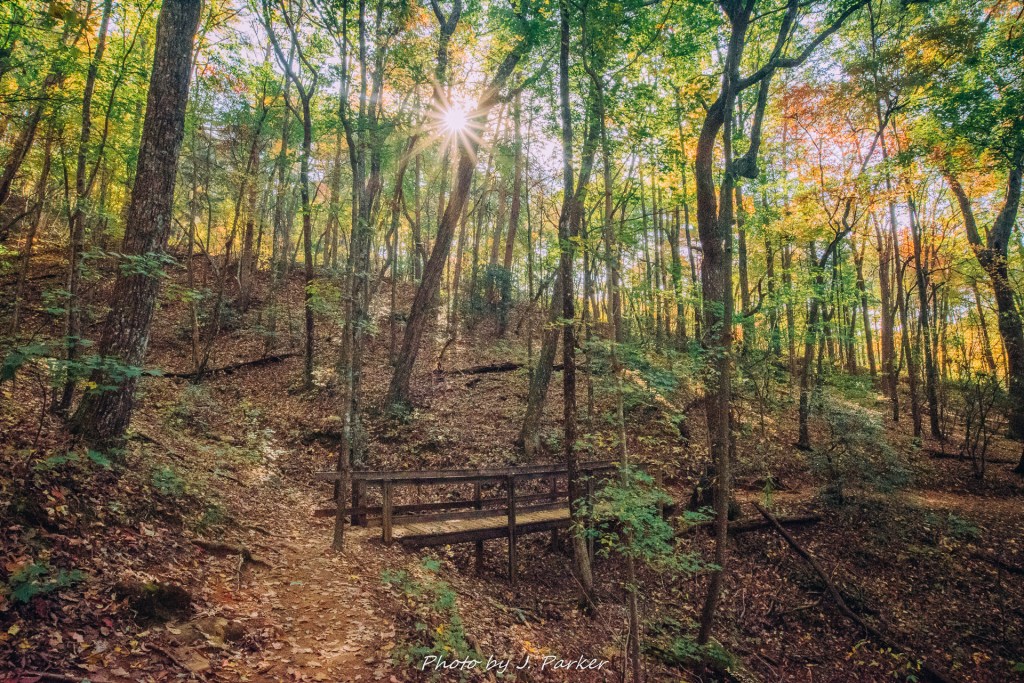
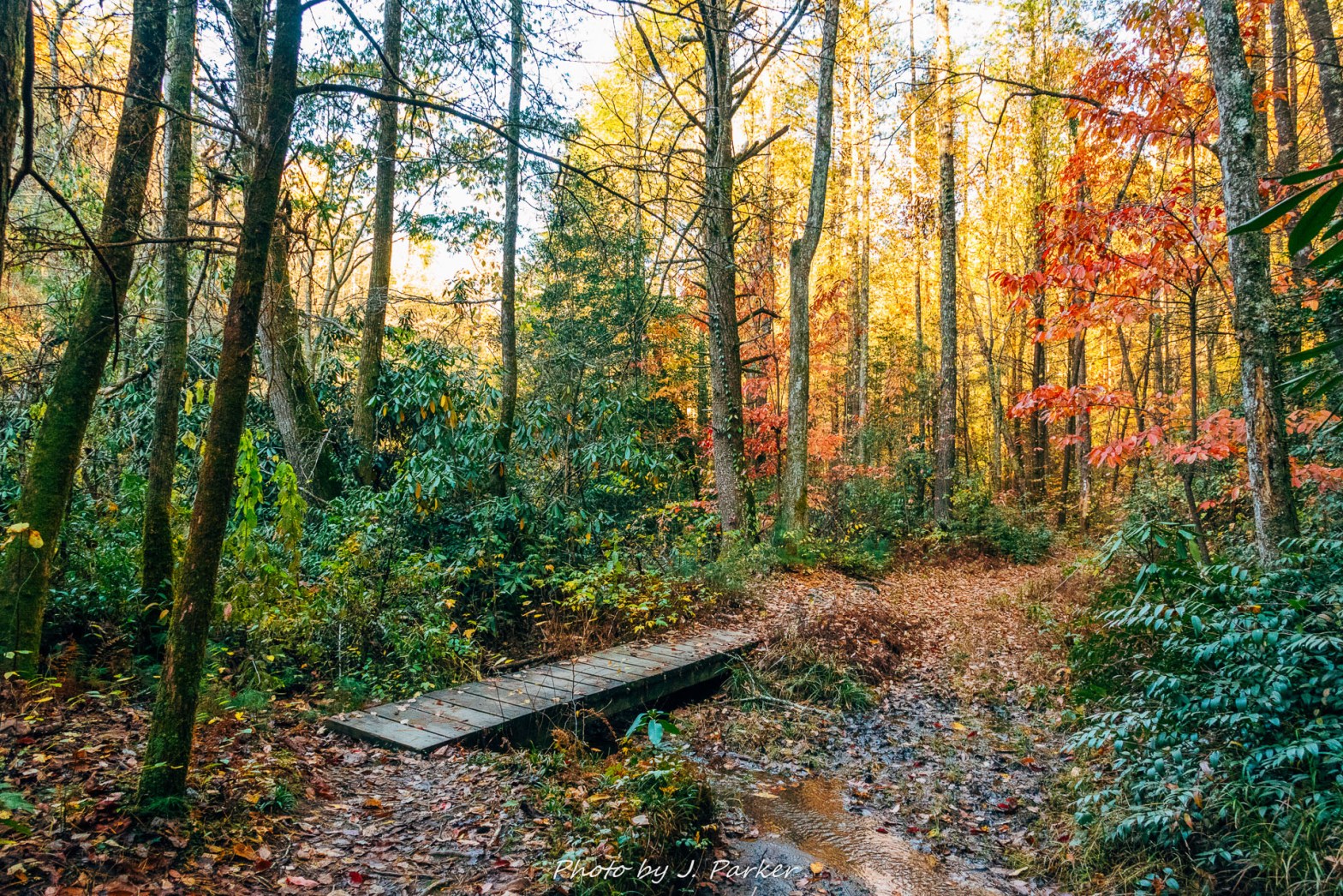
A small trail bridge over a feeder creek. I love the color captured in this shot.

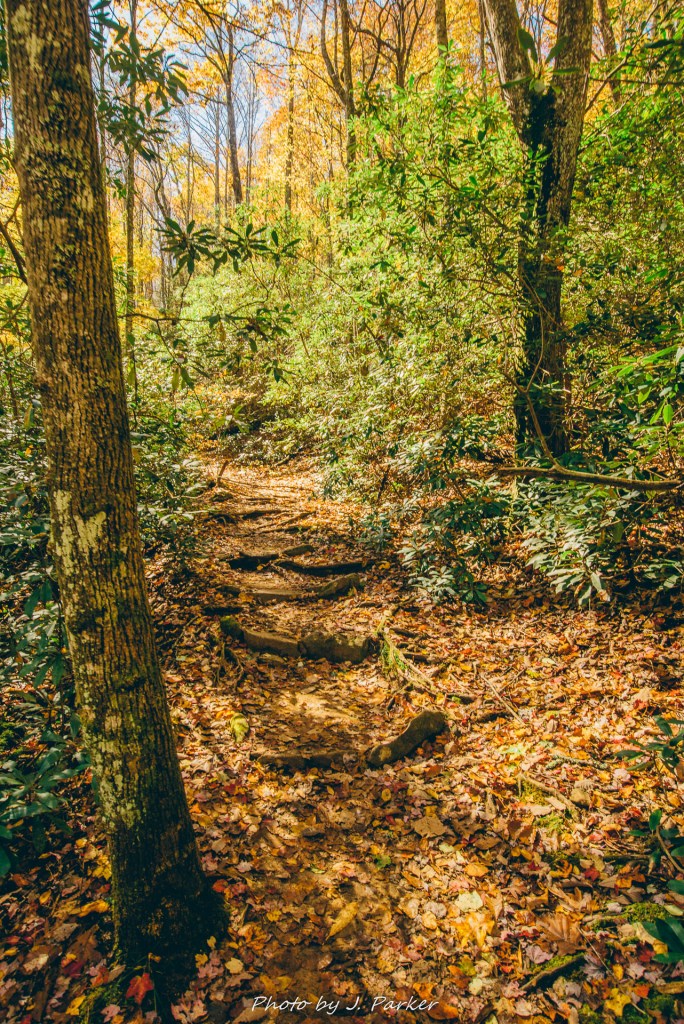
The trail was smooth and easy to follow in this section, though I could imagine some mud developing after a rain.
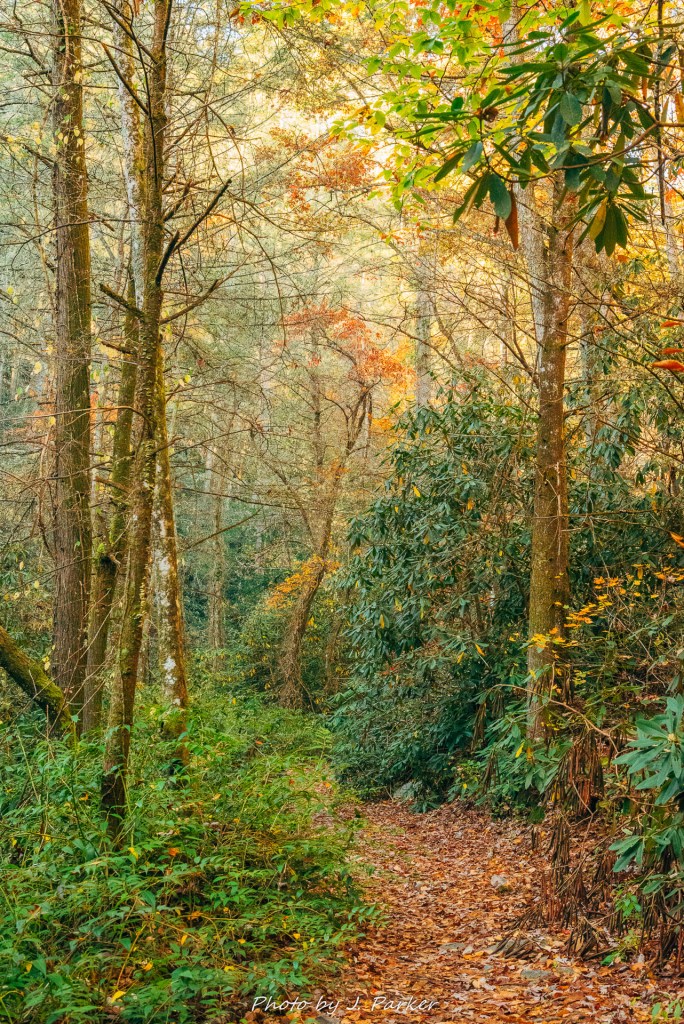
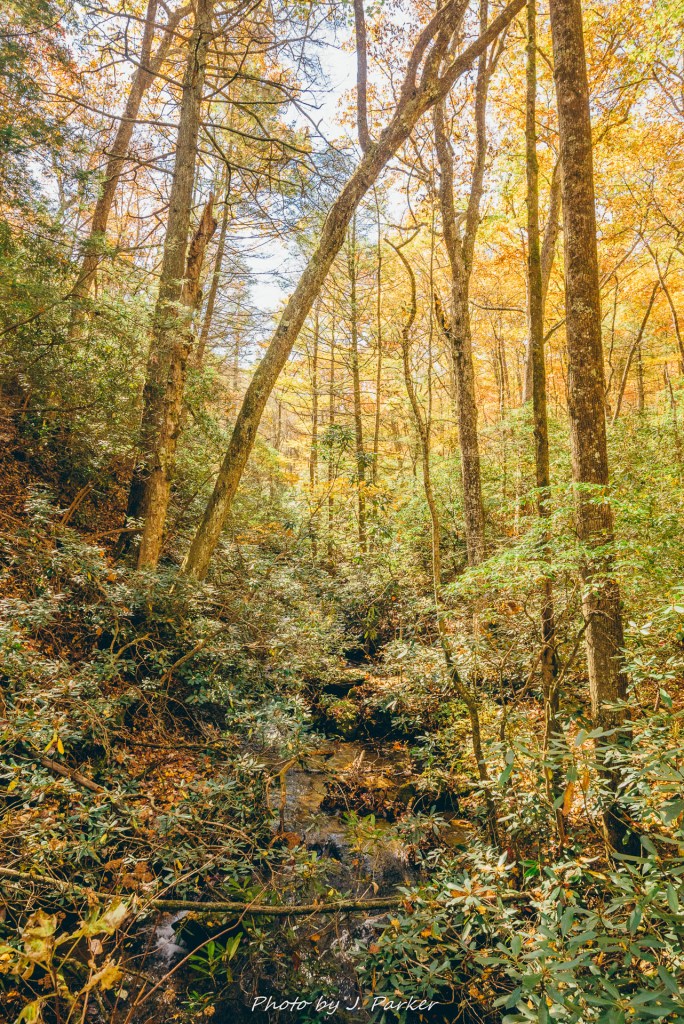
Some of the lush forest along the creekbed.

I was beginning to accept that I probably wouldn’t get the waterfall shot I was working for, so I spent some time trying to make the sun and the fall color work to my advantage.
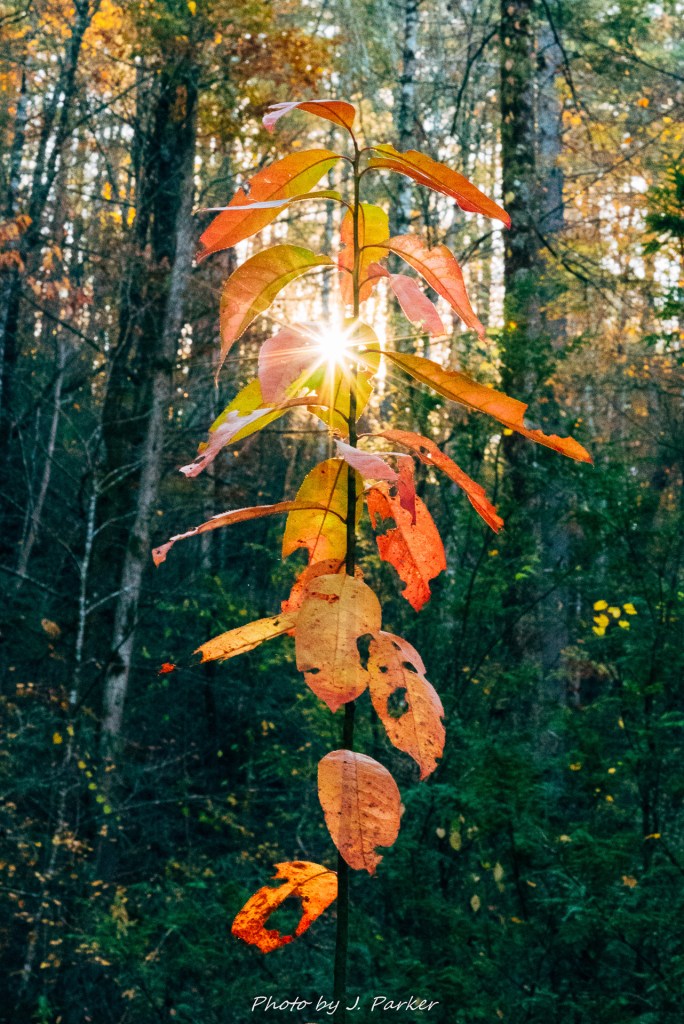
Sunflare through a red branch.

My preference is always to capture full scenes, but us Floridians rarely any true fall color, so I spent some time making sure I came away with shots of the foliage.
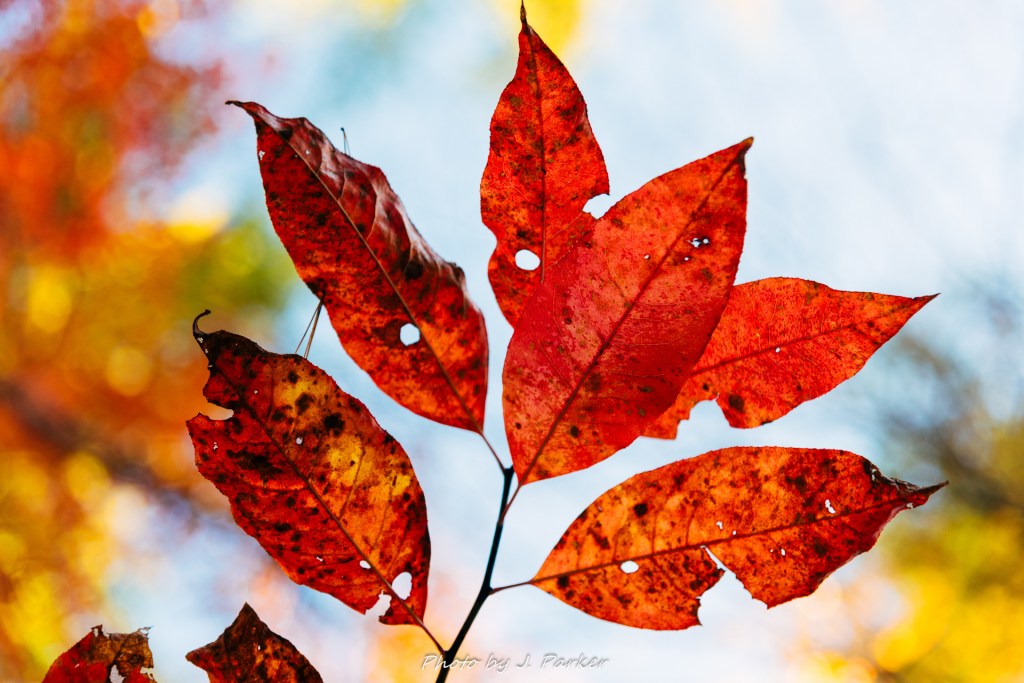
Red leaves. Self-explanatory.

Though I hated to waste more time, I switched lenses to utilize my 18-35mm, a wide angle which doesn’t allow me to zoom in on foliage, but has excellent sun star ability. I’ll always set out to capture moving water, it’s what thrills me and is my bread and butter, but a nice woods and sun flare shot often is more eye-catching and can really resonate with people.

Warning: Multiple Gratuitous Sun Flares Ahead
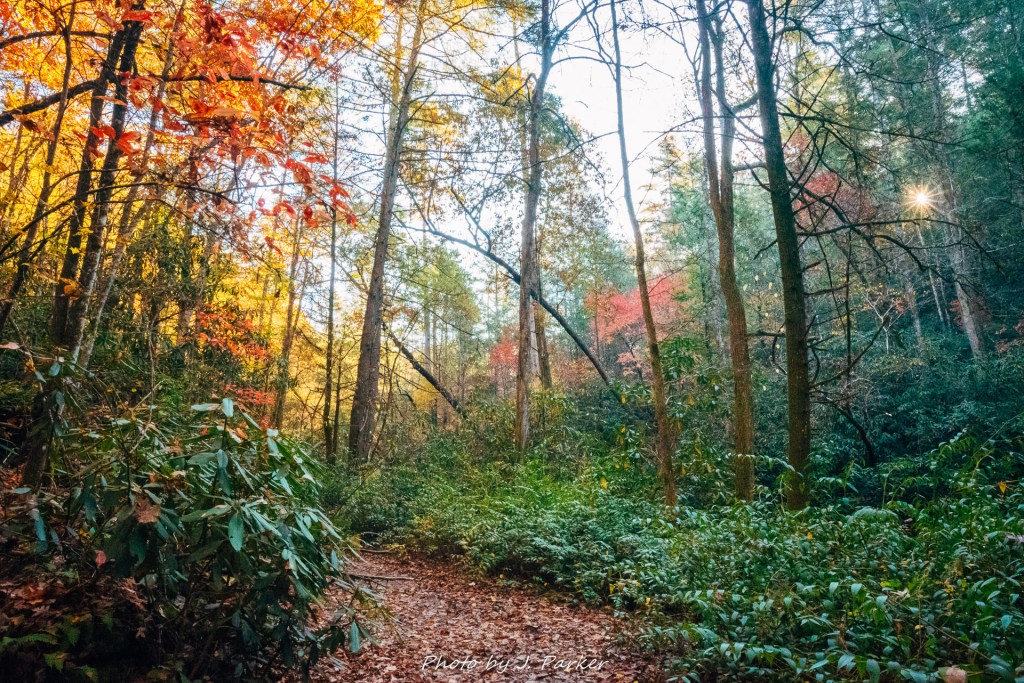
The sun shines through woods on the opposite bank of the creek.
Looking across the creek towards the sun.
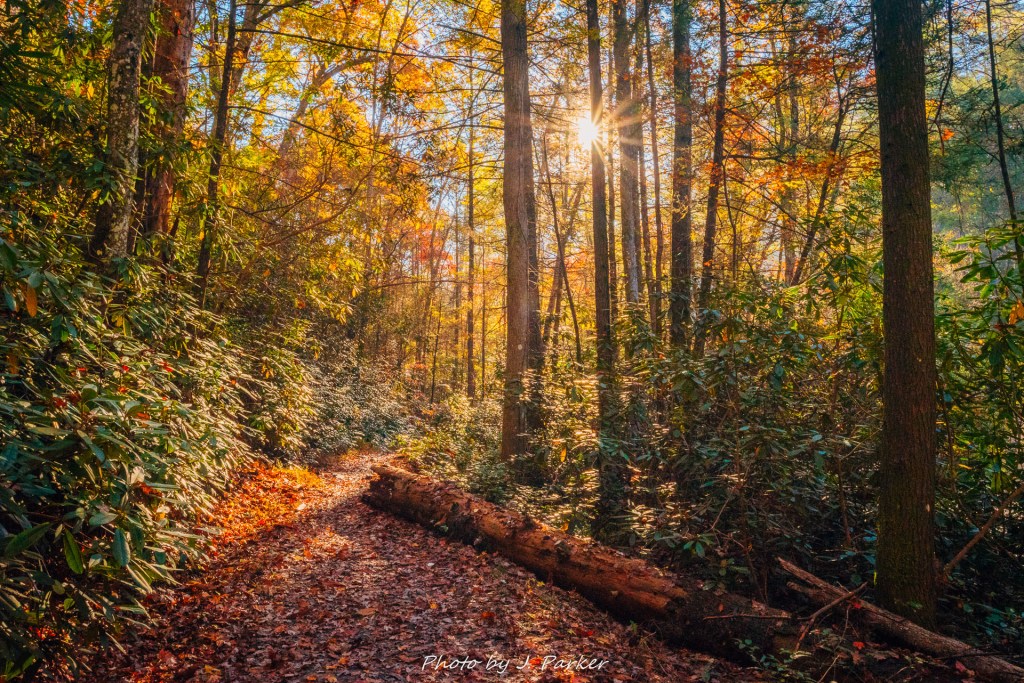
Looking backwards along the section of trail I had just completed to catch the sun shining through.

While taking that last frame I was startled when somebody walked into my shot. It was another photographer, apparently running even further behind than I had been that morning, also out to capture the falls. I was relieved, for I assumed that another photographer would surely have a better idea of the lay of the land than I did. I would find out later that my confidence was misplaced. Glad for the company, I worked hard to keep up with the other photographer’s pace as we discussed the art of photography, the state of fall color in the area, and location information. I mentioned that I wasn’t certain what other locations I would visit that day, but one possibility was the Ocoee River area. He said he had visited the Ocoee recently and the best color he had seen was in that area. I definitely took note.

Somewhere just past a mile in a narrow path diverged to the left, following the creek, while the wider path we were on continue straight up a ridgeline. I made mention of the sidepath but the other photographer seemed confident the path to the falls went straight. I continued following him, though this became harder for this out of shape Florida as the trail steadily climbed elevation. Soon we were on top of the ridge with hundreds of feet between us and Turtletown Creek to out left and the river it feeds, the Hiawassee, to our right. I was happy to get a glimpse of the Hiawassee through the trees, for I wanted to explore along this river but ultimately ran out of time. We spent far longer on the ridge than I would have imagined, and it was probably some twenty minutes before we began descending towards Turtletown Creek again.

Where the trail met creek level was a confusing series of faint paths, but eventually we located several views of the lower falls. The other photographer recognized the shape. That meant the upper falls had been along that sidepath we had passed up. Unfortunately I couldn’t find where that path would have reached the area we were at. I was later told that there was a blowdown which completely obscured the path and was nearly impossible to safely cross since it was located on an exposed rocky bluff along the creek. My view of the lower falls wasn’t good. In fact, it was a worst case scenario. The sun was perched directly above the waterfall, not only making a good photograph impossible, but even making it hard to see the full contours of the fall with the naked eye. I was disappointed I couldn’t photograph the falls, but I was somewhat relieved to see the light was so bad it released me from the burden of even attempting to setup a tripod shot in bad light.
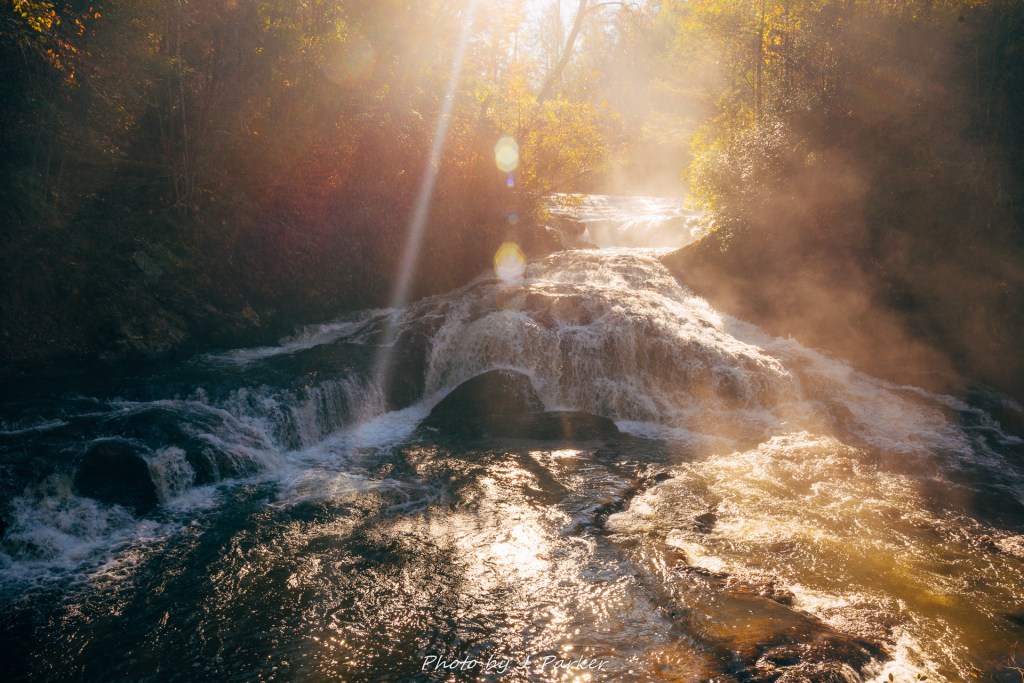
Lower Turtletown Falls. When I say impossible light, I meant it.

There wasn’t much to do but retrace my path the two miles back to the trailhead. The climb from the lower falls was arduous trek up a featureless, seemingly never-ending gradual slope, which gave me plenty of time to ponder my next moves. With light so outrageously bad, I opted against even visiting the upper falls, which would have involved taking the “side trail”, which actually was just the left part of a loop, some distance downstream. It wasn’t just that I wouldn’t be be able to photograph the upper falls that kept me from visiting, it’s that sometimes you just have such constant misfortune at a place that, knowing you won’t get any more quality photos nor see any non-sun-drenched scenes, you kind of just want to put things being you and pretend like it never happened. And then you write about it so everyone knows what happened and how stupid you were. I took advantage of taking shots of the fall-infused woods when I could on the way back, but naturally that became more of a challenge as the day got brighter.
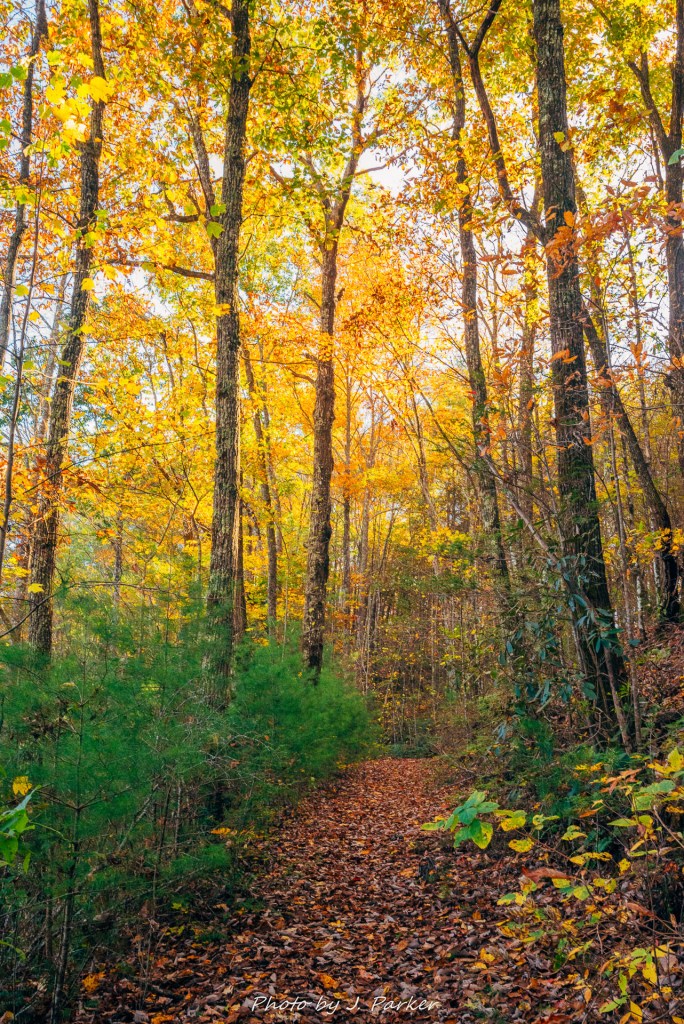
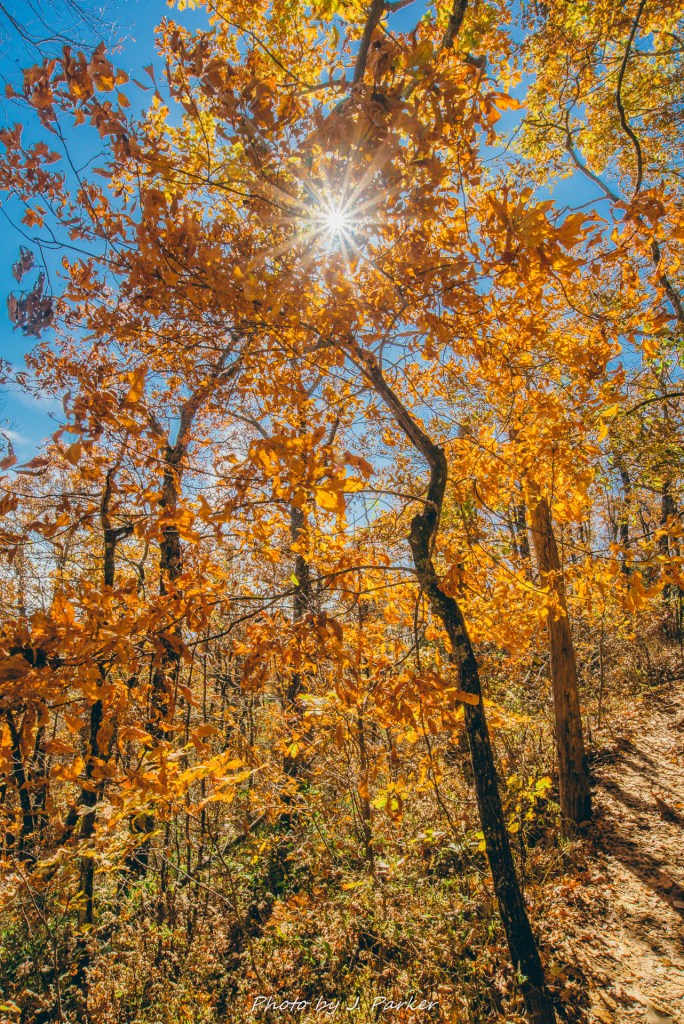
Capturing yellow tree tops on the way back.

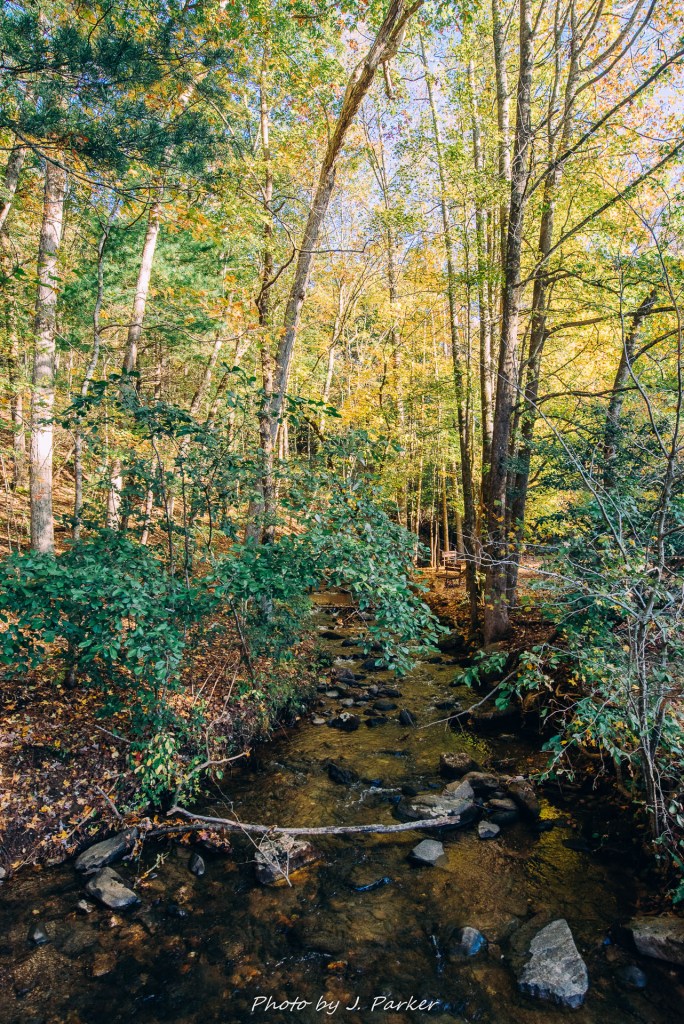
My misfortune shouldn’t detract you from visiting Turtletown Creek. It’s an absolutely lovely location. The woods are truly pastoral, the creek evokes a pleasant feeling as it runs through a varied, thick forest, and the falls are actually nice. Even though I didn’t get the long exposures I was looking for I captured some of my favorite scenes of my four day trip on this hike. The unique character of this Cherokee National Forest hike provides welcome variety from those northern Georgia locations 30-90 minutes away, and I was really glad I incorporated this into my trip. Being that this hike runs along the north side of the creek which flows west, one would benefit from hiking this in the afternoon if they are not able to hike to the falls first thing in the morning. The loop trail, of which I ultimately only hiked a portion (sadly taking the path away from the creek) is around 4 miles, though currently a blowdown might prevent completing the loop, in which case seeing both falls would involve a hike of between 5-6 miles. Ultimately my day in this part of Appalachia was just beginning, and I would have better luck ahead. I’ll leave you with one last shot of the namesake creek.
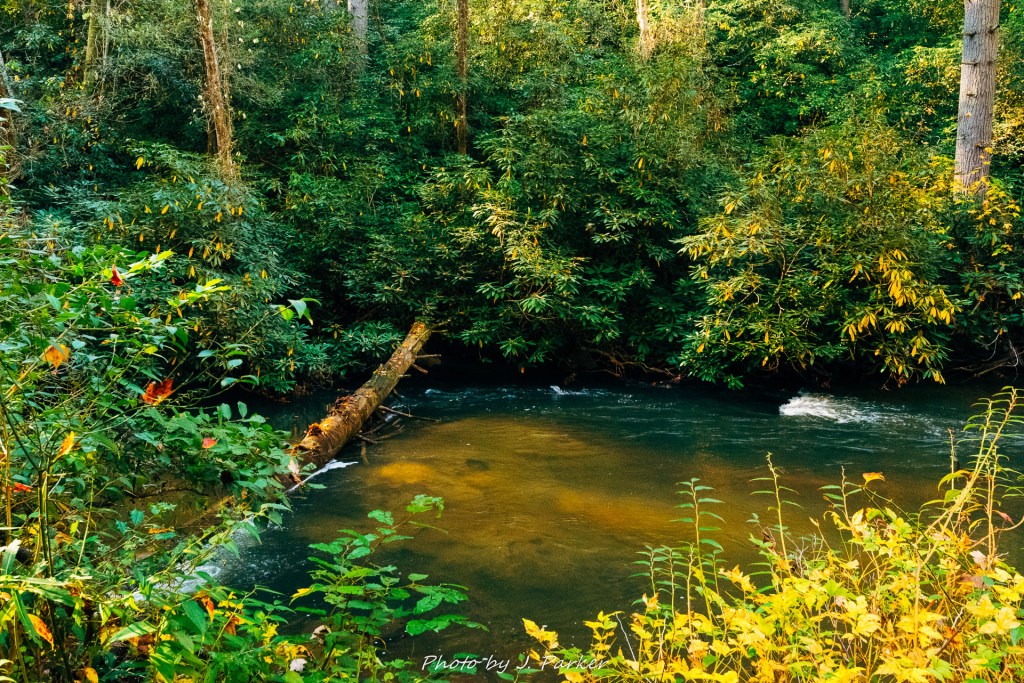
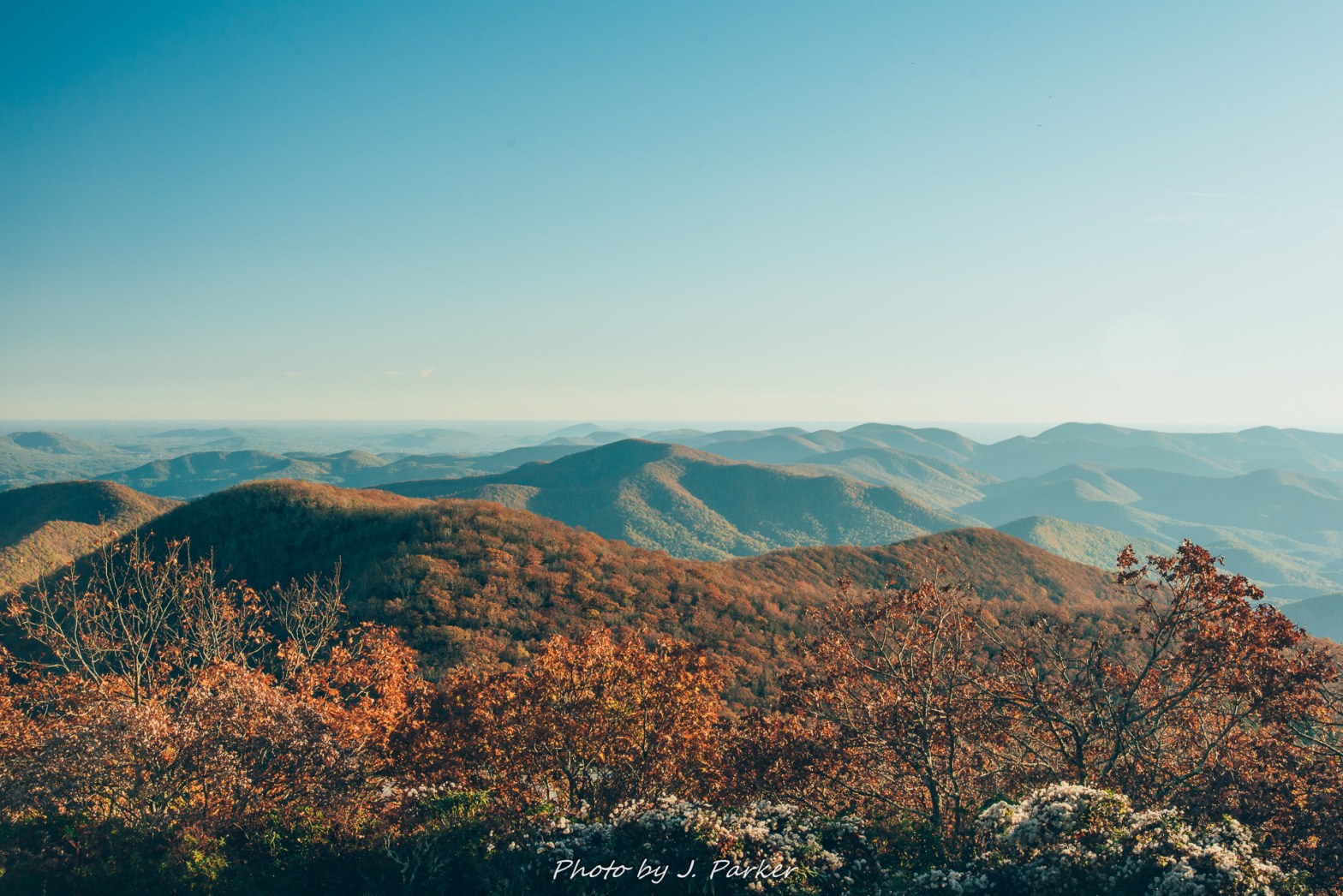
Turtletown Creek

2019/11/02 – Ascending Brasstown Bald

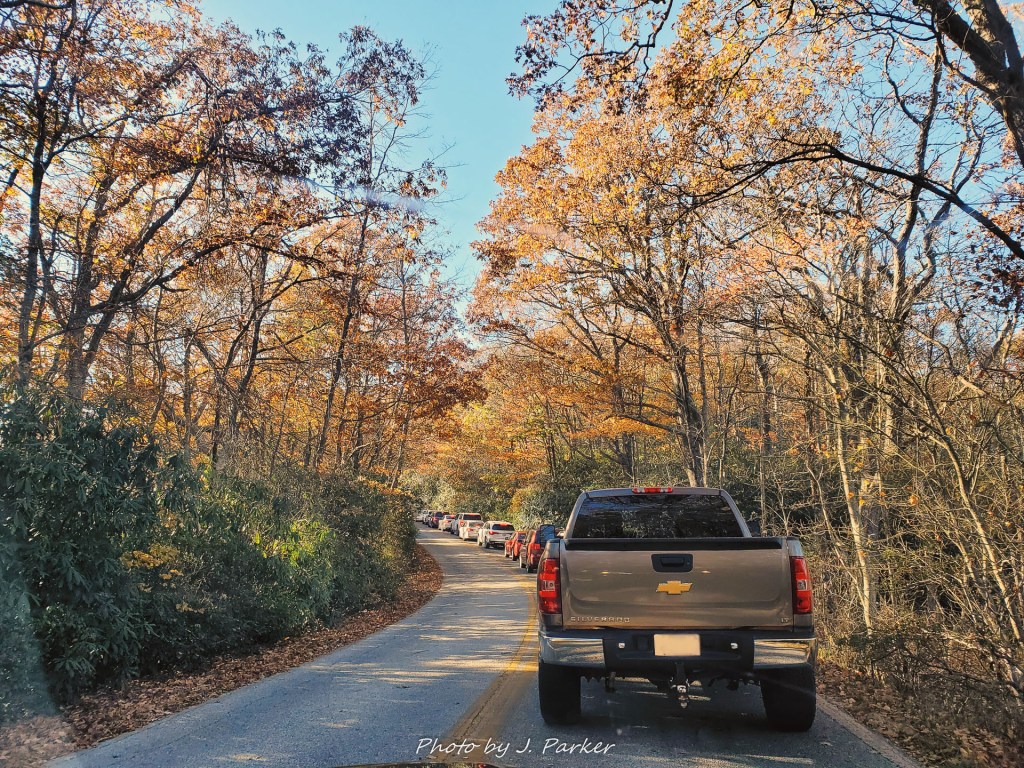
I eased off my break and attempted to get to my gas pedal as quick as possible. I was on an incline and had to be sure I didn’t roll back too far, lest I roll into the vehicle behind me. I hoped that they noted the Florida license plate on my vehicle and allocated me a little extra space than they would usually provide. I needed it. I wasn’t sure how people managed this in the mountains. Do they keep one foot on the break and hit the gas with the other foot? I wasn’t sure. But I would have ample time to try out any method I could conceive of, for I was stuck in traffic roughly half a mile long leading up to Brasstown Bald, Georgia’s highest point. (I guess that would mean I was also stuck in Georgia’s highest traffic jam, for whatever that’s worth).

Traffic leading up to Brasstown Bald.

There were some positives. The road between Blood Mountain, my previous stop, and Brasstown Bald offered increasing levels of fall-color-infused beauty, right at the point where I was starting to wonder if I would find a real fall at all this year. There was a fall to be enjoyed, I just had to get out of this stupid traffic jam. I could only imagine what was happening at the top as I saw several vehicles coming down every minute. Were those vehicles turned away for lack of parking, never having gotten to enjoy the bald? Was every vehicle coming down leaving a solitary parking space for the next vehicle in line to fill? I had to speculate as I slowly waited my turn in line, inching forward ten feet at a time. I didn’t have much of an alternative. If I had been extremely determined to leave I may have been able to get my vehicle turned around on the narrow, wooded road with no shoulders. But I wasn’t extremely determined, for there wasn’t much else I could reach before dark anyway.

As a child, before the advent of internet-based maps and routing services, I used to be obsessed with road atlases. I loved tracing the path of major highways from state to state, and I would imagine trips between major cities and follow the highways as they marked their way past urban areas and natural points of interest. I tried to envision what the views from the road would look like along the way. I also liked to look at each state’s page, which included their capital city, largest city, and their highest point. Georgia was on the way to just about anywhere north of Florida, and thus I was quite familiar with Georgia’s information. It’s highest point was Brasstown Bald.

“Brasstown Bald! What a stupid name!” thought my juvenile brain. I had no idea what a mountain bald was. Many people still don’t.

Fall color along the road to Brasstown Bald.

Here I was, some 25 years after I got my first road atlas, about to visit that stupidly named place for the first time. Assuming I could ever get through this traffic jam straight out of a disaster movie.

Ten feet forward….ten feet forward…..

I finally had a view of the parking area and was able to clearly see the source of the traffic problem, which was…..nothing. There was absolutely no reason for there to have been a traffic jam, certainly not one stretching half a mile back from the parking area, which I could now see was well stocked with dozens of empty parking spaces. FML. The only explanation I could see was that people were confused by the empty guard shack at the top. Each vehicle in succession seemed to stop and wait for a non-existent attendant, in apparent disbelief that there was nobody available to take their money. I lost half an hour of my life to a traffic jam that had no reason to even exist. Am I sure that I actually left Florida?

Nope, no spaces up here. Definitely need a traffic jam.

Brasstown Bald is definitely a tourist spot. To an avid hiker like myself, used to accessing spots in a more organic way, places like Brasstown Bald just don’t really register on our list of natural spots. But with that said, it’s something that someone who makes occasional visits to north Georgia should really take in at some point. The views ARE fantastic, and there is a joy to gaining perspective on all the various peaks that can be found in the area. It allows you to appreciate those legitimate hikes and visits you’ve taken even more.

There is a bus that shuttles visitors the roughly half mile from the (half-empty) parking area to the center at the top, but that bus had stopped running by the time I got there. I probably wouldn’t have taken it anyway. The ironic thing about places like Brasstown Bald or Clingman’s Dome in the Smokies is that, illegitimate as they may seem, they often contain an uphill climb whose strain is no doubt legitimate. Steep, paved pathways lack the visual spectacle that a natural pathway would provide, while a hard surface lessens the chance of a misstep but does nothing to ease the strain of going uphill. In fact, they are usually paved because they are exceptionally steep, and the powers that be want to make these locations accessible to those who wouldn’t be able to navigate a steep, natural-surfaced pathway. The journey is often part of the fun, but not at these observation tower-type attractions, where you just want to get the walk over with and get to the goods.

I was but one of many taking the switchbacking pathway up to the top, and there was an odd feeling sharing a communal feeling of exhaustion with the masses as we all worked uphill….slowly. I felt smug, for at least I had the alibi that I had done the stairs at Amicalola State Park and the journey up Blood Mountain already that day. It’s only natural that I would be tired. What excuse did these peasants around me have? What fools they were with their tiredness. Partway up a group of young women started walking backwards to switch the strain on their bodies. Such is life on those paved pathways. You just wouldn’t understand unless you’d been there.

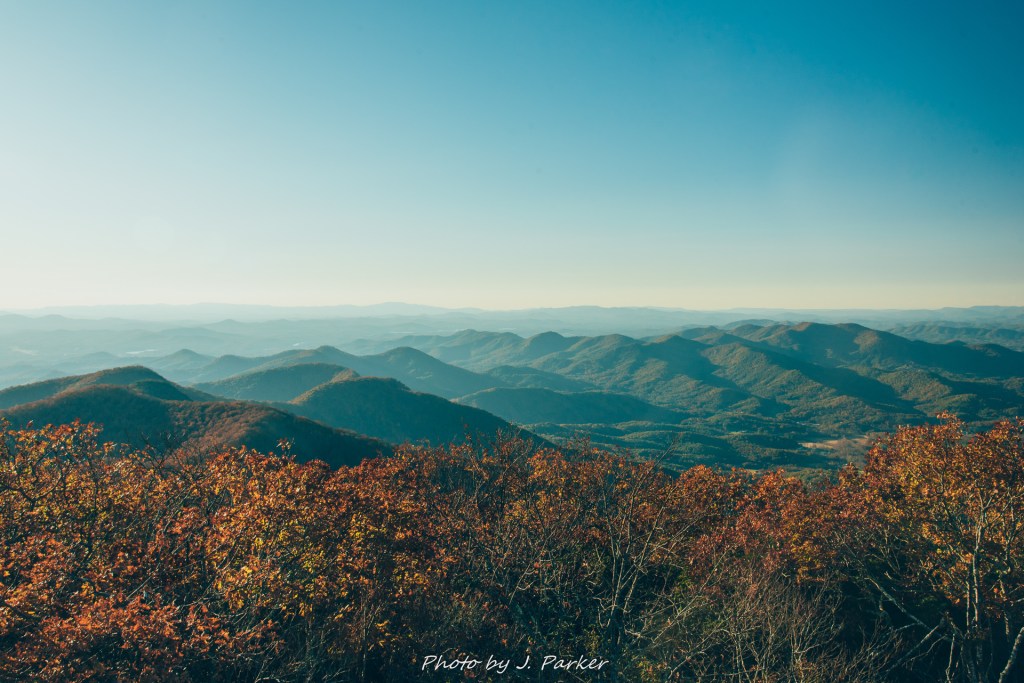
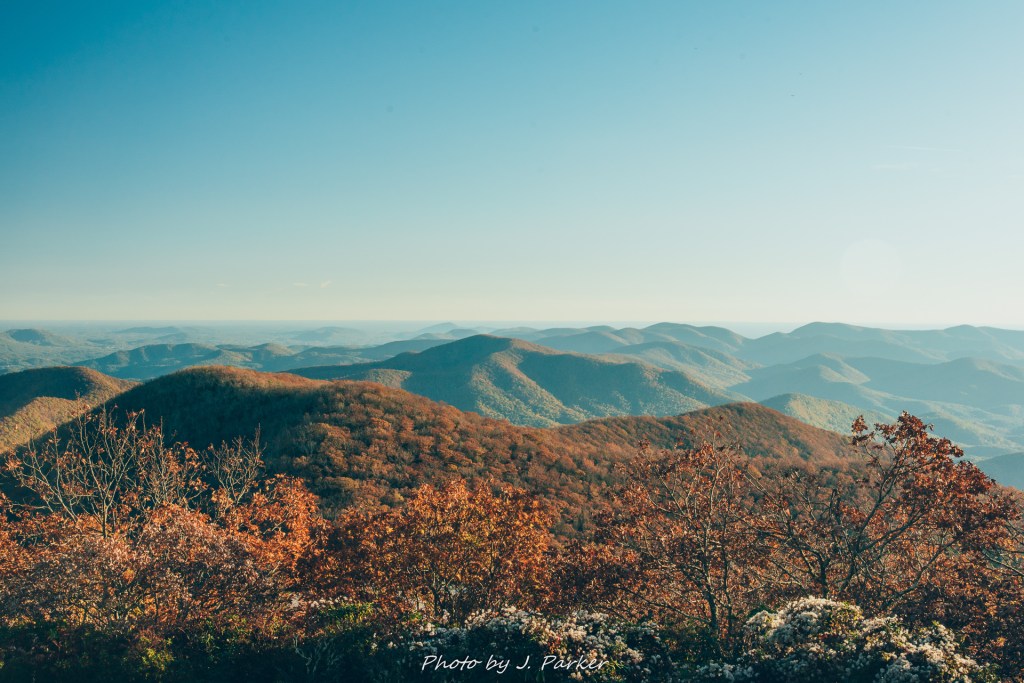
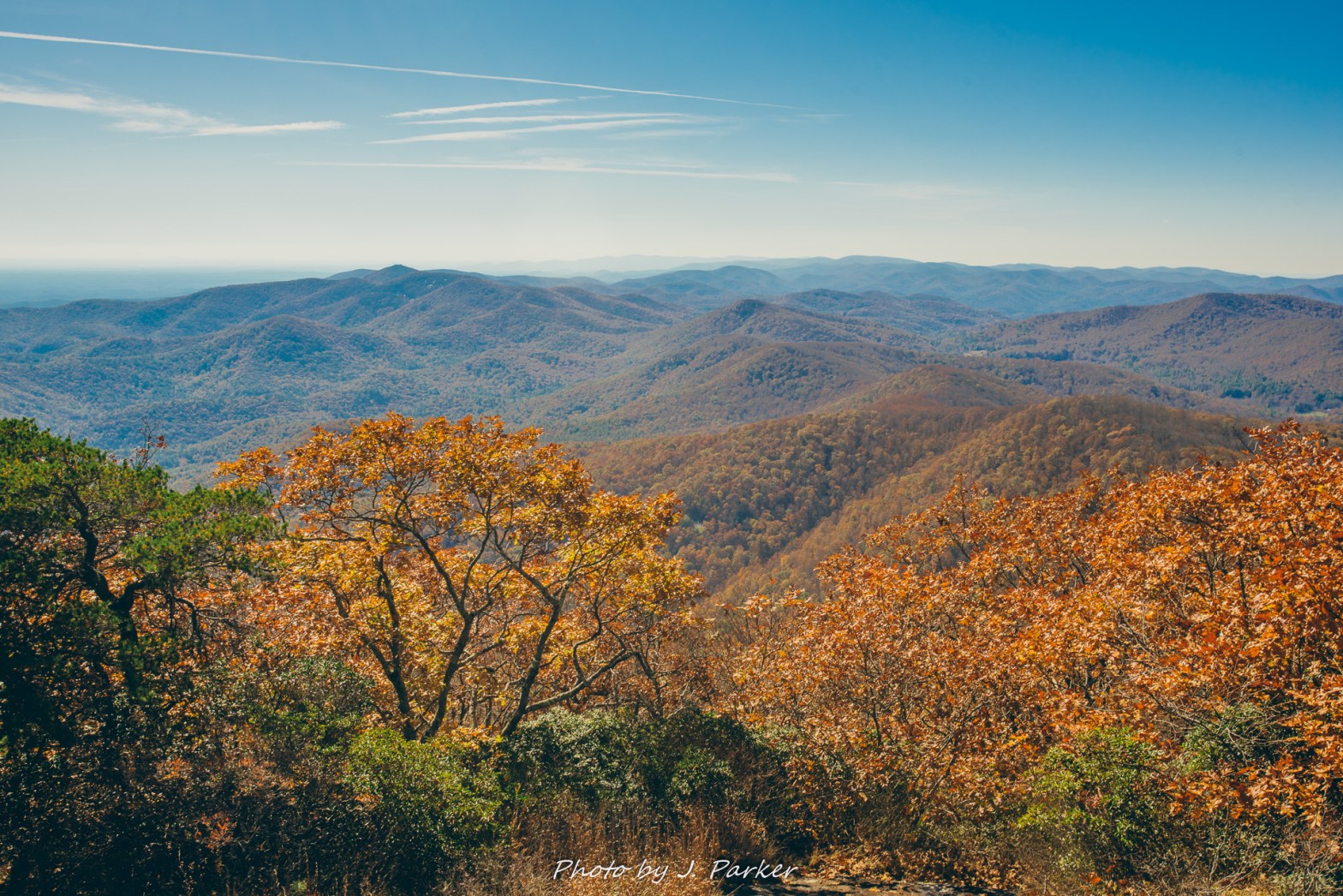
While its natural to expect the highest point in any state to have excellent views, I’ve found that highest view doesn’t always equal best view. I could think back to recent experience at Shenandoah National Park, where a trip up Hawksbill Mountain, that park’s highest point, offered inferior and, by comparison, uninspiring views to those of other places in the park like Mary’s Rock, or even just Skyline Drive. Luckily, the views at Brasstown Bald not only met expectations, they exceeded them. In every direction they were absolutely breathtaking. Quality of a mountain view is as much about the ridgelines that fill that view than just the height itself. Brasstown Bald has the benefit of interesting ridgelines and peaks in every direction. It was fun picking out the location of previous hikes I’ve done in the area, like Cowrock Mountain from last September or Blood Mountain from several hours earlier. I could even see the Smoky Mountains far in the distance, several ridgelines back from my current location. Everything was very easy to locate thanks to the informational signs they had for every direction.

Being that this was a very simple, straightfoward place to visit, there isn’t much of a story to tell beyond the traffic on the way there. Instead, the pictures will have to tell the story.

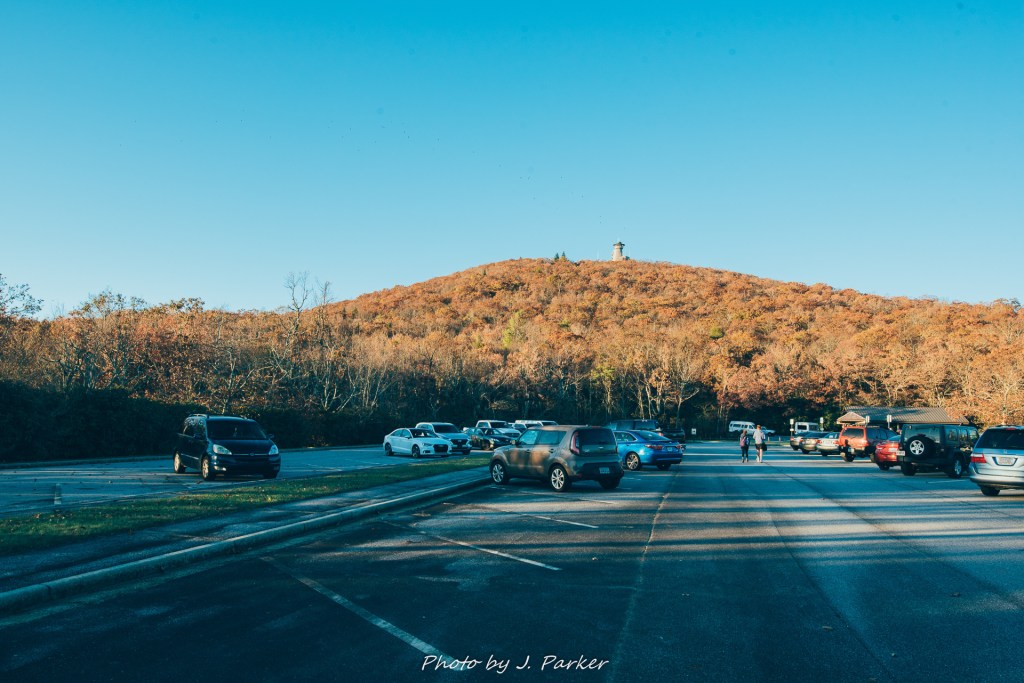
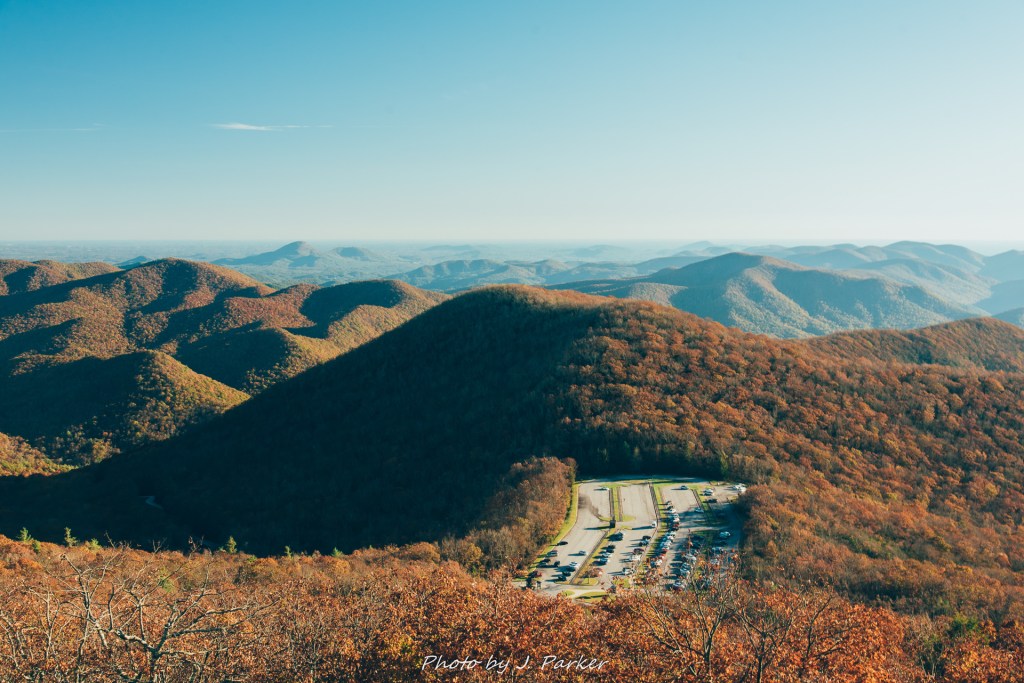
Looking straight south towards the half-filled parking lot.
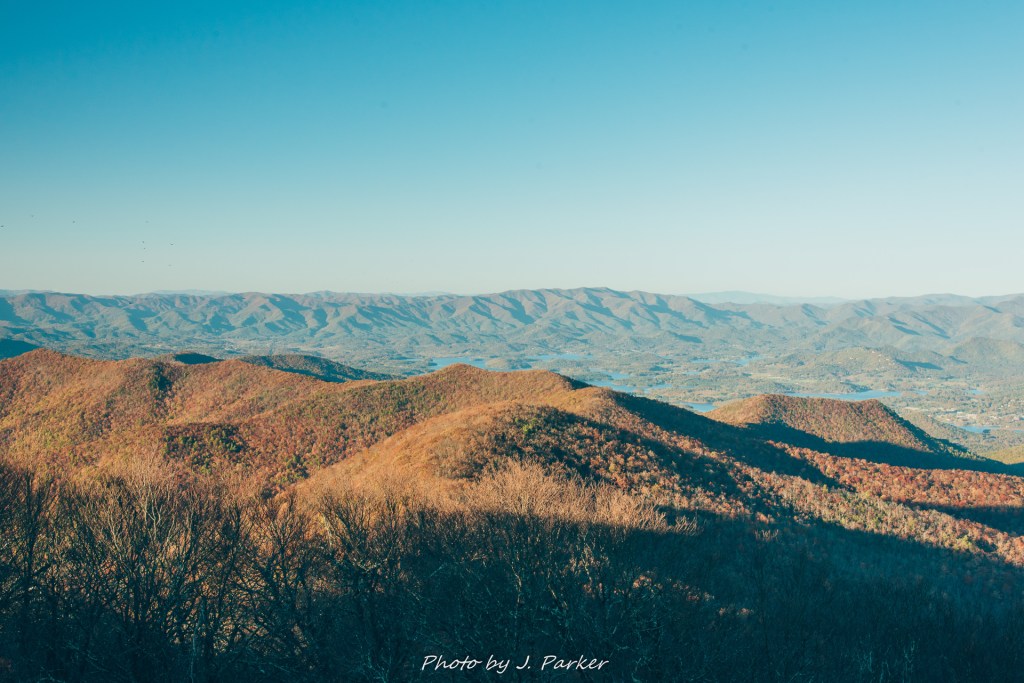
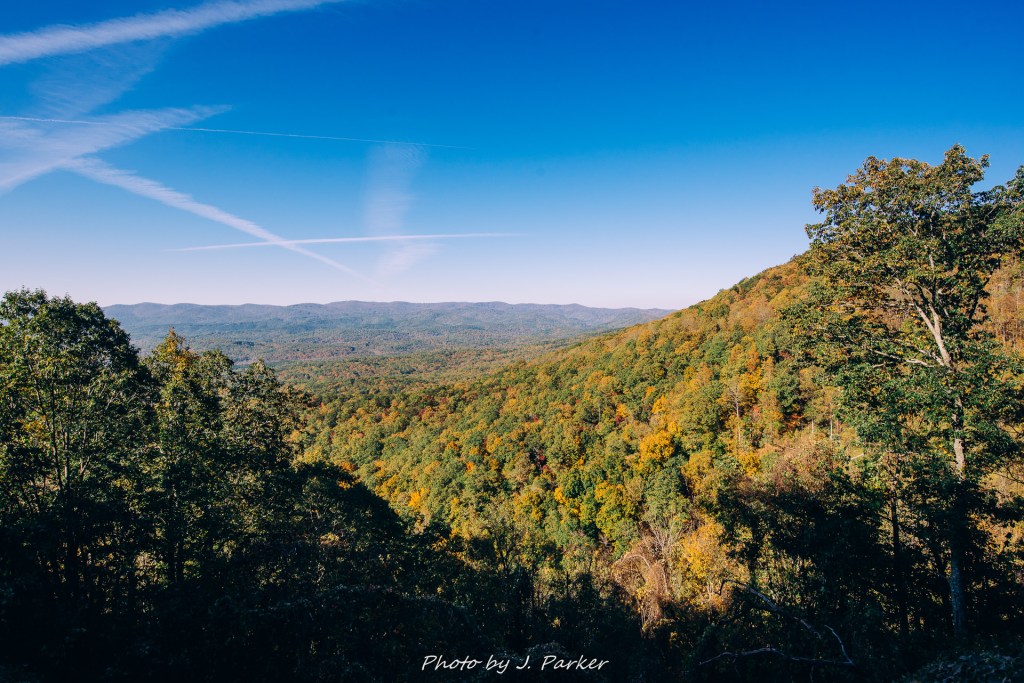
A view to the north, with the Hiawassee area lying behind the ridge in the foreground. The ridge on the other side of the valley was part of North Carolina, and it had a shape for the area I had never seen before. It reminded me of the ridges opposite Shenandoah National Park, which ride the Virginia-West Virginia border.
Looking east in the general direction of Clayton, GA. and Highlands, NC.
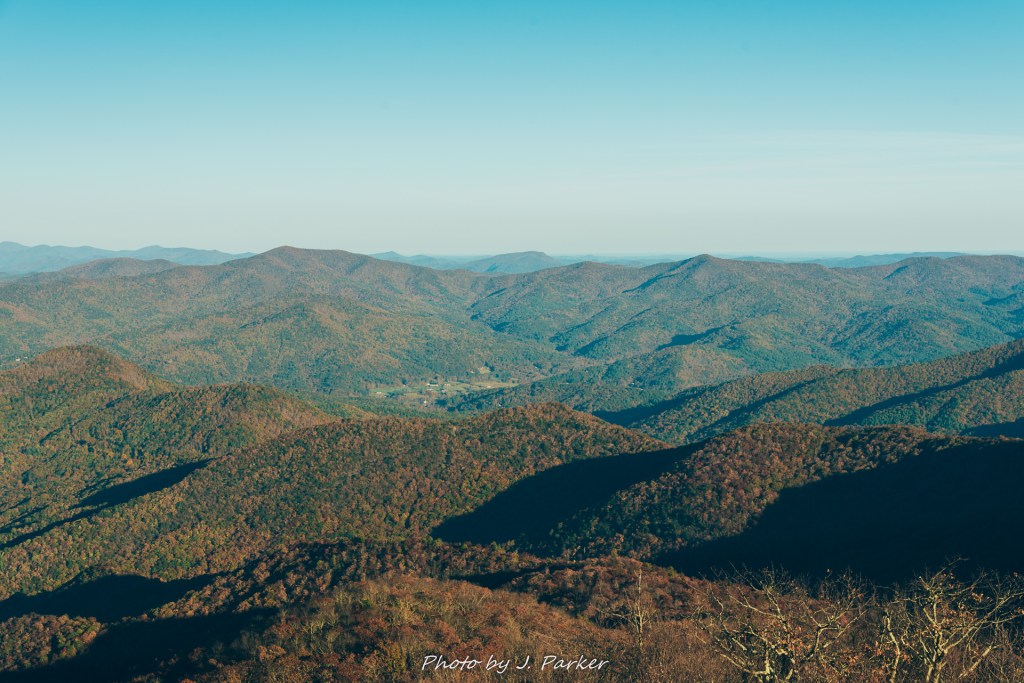
I believe this is looking West or NW in the direction of Blue Ridge, GA. and southeast TN. I would be in this area the next day.
I think this view was again towards the south, looking towards the Helen, GA. area where a lot of Georgia’s best hikes are found.
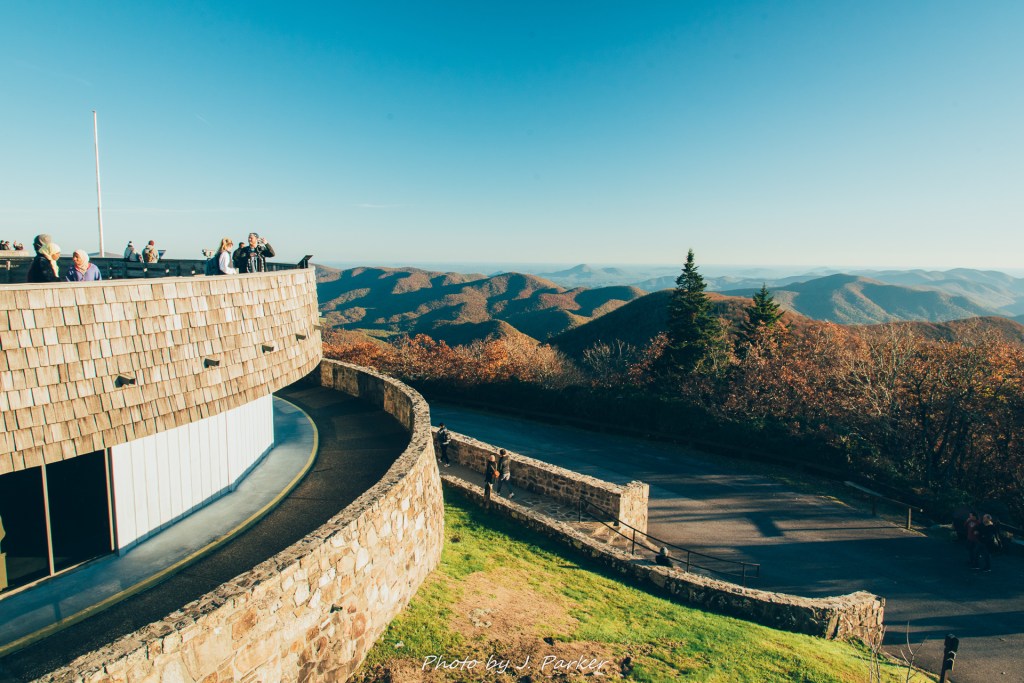
A shot which includes some of the visitor’s center in the frame.

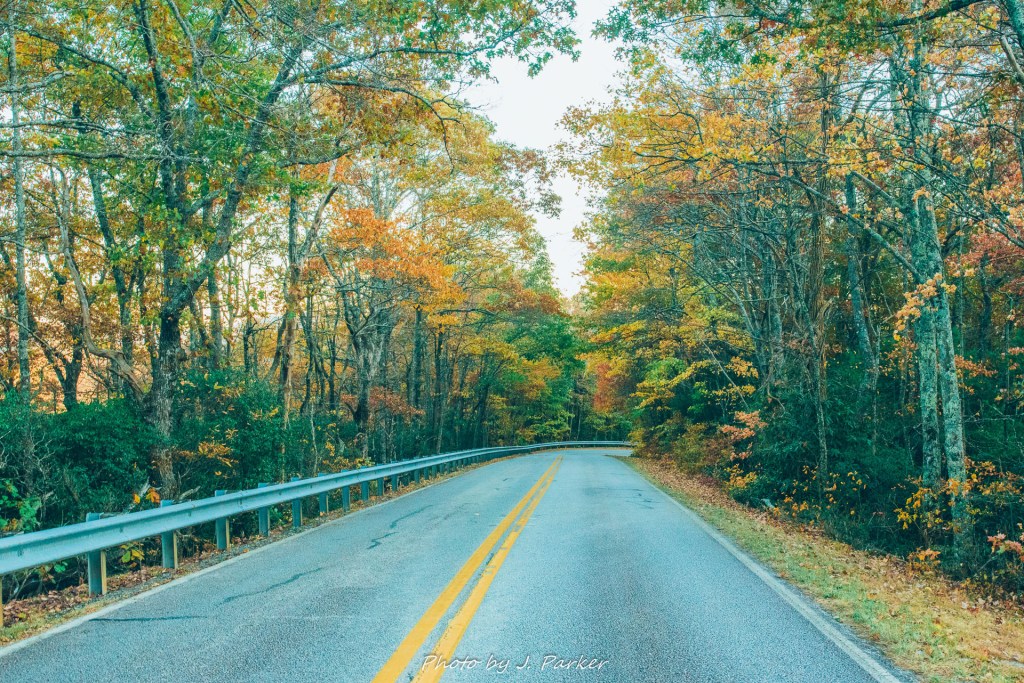
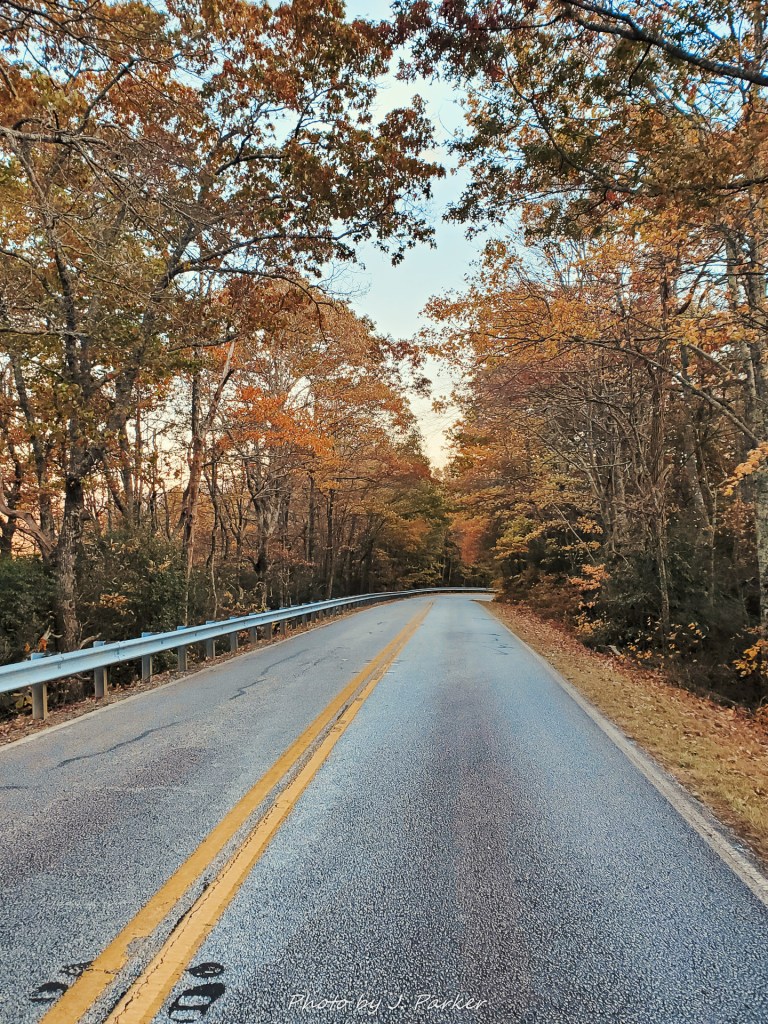
Brasstown Bald was my last stop of the day. There wasn’t going to be enough time to get anywhere meaningful before dark and I was yearning to get to my hotel about an hour away in Blue Ridge, where I could get more substantial rest and replenishment than my frantic drive up after work allowed me. Before I left the park, however, I made a point to get a few shots of the beautiful steep and winding road up to the bald, as it had the best color I had yet found during my trip.

A cell phone shot I took on the way down.
Roads often contain great fall color, but finding safe stopping locations on winding mountain roads with blind turns is not always an easy proposition.

2019/11/02 – Hike Up Blood Mountain

I looked up, but I didn’t like what my eyes saw. The hill seemed to stretch on for eternity. Hundreds of feet in the air the trail weaved a serpentine path up the hill, and dozens of tired people littered its path (unfortunately sometimes literally), bestowed in bright colors of neon green and pink, ostensibly to try and ward off hunters. Or maybe to make it easier to find their bodies in the woods after they passed out from exhaustion, I’m not sure. One might have called it a stairway to heaven, except it was going to feel like hell. Gravity pulled me downwards while my insatiable curiosity for the spectacles that lied at the top of that hill pulled me upward. Such is hiking; moments of physical discomfort, boredom, and sometimes terror, all endured so one can satisfy curiosity and enjoy the natural rewards of a trail in an organic way that merely driving to a scenic spot could never provide.

This was the ascent to Blood Mountain, the highest point along the Appalachian Trail in Georgia. Saying it is one of Georgia’s most popular trails seems to be a bit of an understatement, much like saying the Beatles were a fairly popular rock group. I don’t know the numbers but I do know that I’ve done a fair amount of hiking in Georgia and other locations throughout southern Appalachia, and I’ve never seen more people on a hike longer than your 1-2 mile leg stretchers.

I had asked a north Georgia hiking group what they thought the single best trail in Georgia was, and the overwhelming response, more than any other trail combined, was Blood Mountain. I knew little about the place at the time but began to do my research. The idea of hiking here was intriguing, if only because the name sounded entirely badass, which naturally is a key component of my trail rating system. (Where did I hike this weekend? Just a little place called……BLOOD MOUNTAIN.) Since I usually travel a more easterly route through northern Georgia, I hadn’t yet been able to sample what this trail has to offer. Despite my curiosity about this hike it wasn’t my first choice to visit that afternoon. I would have liked to explore the Three Forks area including Long Creek falls, but the sunny weather wasn’t conducive to that type of hike, and one can only deal with the day they have. So Blood Mountain it was.

Having passed the trailhead on a busy weekend before (I was unable to do this hike that weekend due to a hip ailment), I knew that finding parking mid-day along US 19 in the Chattahoochee National Forest was going to be a challenge. I was ready for it, though the spot I found along the main road was rather unsettling. My Rav4 ended up parked at such a steep angle, leaning to the passenger side, that I was afraid to shift weight or slam the doors for fear of the vehicle tipping. I was well aware that my pack was still heavily overloaded for the trail I was about to do, but could do little about it since I was happy just to safely extricate my bag from the vehicle at all. I set off to start the trail which began few hundred yards from my parking spot. It was then that I realized my camera was still in the vehicle; having taken note of a few parking spots closer to the trailhead, and with far less vehicle-tipping potential, I used the opportunity to move my Rav4, called Garth, closer to the trailhead, where I began my hike from the Byron Reece Trailhead.

Crossing a creek near the start of the trail.

Owing to its location along the Appalachian Trail and with various interconnecting trail systems in the area, there are multiple ways to get to Blood Mountain. Still, by far the most easy and consequently most frequently used was the route I was taking from the Herbert Reece Trailhead at Neels Gap, where a .7 mile trail connects you with the Appalachian Trail at Flatrock Gap before it makes it ascent west (technically south on the AT) up Blood Mountain. Also connecting at Flatrock Gap is the Freeman Loop, which diverges from the AT after its course on Blood Mountain, allowing hikers to take a 6 mile loop. While I had considered taking this route, as loop hikes are generally more enjoyable than repeating trail segments, I ended up deciding that extra mileage wasn’t a worthwhile undertaking given the heavy sunshine and only patchy fall color present in the area. Instead I opted for an out and back to the Blood Mountain summit, which would result in a course of about 4.3 miles and 1400 feet elevation gain.

Sunlight streams in along the connector trail to the Appalachian Trail.

I started the hike behind several large groups of people, and I had to go in turbo mode on my legs when the situation presented itself to get ahead of them along the trail. Finally there was just me and another young gentleman pacing well ahead of his group. I talked to him for a moment and he indicated that his group wasn’t sure what they were doing, but that they liked waterfall trails. I had to break the bad news to him that to my knowledge there were no waterfalls along this trail, but that it’s known as one of the absolute best views in Georgia.

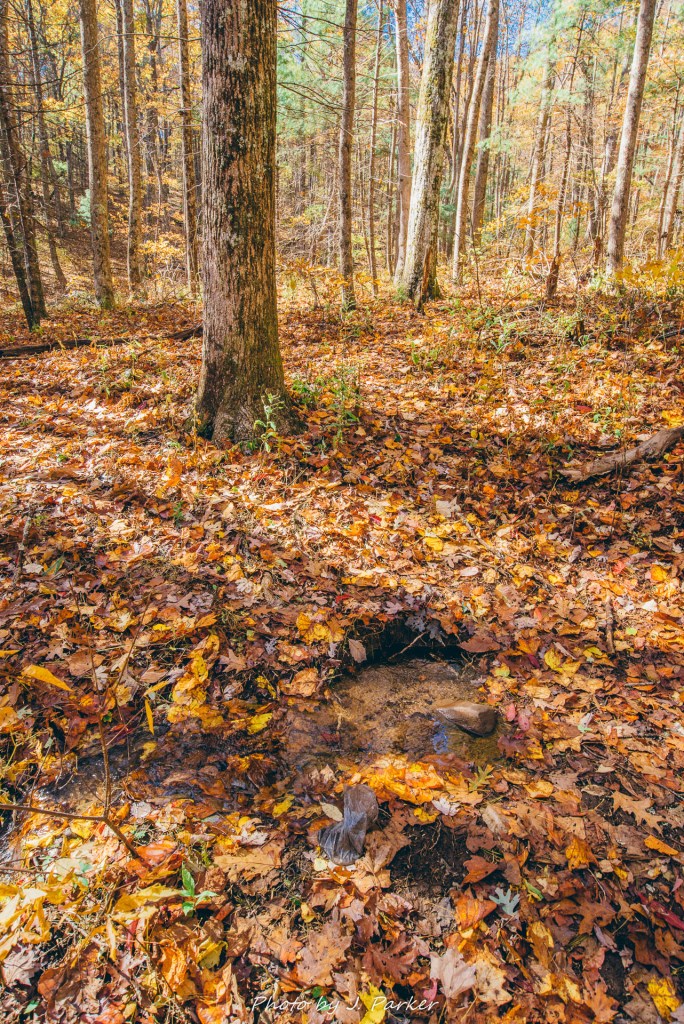
The early stage of the trail crossed several small creeks, each but a minor speed bump as one could rock hop without getting their feet wet. Other shallow creeks with some small, low-flow waterfalls ran in the distance, close enough to provide ambience to the trail while far enough away to be difficult to photograph. One particular stream along the trail piqued my interest, for it arose in a small, roughly foot-wide spring right along the trail. In my home state of Florida, springs hold our fascination like waterfalls do in mountainous areas, so I tend to take note of mountain springs when I come across them. All too frequently they are enclosed in a pipe and/or concrete encasement. As I stepped past the small, natural spring below, I thought not just of the pool and stream I could see before me, but also the path that water would take. Water from Blood Mountain quickly joins the infant Chattahoochee River, which joins with the Flint River to form the Apalachicola River. That river, which historically divided East and West Florida, is an intensely biologically diverse area with surprisingly rugged terrain that is home to some Florida natural locations I hold very dear. Blood Mountain in fact is the tallest area which ultimately drains to Florida. I imagined the mighty river this water would become part of, eventually emptying into the Gulf of Mexico 500 miles away. It signified the beginning of a journey to me, but to others, it was just a wet hole in the ground to be paid no mind as they stepped over it on their punishing course up Georgia’s sixth tallest peak.

A small spring located right along the trail, part of the Chattahoochee River watershed.

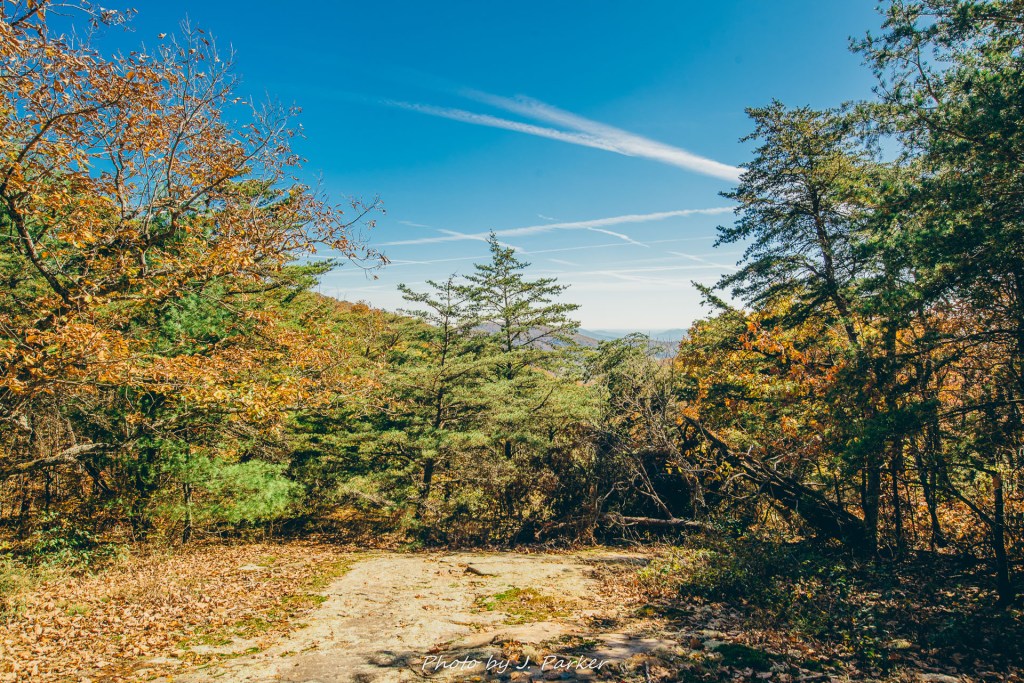
My legs paced furiously to ensure I remained ahead of the noisy horde behind me, and it wasn’t long before I reached an expanse of flat rock with just the smallest hint of a view, the first along the trail. I walked forward to take in the open air and blue sky, though any views of opposing ridgelines were obstructed by trees which still bore most of their leaves. Assessing the minimal view was a lot easier than ascertaining where I was supposed to go next. Four trails intersected here: the connector trail I had come up, the Appalachian Trail going East and West from here, and the backside of the Freeman Loop. I only saw three, and I was concerned that I would take the wrong trail, or that I may not have been in the area I thought I was. Luckily, at that point a group of hikers came down from the path that looked most promising, and they confirmed that it was the way to Blood Mountain. I started up the path still feeling a little unease, knowing that I could be taking the backside of the Freeman Loop, which technically took me to Blood Mountain but which would add 1.7 miles to my route. My concerns were finally abated when I saw a group of hikers traveling down a path to my left so narrow it was easy to miss as it joined the others along the flat rock. I was on the right path after all.

Flatrock Gap is easily noted by having a large, flat rock.

So far the trail had only contained moderate inclines and obstacles, and though my pack was heavy I was in pretty good spirits. I was on the Appalachian Trail for maybe a half mile before I rounded a corner and came face to face with a towering ridgeline, stretching for hundreds of feet high above me, the top hidden behind golden-leafed trees which obscured it from view. It’s very common to come across these ridgelines on mountain trails that usually weave between them en route to their destinations. It’s less common for a trail to ascend one, at least without taking a very indirect path. I was shocked to see shades of neon pink and green and emerging from between those golden tree tops above, which brought to my attention the faint path they were following which snaked its way back and forth over rocky outcroppings until it lead to where I was standing. That was the point at which I realized this trail just got real.

The base of the incline which drove terror into my bones.

I had already tackled the endless stairs of Amicalola Falls that morning. My legs were no longer the virginal sources of power they had been at the beginning of the day. They were off to the side smoking a cigarette, contemplating the dire stuff they’d seen. And I was about to ask them to embark on another great crusade, one which didn’t have the decency to hide its impending brutality. A slew of tired, lifeless faces coming downhill confirmed the terrible nature of what I was about to experience. I had known this moment was coming. The numbers didn’t lie, doing some 800 feet of elevation at Amicalola Falls and then about 1400 at Blood Mountain was a tall order (no pun intended) after driving up from work the evening before. But to see the bulk of that 1400 feet laid out before me in plain sight was ominous. Trails are supposed to have the common courtesy of spacing out their elevation gains, or at least hiding it from view. But Blood Mountain is a honey badger. It could care less about your feelings. Happy hiking!

Partway up the climb.

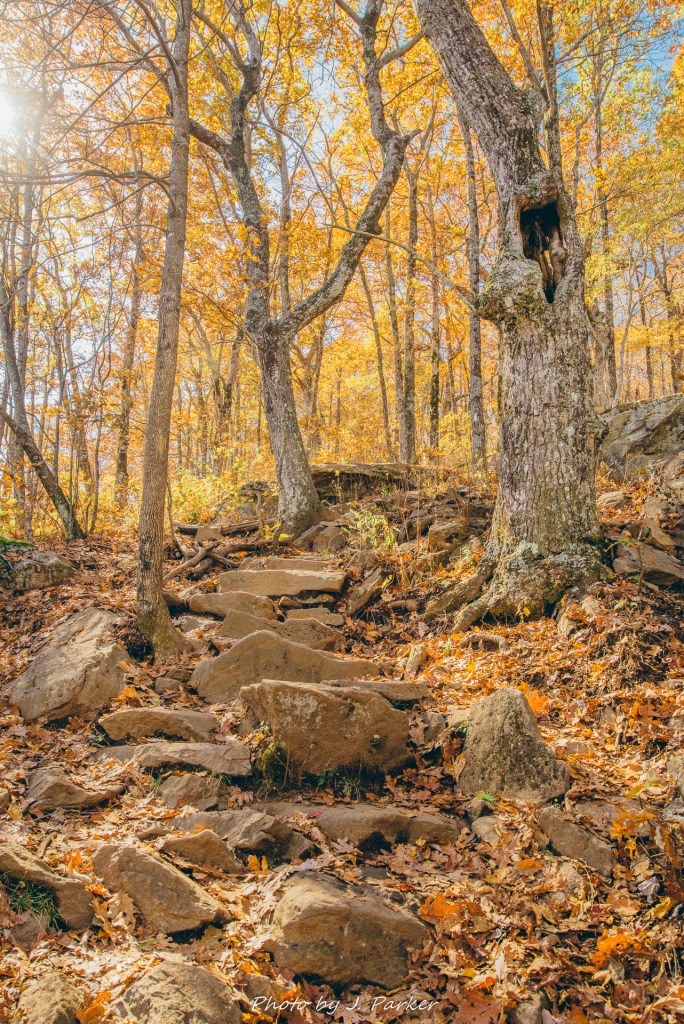
I began to work my way up, inch by laborious inch. As if the elevation gain wasn’t enough, the trail also threw in rocky, narrow pathways, forcing you to concentrate on your every step for fear of turning an ankle. The slender trail added difficulty to the task pf passing hikers coming the opposite direction, which was a frequent occurrence on this busy fall weekend. Nearly every group I passed had at least one dog, and I could only imagine their disgust at seeing somebody hiking the trail without the compulsory canine. Rarely have I made slower pace on a trail, and I cursed my all-too heavy pack as a tripod, taken along on the offchance that moving water would be found, dangled from the pack (I would discover another unintended consequence of taking my tripod in this hike the next day). I was exasperated when I reached an exceptionally rocky portion of the trail which required a great amount of communication between hikers to pass each other as we worked opposite ways along the trail (I go to the woods to avoid having to communicate with people, darnit). I gritted my teeth in anticipation of the continuing climb, and was pleasantly surprised to find the trail unexpectedly return to a relatively moderate grade. Blood Mountain had shown some mercy after all.

The rockiest section of trail which lies at the end of Blood Mountain’s most significant climb.

I’ve done trails with far more elevation gain overall, like Table Rock in South Carolina. I’ve done rockier trails, like the Cedar Run Trail in Shenandoah National Park. I’ve done more steep elevation gains like Chimney Tops in the Great Smoky Mountains National Park. I’ve done the Wright Creek Nature Trail, which is neither steep, long, nor rocky, but is simply a horrible trail. By the numbers, nothing at Blood Mountain comes close to some of those other hikes. But those trails were better paced, and psychologically, having that steep, rocky climb laid out in plain view before you gave that ascent up Blood Mountain a special type of torture. Amazingly, it’s a torture that an immense amount of casual and non-hikers enjoy. I was excited to put it behind me, for I knew something special had to be waiting at the top to make it worth it. That restored a little bit of spring to my step.

The sun shines through autumn woods not far from the summit of Blood Mountain.

Not long after the ascension I reached the first wide, flat rock along the mountaintop, with a faint view towards the south through the trees. Dozens of people were spread out along the rock, no doubt enjoying satisfaction at having survived the incline as well. A young woman, naturally with dog, told me there was a good view from the rock some thirty yards below. I thanked her for the suggestion, but the rock was currently occupied, and I knew waiting for it when it still offered only partial views wasn’t worthwhile, for there were certainly better views ahead. The dog never gave a recommendation one way or another.

The first rocky overlook at Blood Mountain, containing partially obstructed views which were enhanced some by fall foliage.

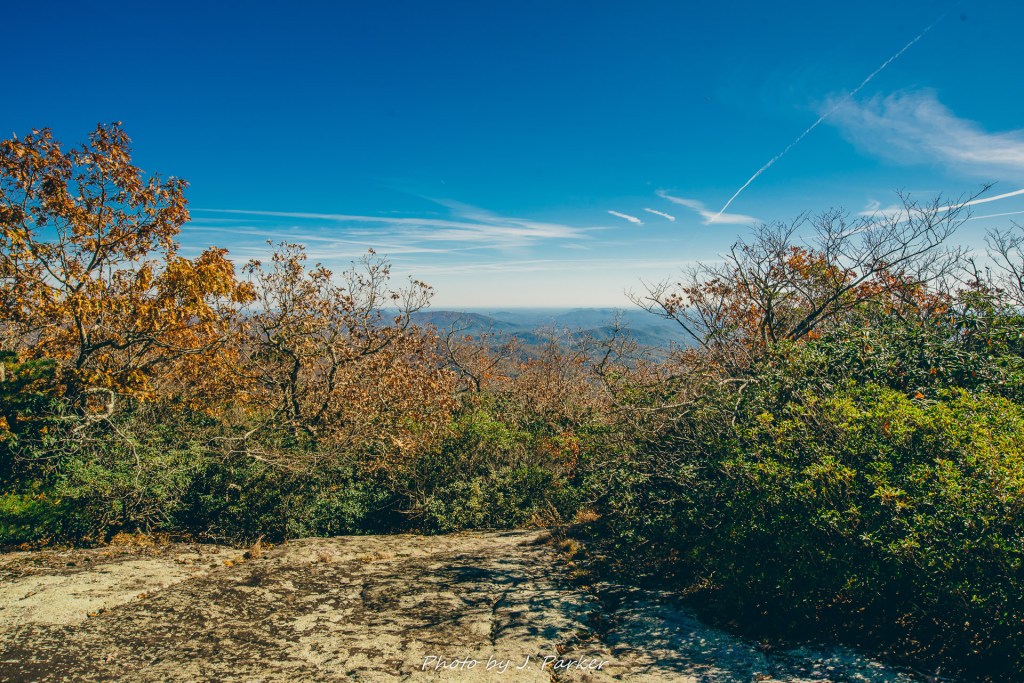
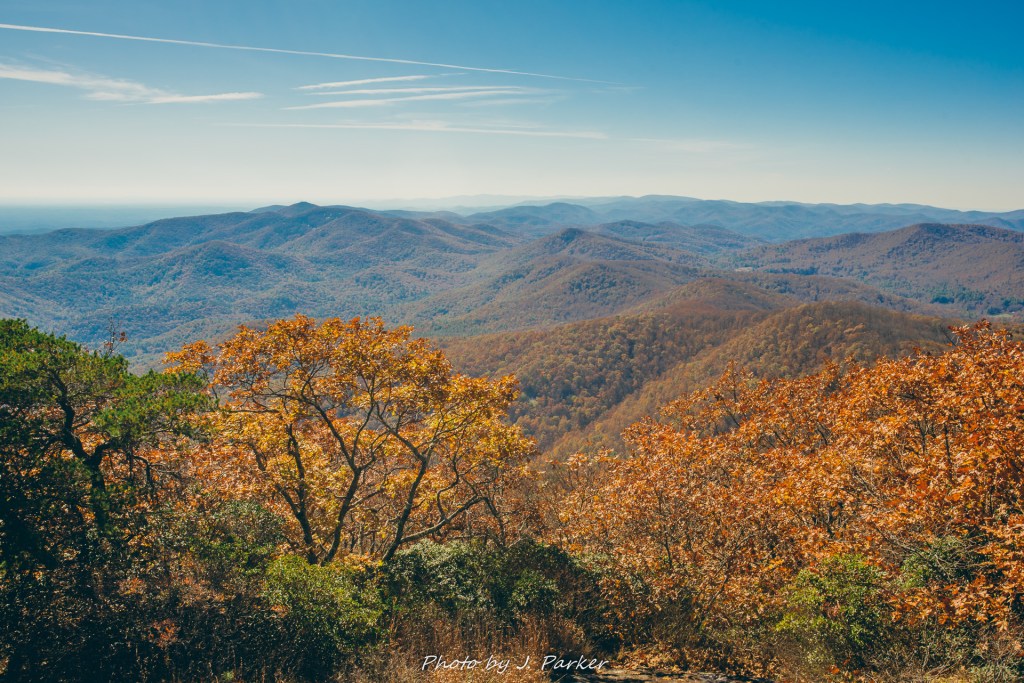
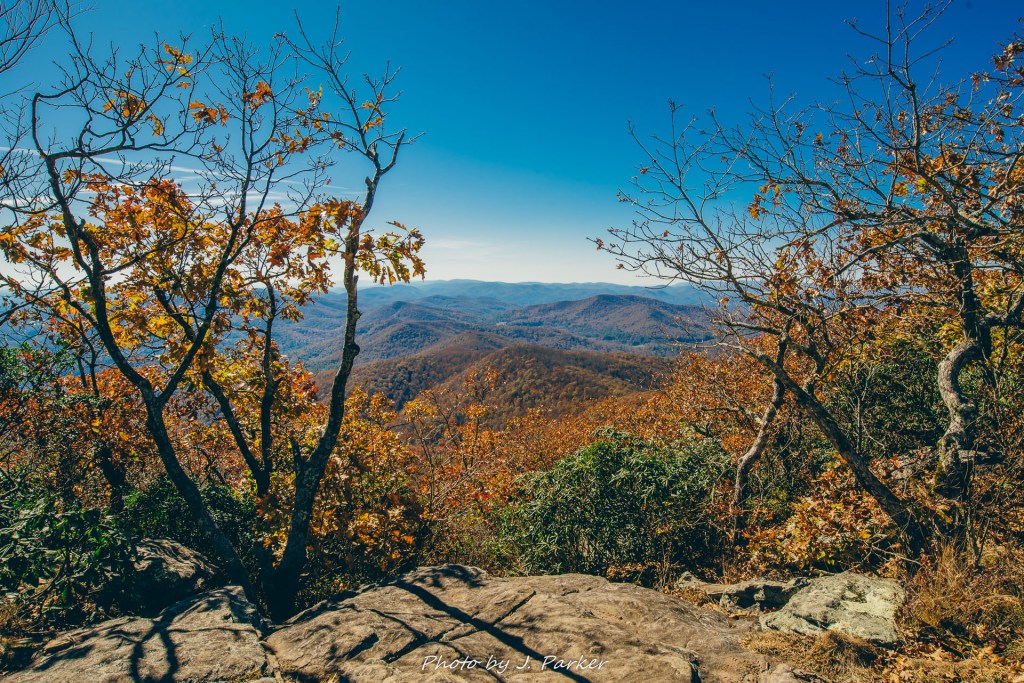
I had no reason to stop for long here, and I pushed forward in out of eagerness for what lied ahead. I anticipated having to travel another half mile or so to get to Blood Mountain’s prime vistas, and was pleasantly surprised to find another rock slab just a short distance up the trail, again with hordes of people and canines sprawled across its surface enjoying the view. And wow….what a view it was. This time there were no trees arching over the top of the rock, obstructing the view. Suddenly I couldn’t remember how heavy my pack was. I couldn’t remember how tired my legs were as they slogged up the 700 stairs of Amicalola Falls and then tackled the unrelenting ascent of Blood Mountain. I couldn’t remember politics, or the fact that the Miami Dolphins had yet to win a game this season. All I could feel was magic at having a sea of mountains and clouds stretched out before me.

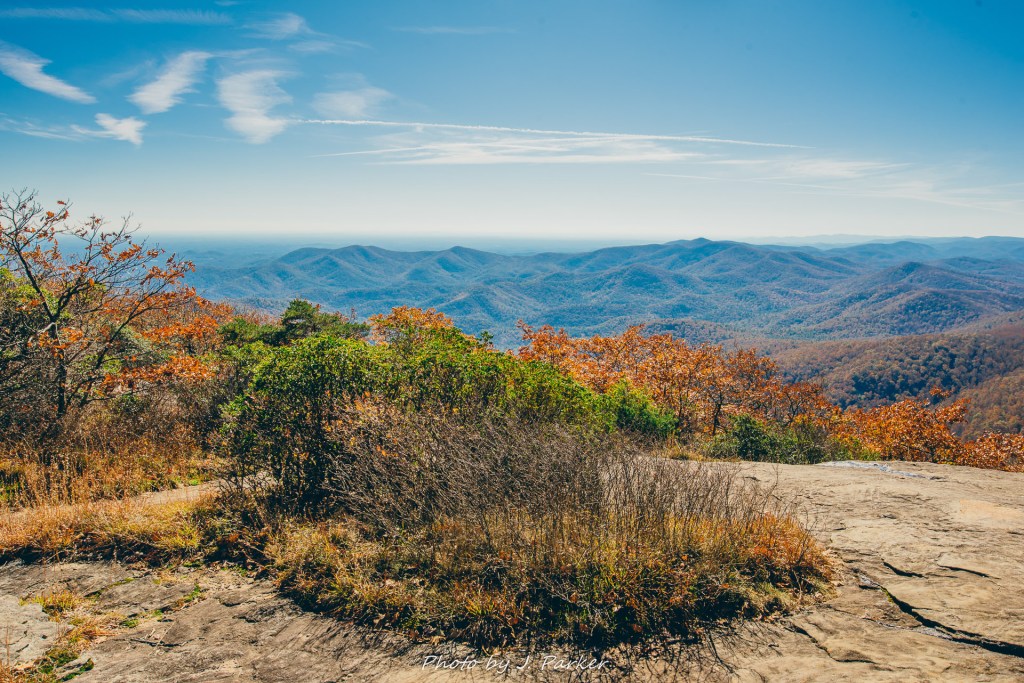
The view from Blood Mountain’s first real overlook. I was pretty far forward on the rock to get a view without people (and dogs) in it.

There is no way to quantify what makes some mountain views good while others are great, magical experiences. Perhaps science could quantify it if they weren’t having to waste energy on proving that the Earth isn’t flat, vaccinations are good, and climate change is real, boomer. I do know that large rock slabs where one can move about freely definitely enhances the experience, but that doesn’t ensure a transcendent experience. Blood Mountain was proving amazing just in this one view, with the only detractors being the direction of the view (facing south into the sun) and the large population inhabiting the rock. Much to my surprise, the latter problem disappeared as I moved further up the mountain. I was floored to find another rock slab some twenty yards away with similar stunning views but without the crush of people. I felt almost giddy at finding a private, quiet view on a trail teeming with hundreds, if not thousands of people that day.

View from an empty rock slab just yards from an overcrowded overlook.

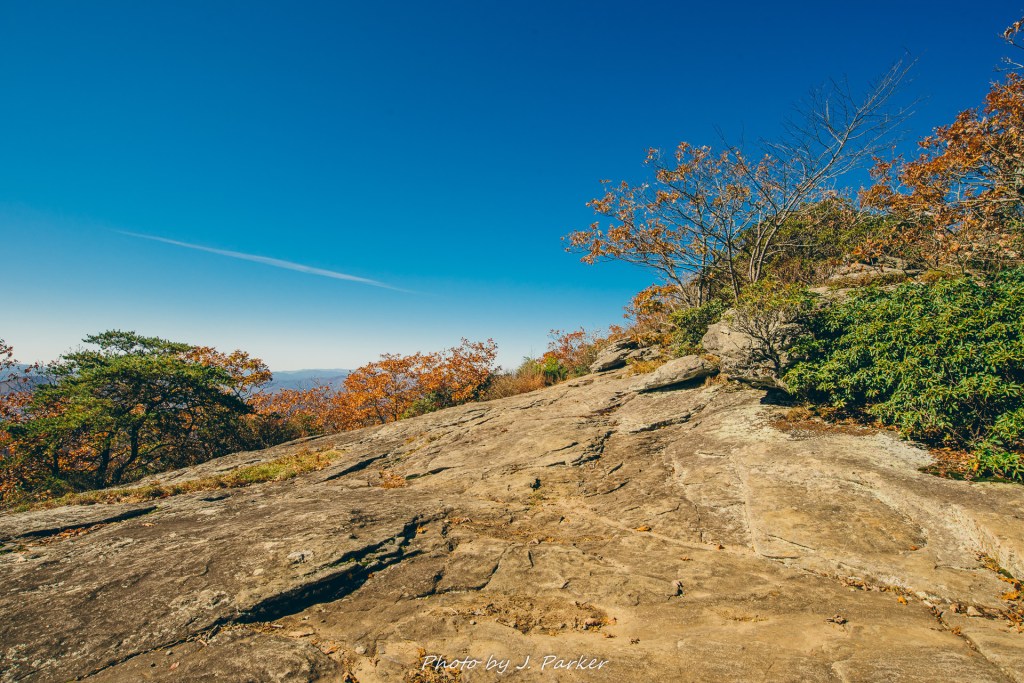
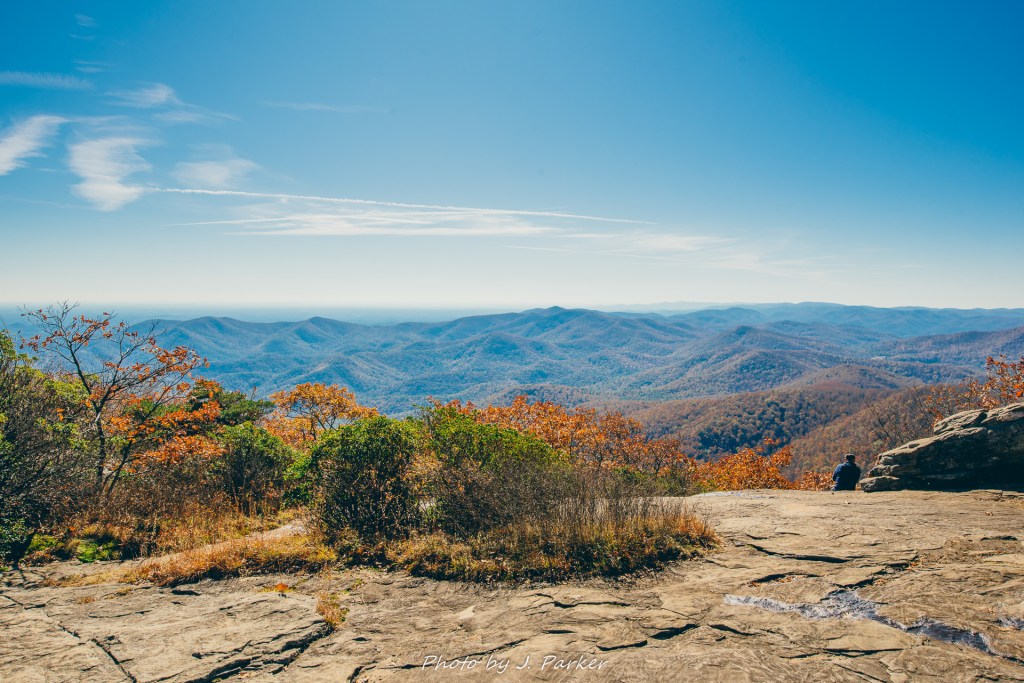
From there, I cut across the trail and went slightly uphill to get a view from the opposite side of the mountain. And this was the point at which I was really blown away. Though this rock slab was not empty, the few that were there were spread lightly across its expansive face, which stretched some 60 yards long and at least 20 yards wide, well large enough to explore without worrying about encroaching upon other people or having them inhibit your views and photographs.

Blood Mountain’s best rock slab.
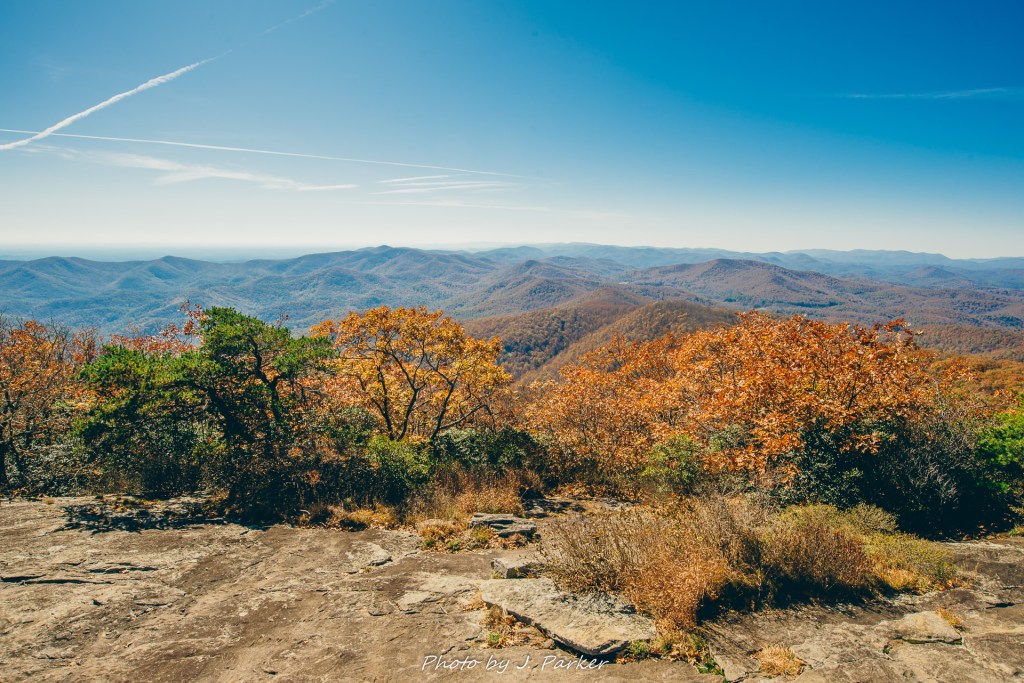
Prime view at Blood Mountain.

As I moved freely across the rocky expanses near Blood Mountain’s summit it became clear to me that while there was an immense amount of people visiting that day, almost all of them were stopping at the first real overlook. This left the rest of the mountain as quiet as one could ever imagine for it being one of Georgia’s premier hikes.

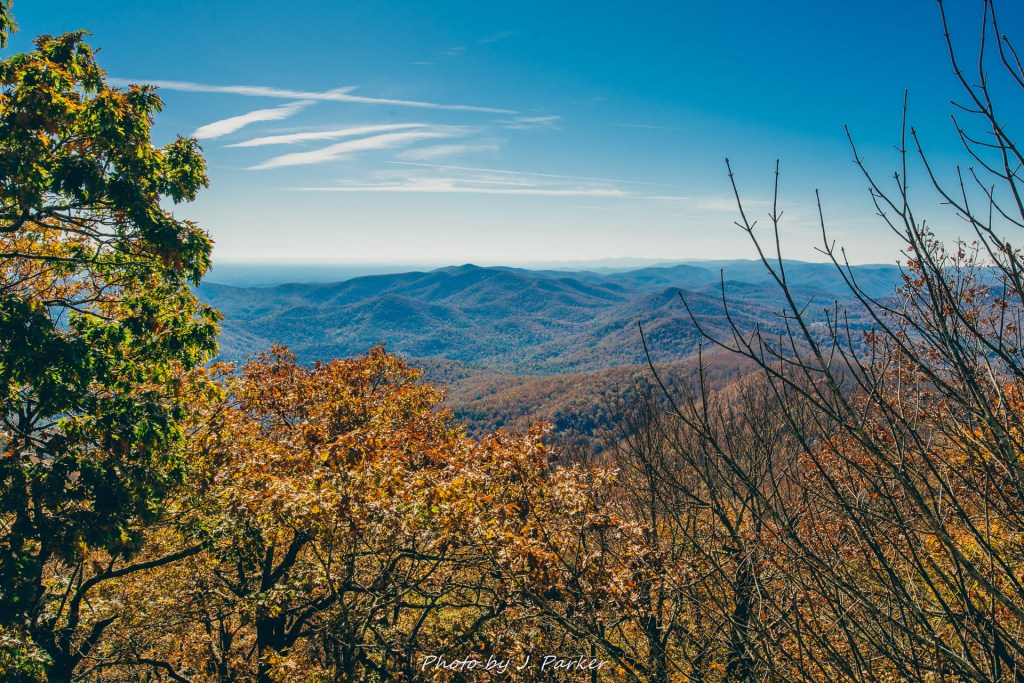
A view to the southwest. I used my lens cap to shield the sunlight as much as possible. The red foliage stands out well in photos but wasn’t actually as striking in person.
Peering between trees looking towards the west.

This being the Appalachian Trail, there is a large shelter once one reaches the actual summit of the mountain. This is also where the flood of views finally ends, as the Appalachian Trail immediately drops elevation into a thick forest on the back side. Beside the shelter is a large rock one can ascend for a final good view. There was a small, quiet crowd there, and I briefly talked to a middle aged couple about locations in the area, including Brasstown Bald. The gentleman was excited to share a view he had found of the aforementioned Bald, Georgia’s highest point, and he directed me to a small opening in the trees where you could see the distinctive tower for the Brasstown Bald visitor’s center. He handed me a small set of binoculars so I could see it close up. I couldn’t find it in the binoculars, but not wanting to hurt the nice gentleman’s feelings I pretended like I did and acted impressed. He explained to me that it was a great place to visit, but “you won’t have time to get there today”. Ha….we’ll see about that. I consider that a challenge.

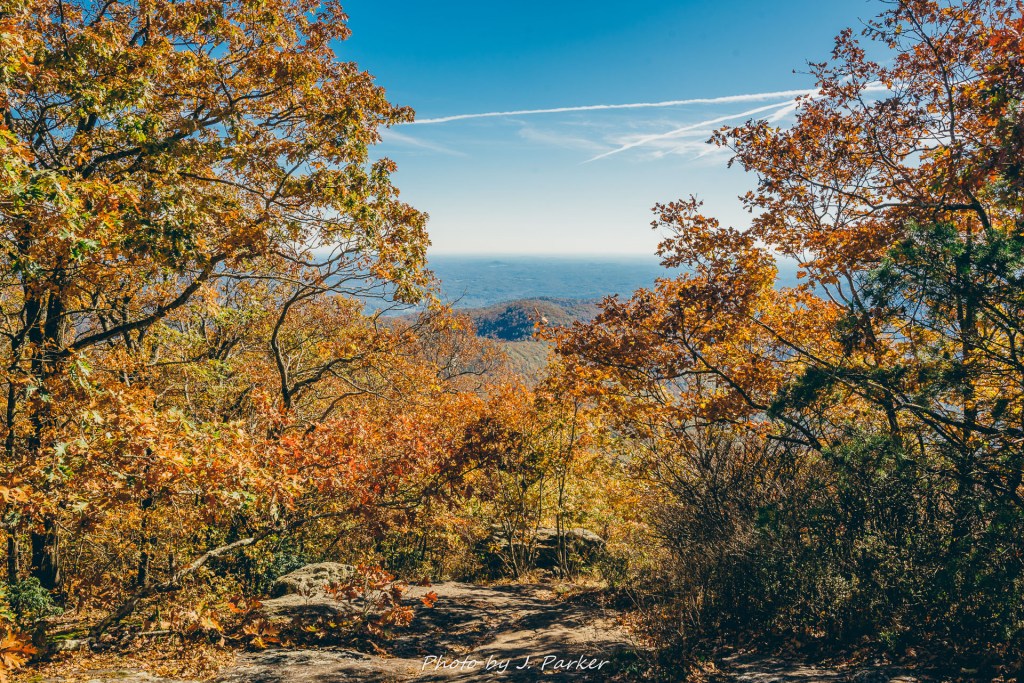
A mountain filled view from Blood Mountain’s true summit.

The shelter was my turnaround point, and I slowly walked back along Blood Mountain’s open rock faces, attempting to photograph every view I could in hopes of capturing some of the mountain’s magic. I’ve been places with expansive open rock faces, but none in combination with such a majestic view.

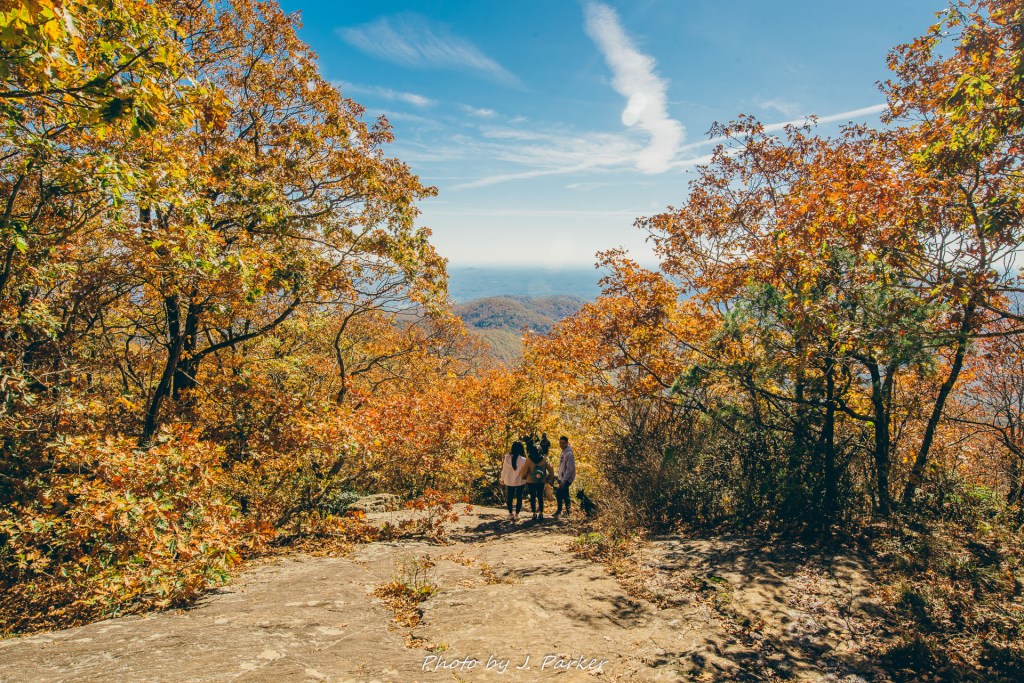
Blood Mountain’s biggest rock face on the way back. You can see one solitary person to the right, a testament to how few people were enjoying this section of the mountain.
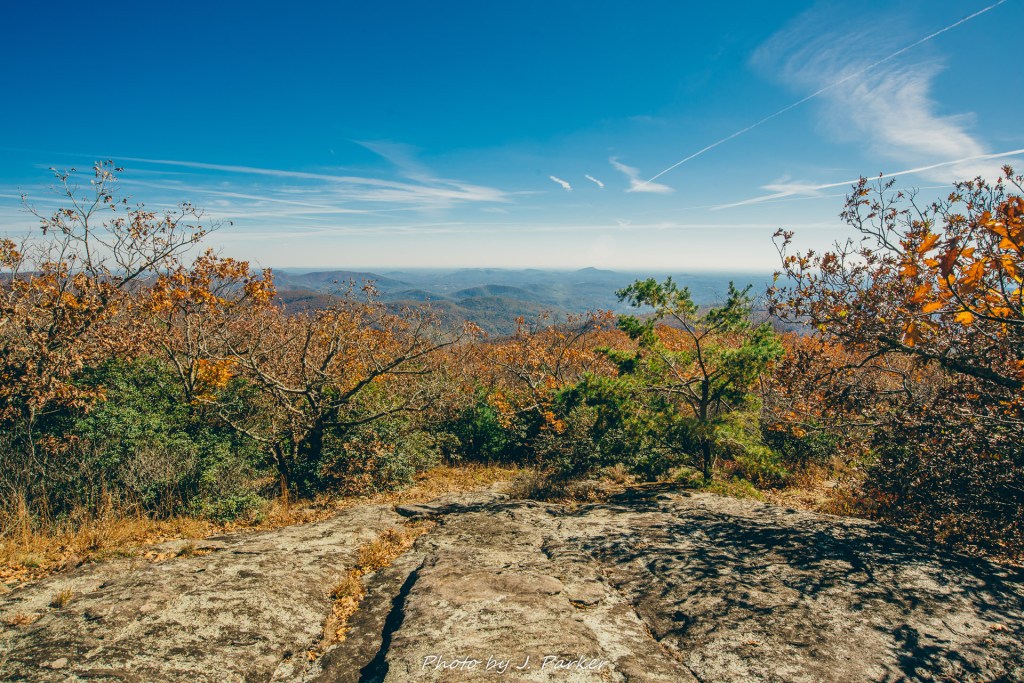
Looking almost due south from Blood Mountain. I’m not confident in my ability to identify those peaks.

On the return trip I reached the partially obstructed rock slab which had been filled with people as I first passed. This time the rock was almost empty, and I did check out the rock which been recommended to me on my first go through. Much as I had suspected, there was nothing in this view that compared to those found closer to the summit.

Blood Mountain’s first rock slab, sans people.

“It’s as hard going down as it is going up,” say people who are wrong. There is no comparison to the energy required to go up hill, but going downhill can have its challenges and provide a strain to different parts of the body. In particular, one must concentrate on footing a lot more on the way down, especially on rocky surfaces that provide an excellent opportunity to turn one’s ankle (my wife rarely fails to take advantage of this opportunity). I had some concern about successfully navigating Blood Mountain’s extended rocky downhill, but I quickly found myself through that section of trail which had given me so much agony on the way up.

Sun shining on the trail as I make the return trip.

My concern on the way down was staying in front of a group of bros who always seemed to be nipping at my heels. I try to stay in front of other hikers so I can get my trail shots without people in them. Their loudness also gave my extra incentive to stay ahead. Though it wasn’t exceptionally late in the day, it was getting late enough that sunlight no longer penetrated into the valley. I was hoping to use this to get some woods shots with even light, with bonus points for fall color, but I encountered few scenes of note on my way down. For all the awesomeness of Blood Mountain, a fall color bonanza this first weekend of November it was not.

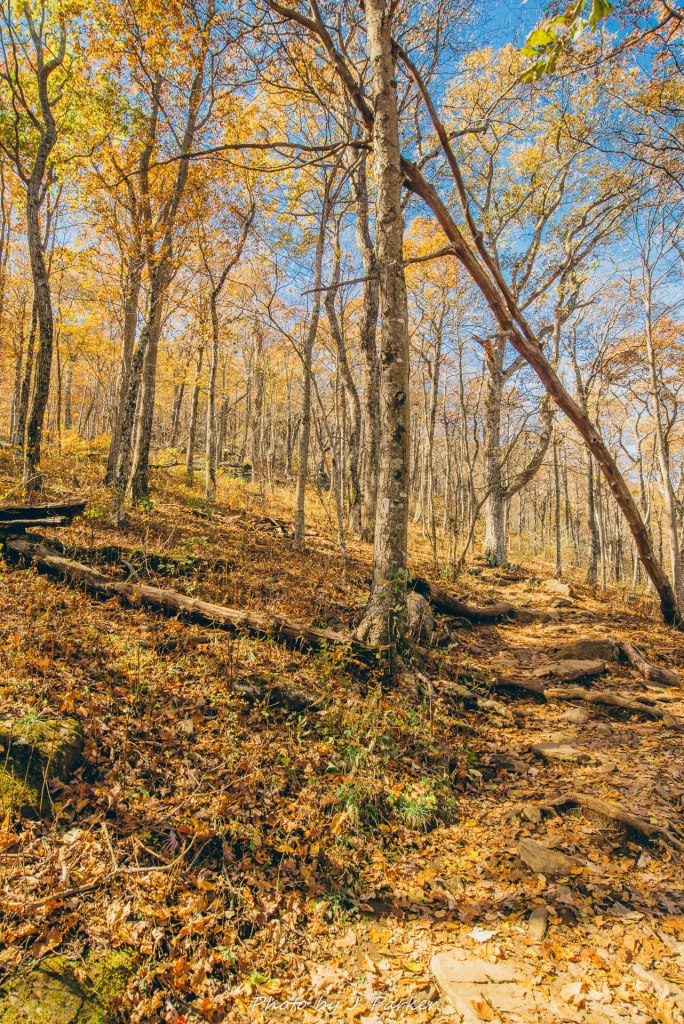
A shot of the woods along the connector trail on the return trip.

As I completed by Blood Mountain journey there was little doubt as to what my next stop would be. I generally prefer to end days taking in a nice creek or waterfall view, but there was little of note in the immediate vicinity which I hadn’t taken in on a previous trip. I instead opted to get up high once again. In fact, I’d go to the highest point of Georgia: Brasstown Bald. It had looked so spectacular in the binoculars earlier, after all.

As for Blood Mountain, while I certainly envisioned visiting creeks and waterfalls bathed in fall color on this trip, I can’t say I was disappointed that circumstances lead me here. In Georgia, a state with a lot of “good” hikes, this is a great hike. Though I’ve enjoyed other Georgia hikes like Cloudland Canyon, Tallulah Gorge, and Panther Creek Falls, Blood Mountain is easily the best hike I’ve done in the Peach State. I can understand why so many people in Georgia rate it so highly, and though some will have trouble enjoying a trail that is so filled with people, there is a reason why they all flock to this one. This mountain has a quality that must be experienced to be believed.

2019/11/02 – Exploring Amicalola Falls

Georgia’s Tallest Waterfall…Maybe?

My legs screamed in protest. My lungs strained, for Floridians are neither well versed in cold air or the concept of going uphill. My pack felt heavy. It didn’t just feel heavy. It was heavy. An obsessive planner, I made sure my pack was stocked with every lens, drink, snack, and backup camera I might need on a long foray out into the wilderness. Except I wasn’t going to the wilderness this morning, I was going to one of Georgia’s busiest state parks. I guess it was comforting to know that if I wanted to down five yellow Gatorades in a row I would have ample supply. My body shuddered at every step I took up the long stairway I had foolishly and needlessly embarked on. In my head, one phrase rang out repeatedly. Cloudland Canyon. Cloudland Canyon. Cloudland Canyon.

Cloudland Canyon.

That phrase always rings in my head when my body begins reaching the point of exhaustion while hiking uphill, something for which adequate training in Florida is hard to come by (going uphill that is. We need little training at being exhausted). It was at Cloudland Canyon, another Georgia state park, where in 2015 I found myself bent over a log, trying to regain energy after having nearly passed out halfway up a neverending staircase (something that Georgia state parks seem to specialize in). Rushing up after work in the evening, staying in a hotel in north Georgia and getting minimal rest and even less nourishment before embarking on a strenuous trail in sweltering heat, it was little wonder I had trouble that day. And yet, four years later I had placed myself in similar circumstances, having again rushed up after work with little food or sleep to tackle a state park in Georgia with an end succession of stairs. But there were some key differences. This time it wasn’t sweltering, it was downright freezing. Literally. And I wasn’t going to pass out, nor even come close. Not this time. But tired I was. And it was all for a stupid view I could have driven to.

My day started out rather inauspiciously. Having intended to set out before dawn, I woke up to sunlight streaming into my hotel room, a pretty sure giveaway that I had missed dawn. I had in fact set an alarm, but I neglected to notice it was a Monday-Friday alarm. It did not ring that Saturday morning. I setout quickly to reach Amicalola Falls State Park, my first visit of a planned four day excursion to southern Appalachia. Amicalola Falls is one of those places that as a nature lover you’re supposed to visit, for it has something like the tallest waterfall in Georgia, the tallest east of the Mississippii, or maybe neither of those things, for nobody quite agrees on how these things are calculated. Let’s just agree that it is tall, handsome, its grandmother is proud of it, and move on. As I sped along the backroads with my Rav4 named Garth set to sport mode I imagined the park filling with sunlight that I had intended to beat by arriving much earlier than I now would.

Sunlight streams into the woods at Amicalola State Park.

I pulled into the parking area and immediately grabbed my overstuffed camera bag to set off on the Creek Trail, a trail I suspect was named by the Florida State Park system as it scarcely follows the creek. But I can’t complain, for I knew from my research that the trail didn’t see the creek very much. I was taking it because it provided the easiest hike to the base of the falls, which I believed would be more fulfilling than parking right on top of the falls.
Crossing the creek on the creek trail, essentially the only time you see the creek on the creek trail.

It was a cold morning, literally freezing in fact, and my lungs got heavy from the frigid air every time I worked my way uphill, which the creek trail did at a moderate pace. It seemed to be no time at all before I reached the end of the creek trail and my first point of interest, the reflecting pool poised to highlight the beauty of the falls.

Steps along the Creek Trail.

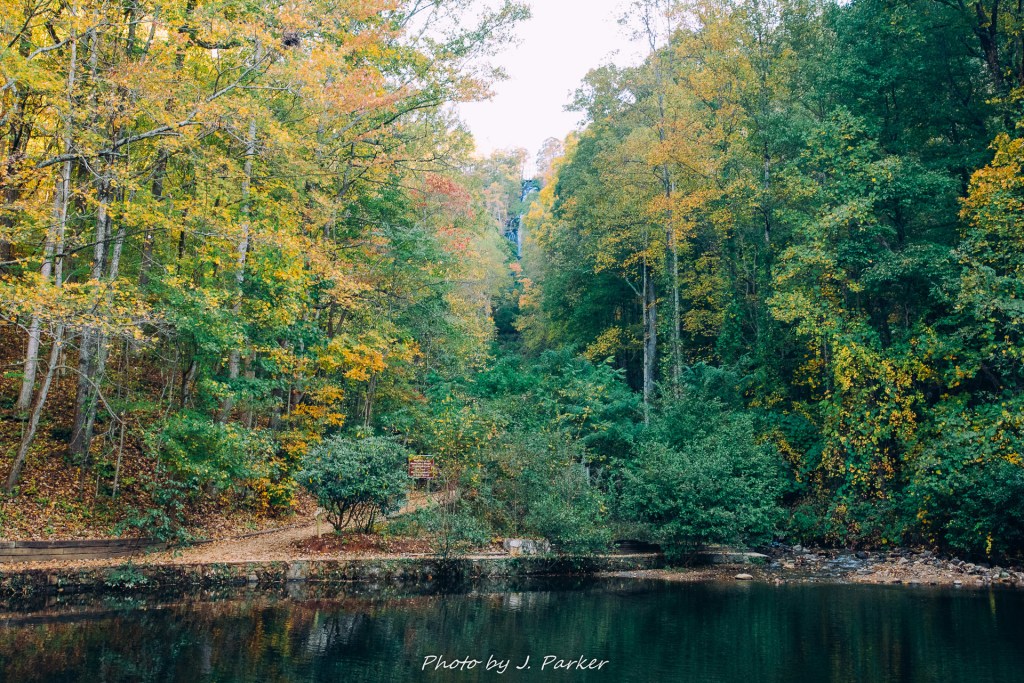
Though I was in a hurry to reach an up close view of the falls before sunlight cast uneven light on its flow, I paused for a moment to observe the view from the reflecting pool. The view was lovely, but I did harbor some disappointment that fall colors, while present, weren’t more prevalent. I hadn’t been certain I would visit Amicalola Falls, at least not on this trip, but opted to start my adventuring here after seeing pictures which implied it had far more fall color than was actually present in real life.

The view from the reflecting pool.

From the reflecting pool I hooked up with the Base-of-the-Falls trail, where I would start the approach to the falls itself while also obtaining better views of the tumbling creek in the process.

The trail crosses over the creek.
The Base-of-the-Falls Trail had a steady, moderate incline, but the increasing scenery provided ample distraction to the point where I barely noticed I was going uphill. I wasn’t on the trail long before I found a spot to setup a tripod shot, my first of the trip. I feel like its important to get that first “real” shot on any trip in order to establish some positive momentum. But even though I got a nice shot, I wasn’t feeling much momentum. I had been hoping to find more color in the trees, and maybe a cloud or two to dilute the oppressively shining sun, neither of which I had. Undiluted sunlight casts uneven light on waterfalls and woods scenes, making photography in those areas all but impossible while also some of the ambience and life from the scenes in person as well.

My first tripod, aka “real”, shot of the trip.

The current trail section was much more interesting than the creek trail in that it provided nice interaction with the creek in addition to sporadic views of the falls themselves. It wasn’t long before a reached my first unobstructed view of the falls, and miraculously the sun hadn’t yet blasted the fall with uneven light. Happy with my temporary good fortune, I was able to setup a tripod shot with an encompassing view of the falls, something I wasn’t sure was even possible to obtain.

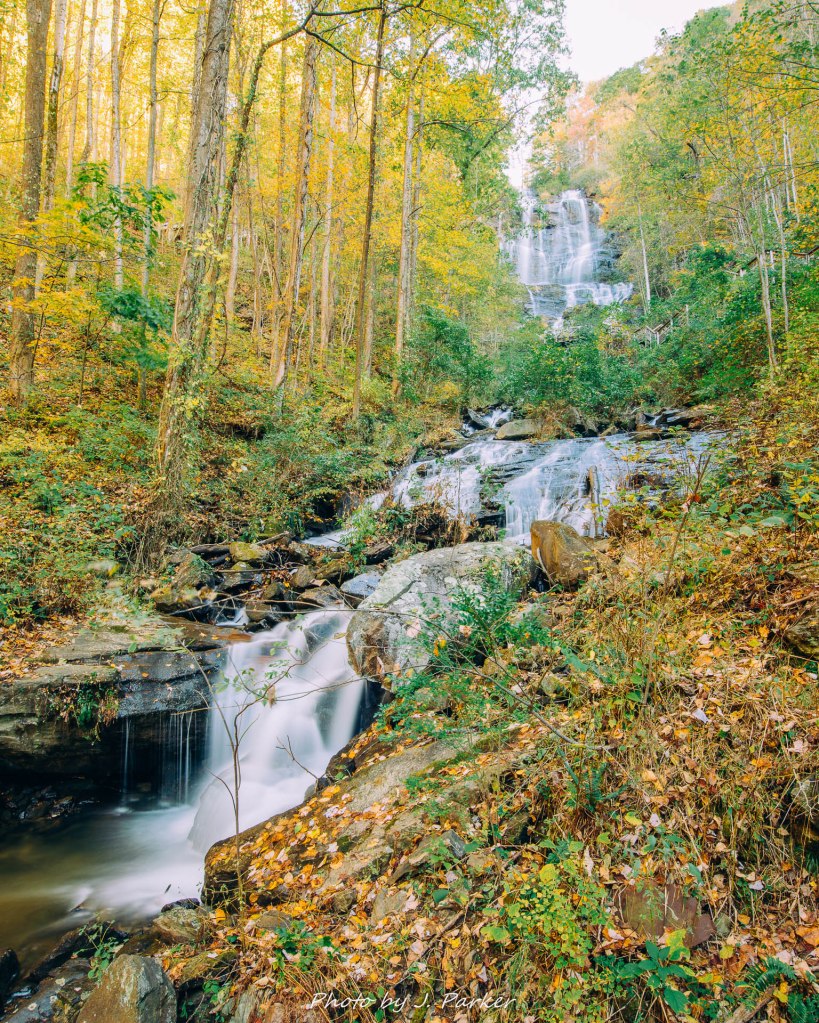
My full view of Amicalola Falls. Or at least I consider it full, but nobody really knows where the actual fall ends.

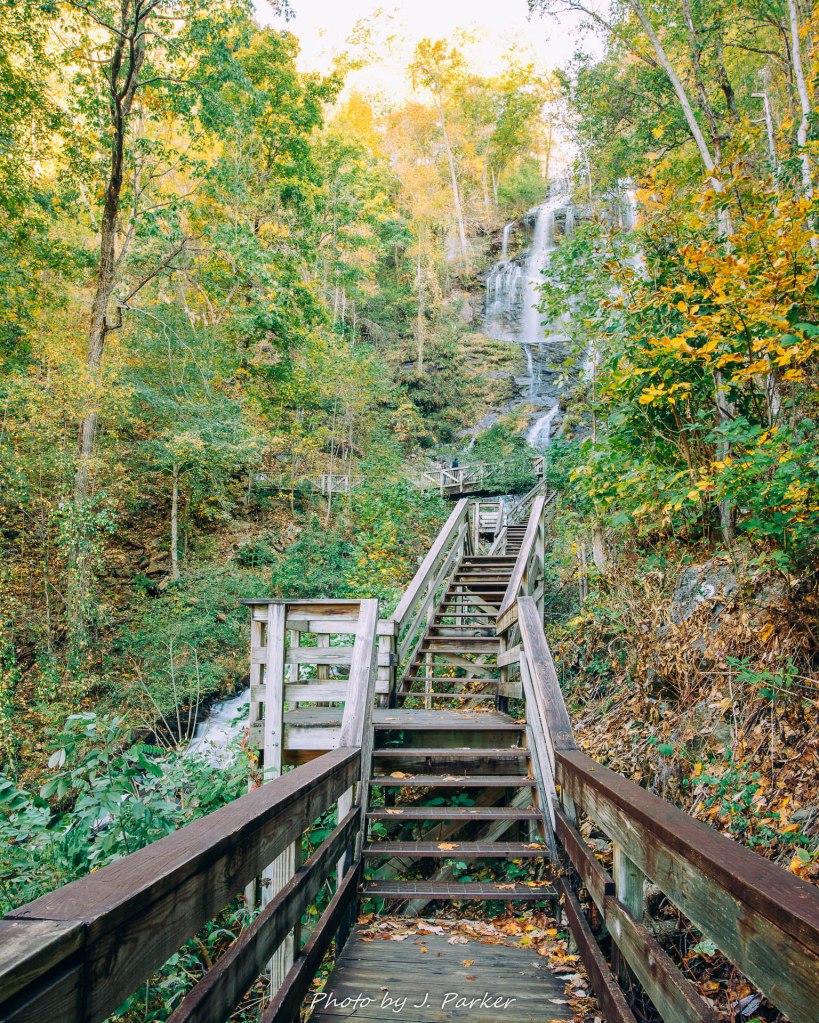
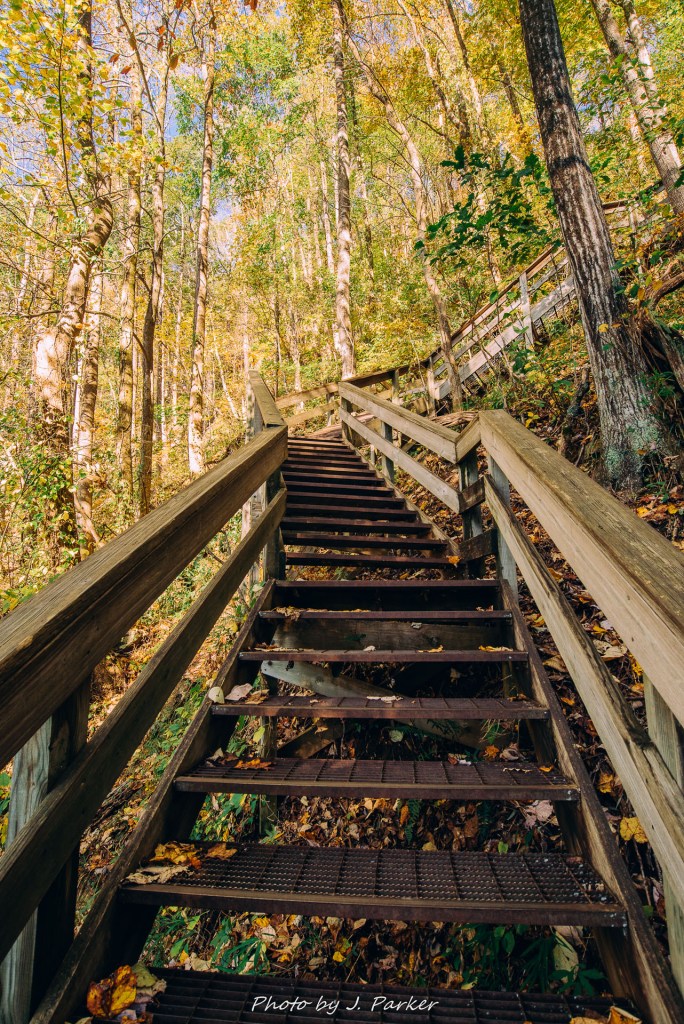
I packed up my tripod and advanced further along the trail, where I shortly reached a stairway with a sign that warned of a strenuous number of steps ahead. Amicalola Falls is infamous for the strain of its stairs, but I almost laughed when I saw the number of stairs listed at 125. This was far less than the aforementioned Cloudland Canyon, which has 600 stairs, and Tallulah Gorge, another Georgia state park which I had conquered in 2017 despite having been largely immobile for five months prior due to a hip injury. I think I take almost 125 stairs just getting to my desk at work. I paused a few more times to get some shots of the boardwalk with the falls in the background, a type of shot which I have an inexplicable fondness for.
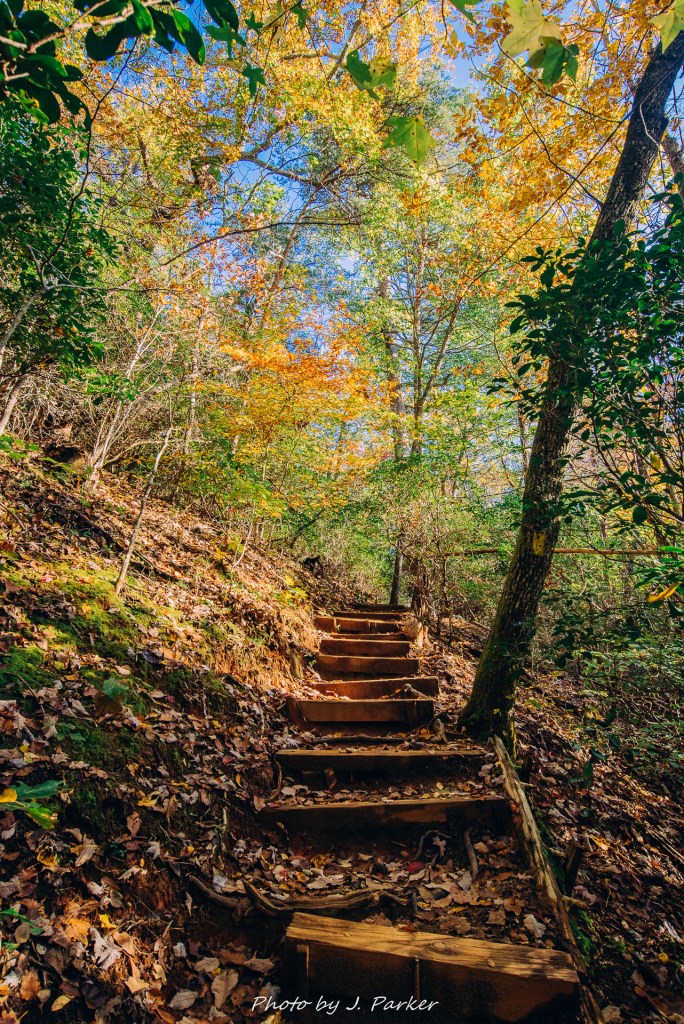
Looking up the boardwalk to the main overlook area.

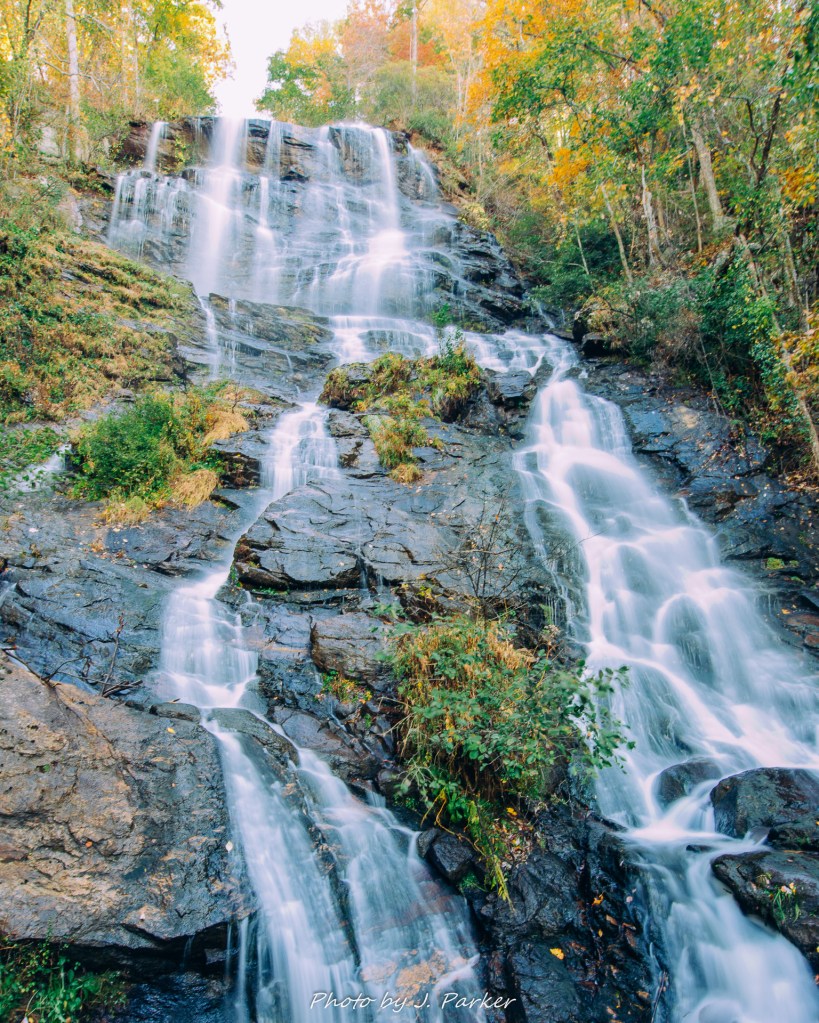
The 125 stairs lead me to the primary view of the falls as the boardwalk crosses just in front of the main cascade. Not only is this the prime view, I would argue that it, along with the scenes from the approach trail I had just taken, provide the only essential views in the park. From here, one gets an up close view of the majestically tall main cascade, one that’s very invigorating in person somewhat less so for pictures, as its impossible the cascade in its entirety from this spot. Nevertheless, its the most common area to photograph the falls from (though many people do great “fine art” shots of portions of waterfalls, I myself don’t really enjoy photographing that way. I like to capture the place as a whole). At this point, the park was starting to get a lot more busy with people of all ages, and it was no sure bet I’d be able to get a workable tripod shot from here. Still, I hoped for the best as I setup my tripod on metal grating which scarcely allowed purchase for its legs and reverberated with every step taken. I held my breath as I continuously pressed the shutter on my camera, hoping to get just one long exposure out of the bunch that wasn’t ruined by footsteps.

The view from the main falls overlook.

My main purpose in visiting Amicalola Falls was to get a view and a few time exposures of these famed falls, and I had accomplished that. I could have quit while I was ahead, for I wasn’t prepared to hike the 9 mile approach trail to the start of the Appalachian Trail at Springer Mountain, despite the fact that my overladen camera bag would suggest otherwise. I knew from experience that views from the top of a waterfall are seldom satisfactory to me, for I much prefer a view from the bottom where you see the falls in their entirely and appreciate the movement of water as it flows to you. There wasn’t much to be gained by continuing to the top of the falls except the satisfaction of curiosity and knowing for a fact that you weren’t missing out on anything before you left the park. Satisfying that curiosity may have been sensible on its own, but that could have been easily addressed by simply driving to the top of the falls.

Still unsure of myself, I asked a couple coming down the stairs if the view from the top was really worth it. Not only did they say it was, they said it was the best part of the park. My instinct, crafted by visits to dozens of waterfalls, told me otherwise, but I determined to trudge onward, right past the sign warning of 425 steps ahead. 425 was a number far more concerning than what I had seen earlier. By the end of my journey, I would feel every single last one of those 425 steps, plus the 125 I had already taken.

Some of the 425 stairs to the top of the falls.

I must confess that I haven’t been in prime hiking shape since the summer, when my wife and I trained for months to be ready for over a week of hiking centered around the Smoky Mountains. Physically prepared we were, but we were less prepared for the summer thunderstorms that greeted us practically every day of our trip, and robbed us of pleasant afternoons spent around Smoky Mountain streams and old growth forest. Hikes that I had been anticipating for years were marred by deluges, and we had to call off our planned hike to Mt. Leconte, pretty much the signature hike of the Smokies, due to severe storms that downed trees and peppered the mountains with high winds and buckets of rain. Our troubles peaked on the last day of our trip, when another severe storm struck as we were on the far end of a 9 mile round trip hike. What started as moderately heavy rain ended in a storm which pelted our ridgeline with bolts of lightning, one of which struck a group of people less than a mile away. I was pissed, and I got lazy out of protest, because…take that nature. I’m fat now. Somehow that makes sense.

I was only partway up the 425 steps before I realized that I had made a mistake, that the reward of being at the top of the waterfall wasn’t worth the energy I would expend to get there. But hiking is its own type of crusade. Nobody wants to end a war before its won because then everyone will have died in vain. No, the more tired you get, the more you stubbornly insist on making that fatigue mean something.

Cloudland Canyon. Cloudland Canyon.

Though it’s not my usual practice I stopped several times on the way up to regain energy in my exhausted legs and provide some respite to my cold-air blasted lungs. There was a point at which I could have only had some twenty stairs to go, with some flat stretches mixed in, and I still couldn’t fathom tackling them without taking a moment’s pause to recharge. I had brief conversations with others who were simultaneously making the uphill trek, many of them locals, or at least more frequent visitors to the area, who all had the similar view that the fall colors were very disappointing. They confirmed what my untrained eyes had already observed.

Cloudland Canyon. Cloudland Canyon.

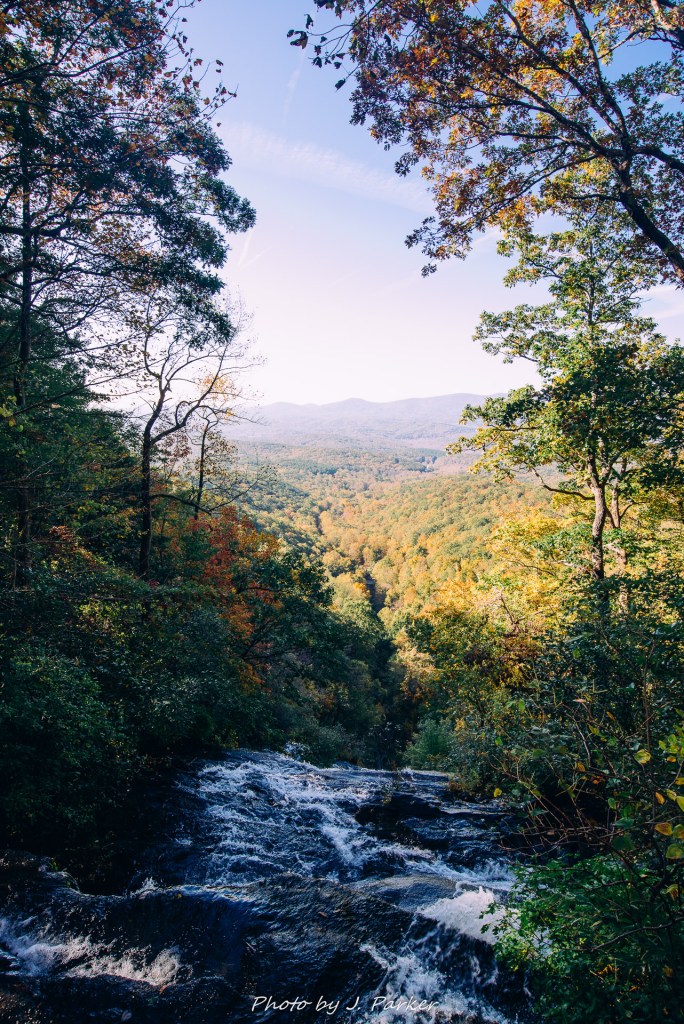
I staggered up the last step and walked over to the bridge spanning the the upper falls, hoping to get the view that I had been told was the best part. An…what a stupid view it was. You could scarcely see the waterfall, for the creek hit a near vertical shelf some twenty feet from the walkway and disappeared out of view. Looking southward towards the Georgia foothills (and into the sun) revealed a single uninspiring valley and ridgeline. This is what I had exhausted myself for; a mountain view uninspiring even to a Floridian, and one in which I could have driven to.

The view from the top of Amicalola Falls.

I would have stormed off in anger right then to put this embarrassment behind me and move on, but I wasn’t able to.

I was tired.

While scores of happy people who had no doubt driven to the falls and apparently not seen a fraction of the mountain views I’ve seen gleefully looked out on the view, foolishly enjoying this spectacle I had deemed subpar, I sat myself on the pavement to regain some energy. At least that allowed me more time to enjoy the view?

Unlike Cloudland Canyon I was never in any danger of passing out. A crusader I am, but I always could have turned back had I really started to become overly fatigued. Loss of consciousness wasn’t a problem, but loss of energy was. I had just spent my legs on an exhausting set of stairs which offered no payoff. This was my very first stop of an action-filled four days, and I had already forced upon my legs a sense of fatigue from which they wouldn’t have adequate time, nourishment, or sleep to recover from. I was going to feel the steps of Amicalola Falls State Park in every other stop of the trip.

Though this was a low point in terms of happiness, it was the technical high point of the trail. All that was left for me was to work my way downhill, which I would do on a different trail than I had used before. This trail, part of the Appalachian Approach Trail, did offer one more open view before leaving the high ground. Except for a short, switchback-filled stretch right before reaching the parking area again, little of this trail was single-track, and there was very little of note on to be found on its path, especially since the sun was out in full force.

Sun streams in upon a rare single-track section of trail.

Finishing my explorations at Amicalola Falls brought to the forefront my need to make a decision on where I would visit next Several things had become clear. For one, high caliber fall color wasn’t going to be found in the immediate area. It wasn’t that the area was before or after peak as much as it was a weird combination of some trees having lost the bulk of their leaves while others had still yet to turn. At any rate I knew I was unlikely to find something worth visiting for the fall color alone in this general area. The unblemished sunlight, so beautiful when one is in an open space to enjoy it, would make any kind of water or woods-based hike disappointing.

One of the backroads of North Georgia.

With those things in mid, I set off on more country roads to find the trailhead for Blood Mountain, one of Georgia’s most popular hikes. I stopped several times to take snaphots of the countryside, for pastoral scenes of rolling hills aren’t something we in Florida get to see much of. I even came across the unexpected treat of finding a small local restaurant tucked away on US 19, where I enjoyed excellent trout and even better service (I had told them I was in a hurry). Though I rarely stop during the day for refreshment when the days are shorter in the cold months, it was good that I did this time, for after the energy I wasted at Amicalola Falls I would need every ounce for the challenging hike up Blood Mountain.

Design a site like this with WordPress.com
Get started